
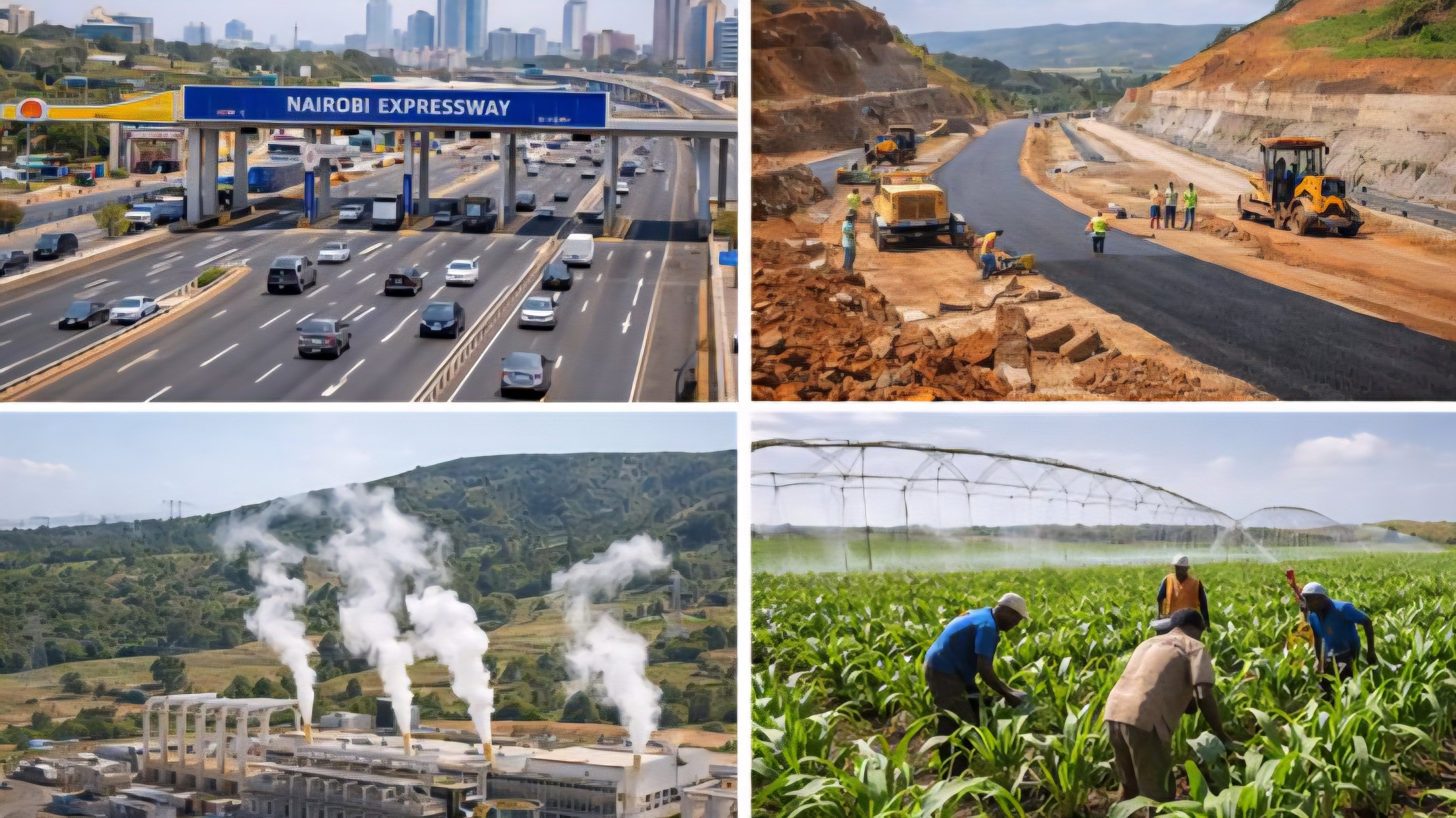

The Kenyan government has pushed its Public Private Partnership portfolio past 40 active projects. This marks a clear shift toward using private capital to build infrastructure faster and ease the burden on public funds.
Kenya is moving quickly to bring private investment into major projects. Recent updates from the PPP Directorate at the National Treasury show more than 40 projects now in the national pipeline. The approach helps close the infrastructure gap in transport, energy, housing, water, health care, and other areas. Private partners bring funding, technical skills, and faster delivery while the government keeps overall direction.
The government has turned to PPPs for clear reasons. Public finances face limits from high debt levels and competing needs like social programs. Traditional borrowing strains the budget and adds fiscal pressure. PPPs let the private sector finance, build, and often operate projects upfront. This keeps major costs off the government's balance sheet in the short term and reduces reliance on taxpayer money or new loans. The 2011 PPP Policy highlighted accelerated infrastructure modernization and bridging the funding gap as core goals. More recent plans, including the Medium Term Plan 2023-2027, position PPPs as a key way to address infrastructure shortfalls while creating fiscal space for other priorities.
Under the PPP model, private companies usually design, finance, build, operate, and maintain facilities for long periods, often 20 to 30 years. They hand assets back to the state at the end. Income comes from tolls, user fees, availability payments, or performance incentives. This setup gives investors a return while delivering public value. It also shares risks better, with the private side handling areas like construction delays or operations where they have more control.
Transport leads the way with several high-profile deals. The Nairobi Expressway stands out as a completed success. This 27.1 km elevated toll road, built with China Road and Bridge Corporation, opened in 2022 and has cut commute times across the capital.
The Rironi-Nakuru-Mau Summit Highway is another major one now moving forward. The project covers 175 to 233 km of dualling, split into sections. Consortia led by China Road and Bridge Corporation with NSSF, and Shandong Hi-Speed, won key packages. Groundbreaking took place in late 2025. The full corridor should finish by mid-2027. It will improve links from Nairobi through the Rift Valley to western Kenya, support trade, logistics, and road safety on a critical route.
Other transport PPPs include annuity-based road programs, toll roads, feeder roads, and urban bypasses. Many aim to reduce congestion in cities and improve access to Mombasa Port.
Energy projects focus on renewables and stronger transmission. The 35 MW Sosian Menengai Geothermal Power Plant is a working example of clean energy delivered through PPP. In December 2025, a Sh40.4 billion deal closed with Africa50 and Power Grid Corporation of India. It covers two 400 kV transmission lines, including the Lessos-Loosuk line, plus new substations. Private partners will finance, construct, operate, and maintain the assets. The work will improve grid stability in western and northern Kenya, connect more renewable sources, and cut frequent power interruptions that hurt businesses.
Affordable housing attracts steady interest. Private developers team up on thousands of units in Nairobi and nearby areas. The government often contributes land as equity to keep costs down and align with national housing goals.
Water and sanitation schemes form a big part of the pipeline. Several bulk water projects are in advanced preparation. They include dams, treatment plants, and distribution systems to serve fast-growing towns and cities.
Health care is opening up as a new frontier. Private operators help manage public hospitals, equip specialist units, and build cancer treatment facilities. Proposals cover upgrades at Kenyatta National Hospital and a new center in Meru. Education and agriculture also appear with plans for student accommodation, irrigation schemes, and modern storage to reduce post-harvest losses.
Oversight of these 40 projects falls under the Directorate of Public-Private Partnerships. The Directorate has the job of streamlining legal and regulatory processes to draw in global investors. Challenges remain, especially around the speed of project approvals and negotiating complex risk-sharing agreements. The government updated the PPP Act in 2021 to simplify the procurement cycle and give clearer rules on government guarantees. These changes help make the framework more efficient and attractive.
As the pipeline grows, the main focus now is getting these projects to financial close. Many of the 40 projects sit in feasibility study or tender stages. They need thorough technical and financial checks to move forward. The latest quarterly report from December 2025 shows a total of 40 PPP projects: 10 under implementation (five in operation and maintenance, five in construction) and 30 in the pipeline at various stages. This includes two at commercial close with signed contracts, plus others in negotiations, tender, ready for tender, feasibility, or awaiting transaction advisors. Most fall under national agencies, with a few from counties. This progress builds on earlier figures, like 36 or 37 projects reported in mid-2025, showing steady expansion. The Directorate publishes these updates regularly under Section 26 of the PPP Act 2021 to keep stakeholders informed.
For the construction industry, this pipeline means a steady flow of work for contractors, consultants, and suppliers. Success depends on meeting the strict requirements from international financing institutions that often back these deals.
Kenya is now using PPPs in a serious way. The model combines government priorities with private delivery to create better infrastructure. This is the start of a more connected, reliable, and growing economy. Welcome to the future.
Comments (0)
Leave a Comment
No comments yet. Be the first to share your thoughts!