
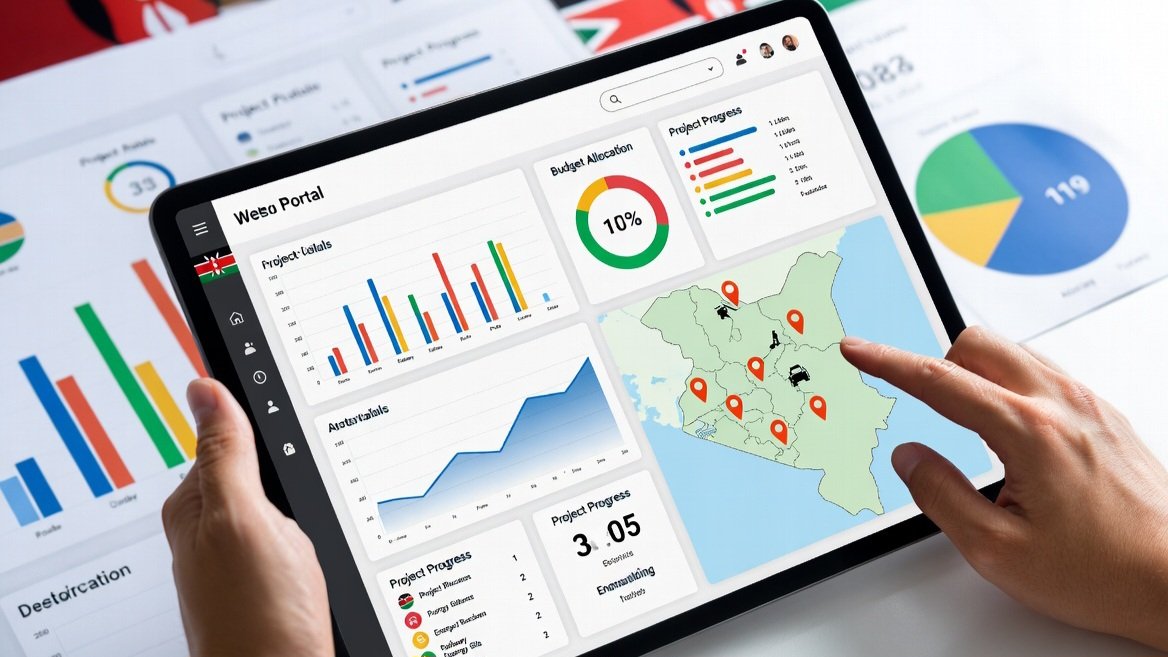

The Public Private Partnerships (PPP) Directorate has opened its official reporting portal to the public, introducing a new level of transparency to state infrastructure.
Director General Kefa Seda announced the launch of the dashboard, which is now accessible to citizens, investors, and contractors.
The online portal goes live as the country coordinates a Sh1.7 trillion investment pipeline, but, it immediately drew questions about the Nairobi-Mombasa Expressway.
A user questioned the difference between feasibility and early stage classification on the platform, when looking at the proposed coastal highway. Seda clarified, it remains in prefeasibility.
The expressway was originally structured as a privately initiated proposal, although the state ultimately abandoned the design.
The Kenya National Highways Authority (KeNHA) had received the proposed Usahihi Expressway plan from an American firm, but the proposal failed.
The statutory evaluation concluded, it did not meet technical, financial, or legal standards.
A tribunal dismissed a legal petition in early 2026, when the investor tried to reverse the government decision.
Officials rejected the tollway over high land acquisition costs, which would burden motorists, who would use the route.
The state wants KeNHA to restructure the project, if the existing highway can be expanded instead.
This digital platform tracks all active infrastructure ventures, which provides vital data to the public.
Under President William Ruto, the government is shifting toward structured private sector participation to finance roads, energy, and water networks.
Out of the 51 projects listed on the new dashboard, only ten are currently under active implementation.
The remaining 41 projects remain in various stages of preparation, appraisal, and procurement.
The dashboard represents a shift toward open disclosure, although many complex projects still face procurement hurdles.
Seda noted, it will eventually help to de-risk these massive investments.
The dashboard is expected to improve investor confidence, but, it also exposes the real delays facing major transport corridors.
Whether these projects will attract capital remains to be seen, when the global economy remains volatile.
The database covers critical sectors including transport infrastructure, renewable energy, logistics ecosystems, healthcare, water systems, and affordable housing.
These ventures are designed to bridge the widening infrastructure financing gaps, when public resources are increasingly constrained.
Seda explained, it focuses on enhancing transaction credibility and positioning them attractively.
The director general stated, it reinforces the strategic importance of using private capital.
The government hopes to attract international financiers, who can help build high-quality networks across the country.
However, critics warn that toll roads could face public backlash, if pricing structures are not carefully managed.
For example, the abandoned Usahihi project sought to compel heavy trucks to use the route, but authorities rejected that proposal.
The tribunal ruled, it would have conflicted with existing national transport policies and caused public resentment.
With the launch of the online tracking tool, citizens can now monitor each phase of these massive procurements directly.
The portal is part of a broader push to restore transparency, although past controversies continue to hover over major projects.
The National Treasury hopes that this open access will demystify the process, when investors evaluate Kenya's investment climate.
Comments (0)
Leave a Comment
No comments yet. Be the first to share your thoughts!