

A version of this article appeared on LinkedIn by Orwa Okinda.
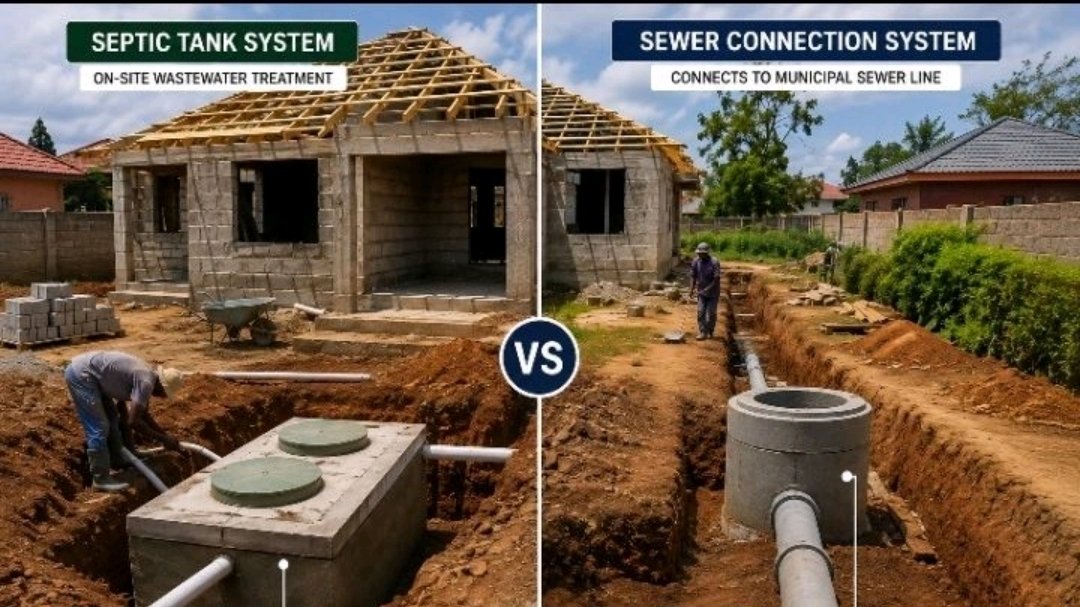
Property owners deciding between a septic tank and a sewer connection face a practical choice that affects both construction and long-term use. The wrong system can bring extra excavation, higher maintenance costs, future repairs or difficulty when the plot is later altered.
There is no universal winner. The decision turns on budget, location, future plans, site conditions and the owner’s ability to keep the system working.
A septic tank is usually suitable where public sewer infrastructure is unavailable, unreliable or too distant. It offers independence from municipal networks. That independence requires correct sizing, careful construction and regular emptying.
A sewer connection is preferable where a reliable public sewer already serves the area. It reduces on-site waste handling. In return the owner meets connection rules and pays ongoing charges.
Future development of the property should form part of the thinking. A septic tank and soakaway need enough space and the right position.
That space can become a problem once a garage, rental unit, extra rooms or extensive paving is added. Owners need to picture where the tank, soakaway, inspection chambers and emptying access will sit ten years from now.
Soil conditions can change the outcome completely. A septic system is more than a buried tank. The effluent disposal method depends on soil permeability, groundwater levels, available space and topography.
Even a well-constructed tank can perform poorly if the surrounding ground cannot receive the effluent. Site assessment should therefore come before the system is chosen.
The septic tank itself is primarily a treatment and settling component. Inlet and outlet arrangements, the effluent disposal system, ventilation and access for maintenance all matter. Cutting costs during construction often leads to years of odour, blockage, overflow or premature failure. Proper design and inspection usually save more than the initial construction saving.
Sewer connections carry additional costs beyond the basic fee. Drainage modifications, inspection chambers, excavation, reinstatement of paving and compliance with the utility’s requirements can all add to the total. The fair comparison is wider than the price of a tank against the price of a connection.
For diaspora clients the maintenance question is sharper. Someone on the ground must monitor filling levels, arrange emptying and respond when problems appear. A reliable sewer connection reduces that day-to-day responsibility.
One engineer who installed a bio-digester with a bioreactor in a commercial building noted that the system allowed water recycling for other uses. Such approaches are increasingly considered for sustainability and long-term cost control.
The system that matches both the physical site and the owner’s capacity to manage it remains the practical choice.
Comments (0)
Leave a Comment
No comments yet. Be the first to share your thoughts!