
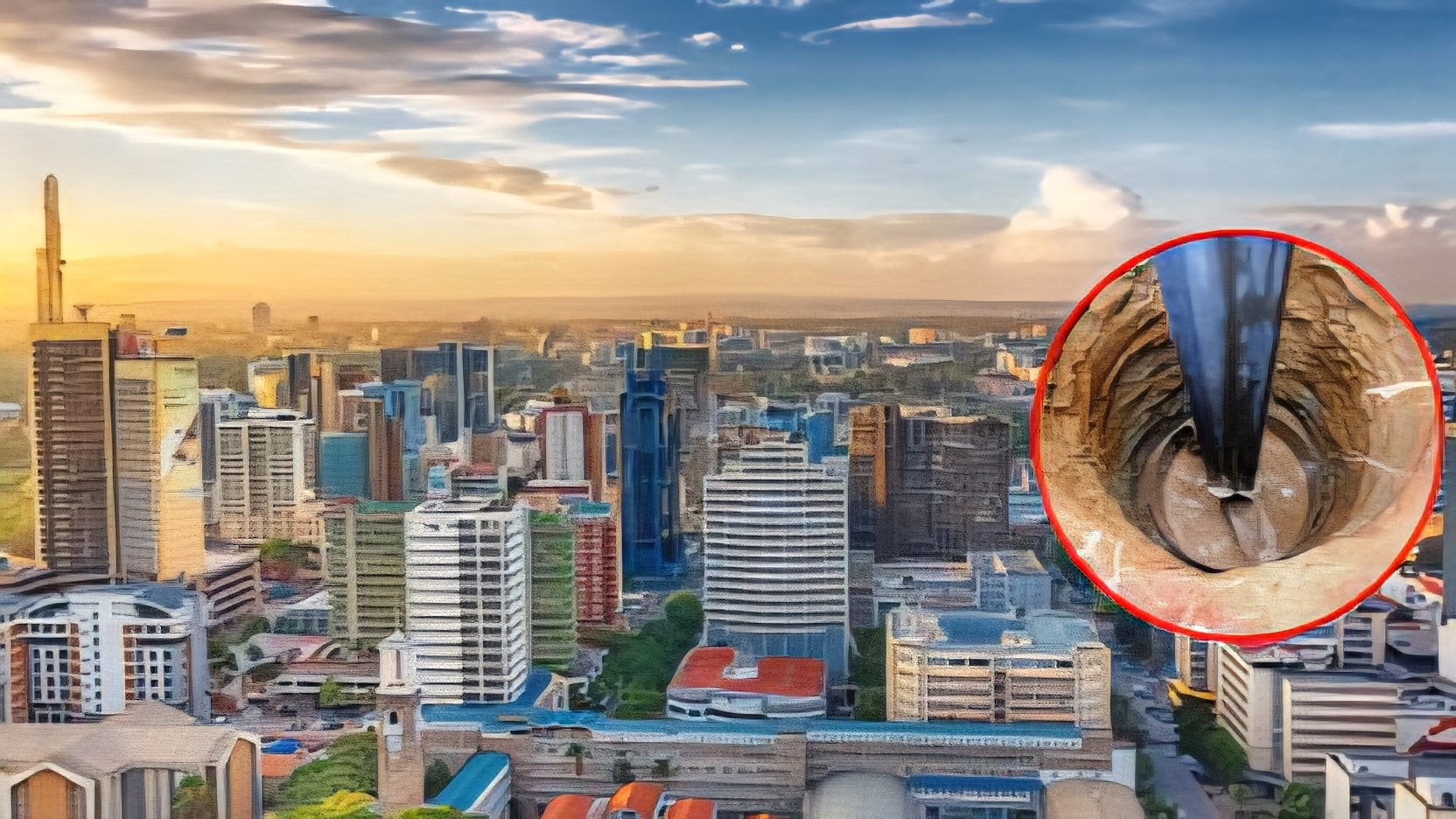

The rapid expansion of unregulated borehole drilling across Nairobi is destabilizing the city's geological foundation, according to a recent assessment by hydrogeology experts. This surge in groundwater extraction, driven by a persistent water shortage in the capital, is now being linked to the increasing frequency of building collapses that have plagued several neighborhoods in recent months.
Dr. Florence Jerotich Tanui, a hydrogeologist and Programme Officer for Science at the UNESCO Regional Office for Eastern Africa, recently cautioned that the unchecked depletion of aquifers is creating substantial underground voids. These subterranean gaps compromise the integrity of the brittle volcanic rock upon which much of the city is built. As water is withdrawn at rates exceeding natural recharge, the resulting loss of pore pressure causes the ground to settle or shift, a process known as land subsidence.
The scale of the issue is reflected in the dramatic change in drilling depths over the last few decades. In the 1980s, groundwater in Nairobi was commonly reached at depths of approximately 50 metres. However, modern contractors are now forced to drill between 380 and 420 metres to find viable water sources. This decline indicates that the city is tapping into its deepest reserves, leaving the upper layers of the earth increasingly hollow and unsupported.
Data from the Water Resources Authority suggests that the majority of boreholes in the city may be operating without proper documentation or official oversight. Estimates indicate that out of approximately 6,000 boreholes currently in use, only 2,000 are officially recorded. This lack of regulation means that many properties are drilling within meters of one another, despite legal requirements that demand a minimum distance of 100 metres between wells to prevent interference and ground instability.
The structural risks are further exacerbated by the general state of construction quality in the region. The Institution of Engineers of Kenya has previously noted that a vast majority of buildings across the country do not meet safety standards. When the underlying soil and rock are weakened by groundwater over-extraction, even minor structural flaws in a building can lead to catastrophic failure. Recent incidents on Kirinyaga Road and in the South C area have already heightened public concern regarding the safety of high-rise developments.
Construction experts have long advocated for more rigorous site investigations before any drilling or building begins. Proper due diligence requires a hydro-geological survey and an Environmental Impact Assessment to ensure that the material used in the borehole does not contaminate the area and that the extraction will not cause the surrounding ground to collapse. Without these measures, the loading exerted by heavy machinery and the subsequent removal of underground water create a recipe for ground deformation.
As the city continues to expand vertically, the pressure on its underground resources grows. Civil engineers warn that unless the government implements stricter monitoring of drilling permits and invests in large-scale public water infrastructure, the city remains vulnerable. The current reliance on private boreholes to solve a public water crisis is viewed by many in the sector as a temporary fix that carries a long-term risk of widespread structural damage.
Comments (0)
Leave a Comment
No comments yet. Be the first to share your thoughts!