
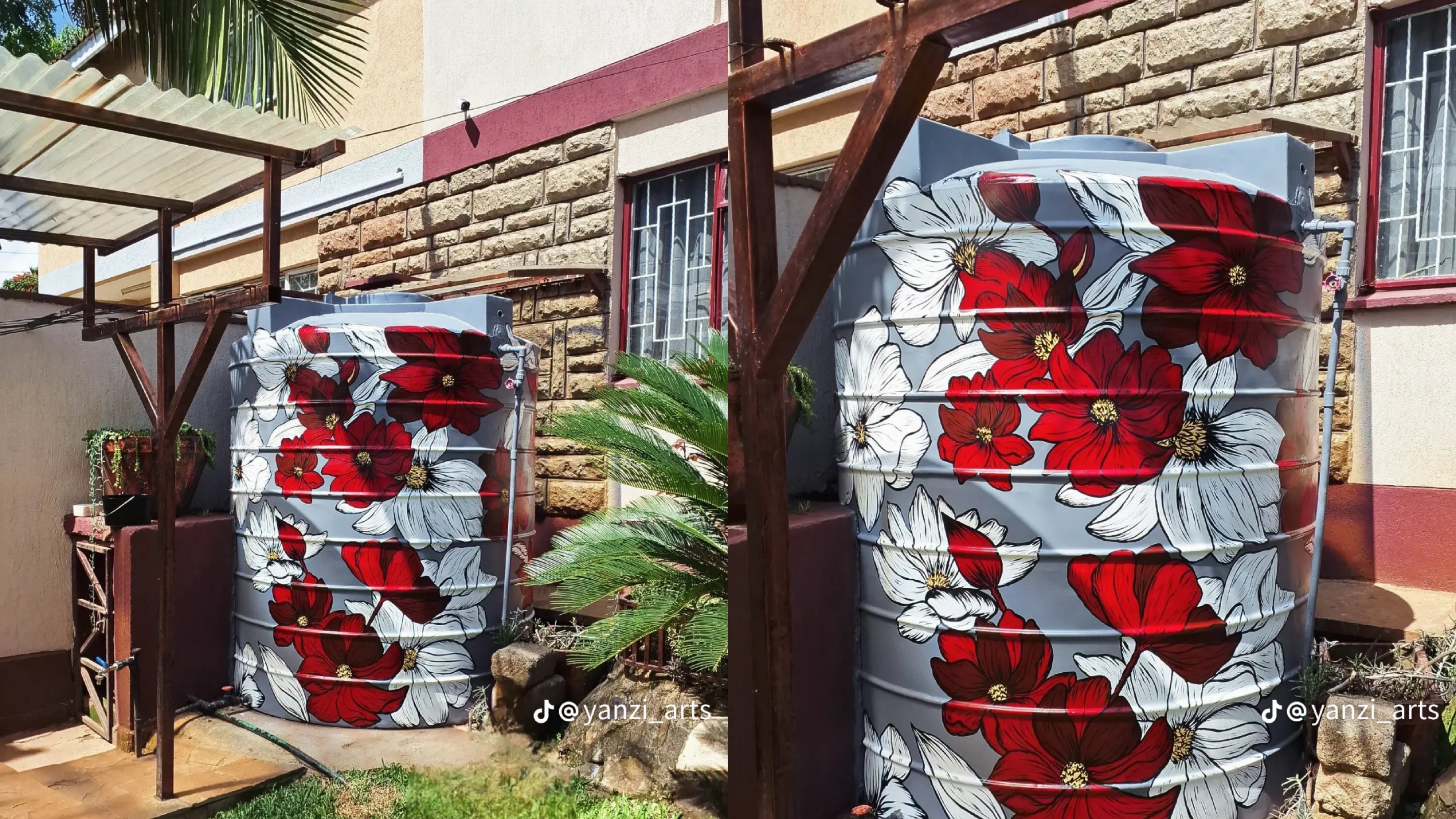

The traditional silhouette of the black plastic water tank, a staple of Kenyan residential and commercial skylines, is facing a visual overhaul. Recent projects by Yanzi Arts, which feature vibrant hand-painted floral murals on standard storage units, have gained significant traction online. While these designs offer a solution to the perceived aesthetic dullness of industrial plastic, they have reignited a professional discussion on why these containers are manufactured in black.
In the Kenyan construction sector, the choice of color for water storage is rarely about fashion. Black tanks are engineered to address specific environmental challenges, primarily the prevention of algae growth. Algae require light for photosynthesis, and the opacity of black polyethylene is the most effective barrier against sunlight penetration. When light enters a tank, it creates a breeding ground for bacteria and organic matter that can compromise water safety.
Maintenance experts in Nairobi note that while painting a tank can improve a property’s curb appeal, it must be done with an understanding of the material’s original purpose. Most high-quality tanks in the local market are UV-stabilized. This chemical treatment prevents the plastic from becoming brittle under the intense Kenyan sun. Adding layers of paint can sometimes interfere with the heat absorption properties of the unit, although some argue that lighter-colored artistic finishes could actually keep the internal water temperature lower than a heat-absorbing black surface.
The transition from purely functional utility to decorative landscape elements reflects a broader trend in Kenyan urban design. Homeowners are increasingly looking for ways to hide or integrate essential infrastructure into their gardens. However, senior engineers warn that any modification to a tank’s exterior should not come at the cost of water hygiene. If a light-colored paint is used, the underlying material must remain completely opaque to ensure no light reaches the stored water.
Beyond the biological concerns, there is the practical issue of durability. Standard industrial black tanks are known for their long life-cycles, often exceeding twenty years if properly maintained. Exterior paint, if not specifically formulated for polyethylene, can peel or flake due to the expansion and contraction of the plastic during temperature shifts. This can lead to increased maintenance costs for the homeowner, who must then manage both the internal cleaning and the external upkeep of the mural.
Current industry standards suggest that for those choosing to follow the artistic trend, regular inspections remain vital. Whether a tank is a solid charcoal hue or a canvas for a forest mural, the cleaning frequency remains the same. Domestic units generally require a full scrub and disinfection every six to twelve months to remove sediment and biofilm. As aesthetic upgrades become more common, the construction industry may see a shift toward manufacturers offering a wider range of factory-finished, UV-resistant colors that provide beauty without sacrificing the core functionality of the traditional black tank.
Comments (0)
Leave a Comment
No comments yet. Be the first to share your thoughts!