
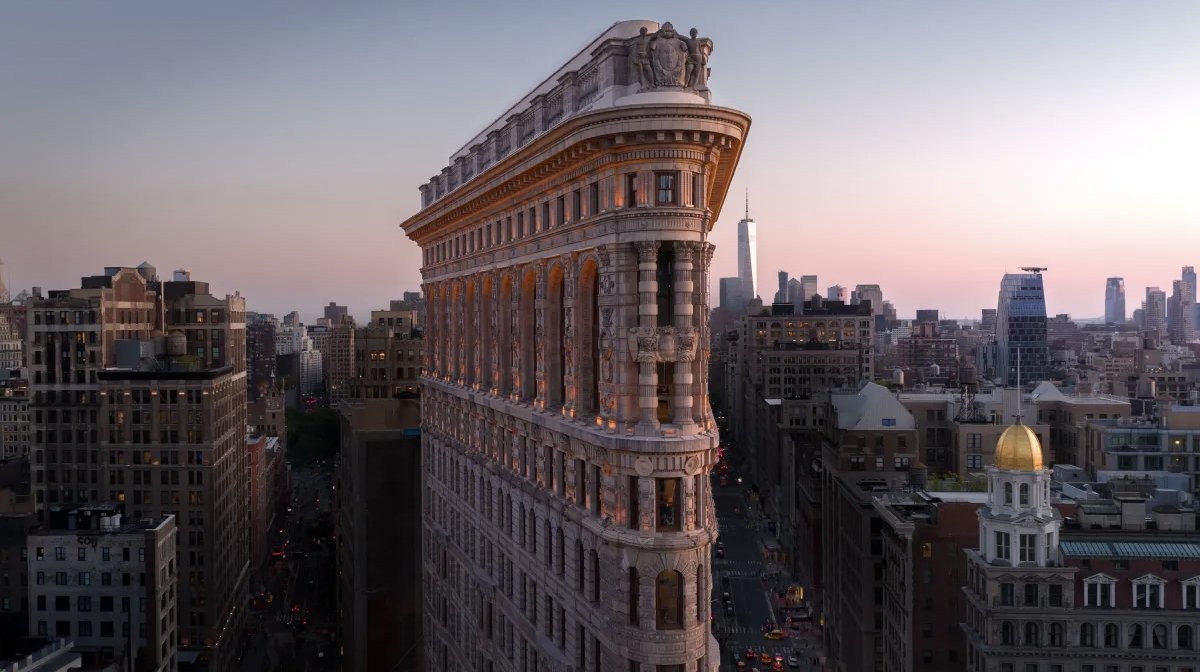

Work on the long-anticipated restoration of the Flatiron Building in New York has entered a visible new phase, with lighting installations now drawing attention to the landmark structure
The early 20th-century skyscraper, located at the intersection of Fifth Avenue and Broadway, has been undergoing a complicated redevelopment process marked by legal disputes and ownership changes. Recent activity around the building indicates that restoration efforts are gaining traction after a prolonged period of uncertainty
Lighting fixtures have been installed along parts of the building’s exterior, offering one of the clearest public signs to date that work is progressing. The illumination highlights the structure’s distinctive triangular form, a defining feature that has made it one of the most recognisable buildings in the city since its completion in 1902
The Flatiron Building has been largely vacant in recent years. Plans to convert it into residential units have circulated for some time, though progress was delayed by disagreements among stakeholders. A court-ordered sale process further complicated the timeline, leaving the future of the building unclear for months
That process concluded with new ownership stepping in, clearing a path for redevelopment to resume. While detailed timelines for full completion have not been publicly confirmed, the current phase of work suggests that preparatory and façade-related interventions are underway
The addition of exterior lighting is not purely aesthetic. In restoration projects involving historic structures, such installations often coincide with façade inspections, repairs, and upgrades to building systems. Lighting can also be used to test electrical infrastructure and support ongoing construction activities during evening hours
Architecturally, the Flatiron Building remains one of New York’s earliest skyscrapers, rising 22 storeys with a steel frame that was innovative for its time. Its narrow footprint and wedge-shaped profile posed engineering challenges during its original construction, particularly in managing wind loads at the pointed northern end
Over the decades, the building has undergone several internal modifications, though its external appearance has largely been preserved. This places additional constraints on restoration work, which must align with heritage conservation standards while meeting modern building codes
Observers in the area have noted increased site activity in recent weeks, including scaffolding adjustments and visible work crews. The lighting installations, however, have become the most noticeable development for the public, especially after dark
The renewed pace of work comes amid broader trends in New York’s real estate sector, where older office buildings are increasingly being repositioned for residential use. This shift has been driven in part by changing occupancy patterns and demand for housing in central urban areas
For the Flatiron Building, the stakes are both commercial and symbolic. Its prominence within the city’s architectural landscape means that any intervention attracts scrutiny from preservationists, planners, and the public
While many aspects of the redevelopment remain undisclosed, the current activity signals movement after a period of stagnation. For now, the lighting serves as both a functional component of the project and a visible marker that restoration efforts are once again underway.
Comments (0)
Leave a Comment
No comments yet. Be the first to share your thoughts!