

The integrity of a concrete structure depends heavily on the properties of the mix before it sets. Among the various field tests available to civil engineers, the slump test continues to be the most practical method for measuring the workability and consistency of fresh concrete. This procedure is a primary line of defense against structural weaknesses that can arise from improper water-cement ratios.
Workability refers to the ease with which a concrete mix can be mixed, transported, placed, and compacted without significant loss of homogeneity. In the context of large-scale infrastructure, getting this balance right is essential. If a mix is too dry, it becomes difficult to pump and may lead to honeycombing within the formwork. Conversely, a mix that is too wet often suffers from segregation and excessive shrinkage.
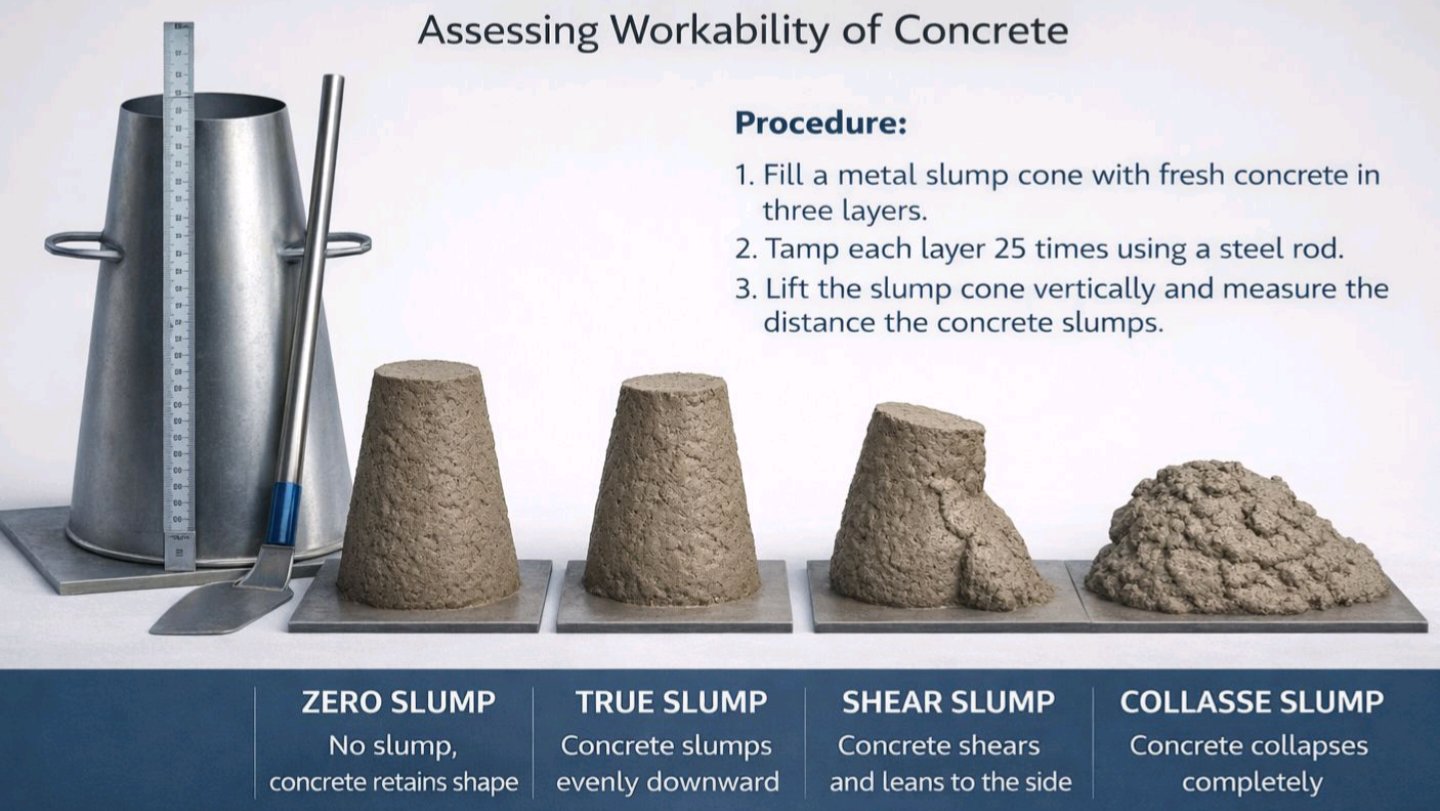
The test involves a standardized metal mold known as a slump cone, which is open at both ends and features handles for steady lifting. The process begins by placing the cone on a smooth, level, and non-absorbent surface. The operator fills the cone in three equal layers by volume, rodding each layer 25 times with a standard steel tamping rod. This rodding ensures that air pockets are removed and the concrete is properly consolidated within the mold.
Once the cone is filled and struck off level at the top, it is lifted vertically with a slow and steady motion. Without the support of the metal casing, the concrete mass subsides under its own weight. The distance between the top of the mold and the displaced original center of the top surface is measured to determine the "slump" value. This value indicates whether the batch meets the specific requirements of the project design.
Engineers typically categorize the results into three types: true slump, shear slump, and collapse slump. A true slump occurs when the concrete remains largely intact and subsides evenly, which is the desired result for most structural applications. A shear slump, where the top portion of the concrete shears off and slips sideways, suggests a lack of cohesion in the mix. If the concrete collapses completely, it usually indicates a high watee content or a lean mix that is unsuitable for standard structural work.
In Kenya and across global construction markets, maintaining these standards is a matter of safety as much as it is about aesthetics. While laboratory testing of cured cylinders provides data on compressive strength weeks later, the slump test offers an immediate result. This allows site supervisors to reject a batch before it is poured into a foundation or a column, saving the high costs associated with demolition and reconstruction.
Effective quality control protocols require that the test be performed frequently, especially when environmental conditions like high heat or humidity could alter the moisture content of the mix during transit. By adhering to these rigorous onsite checks, contractors can ensure that the final product reaches its intended design life and remains safe for public use.
Comments (0)
Leave a Comment
No comments yet. Be the first to share your thoughts!