

Demand for passenger rail construction has surged across the United States over the past year, even as funding for some of the country's largest transit projects remains politically contested.
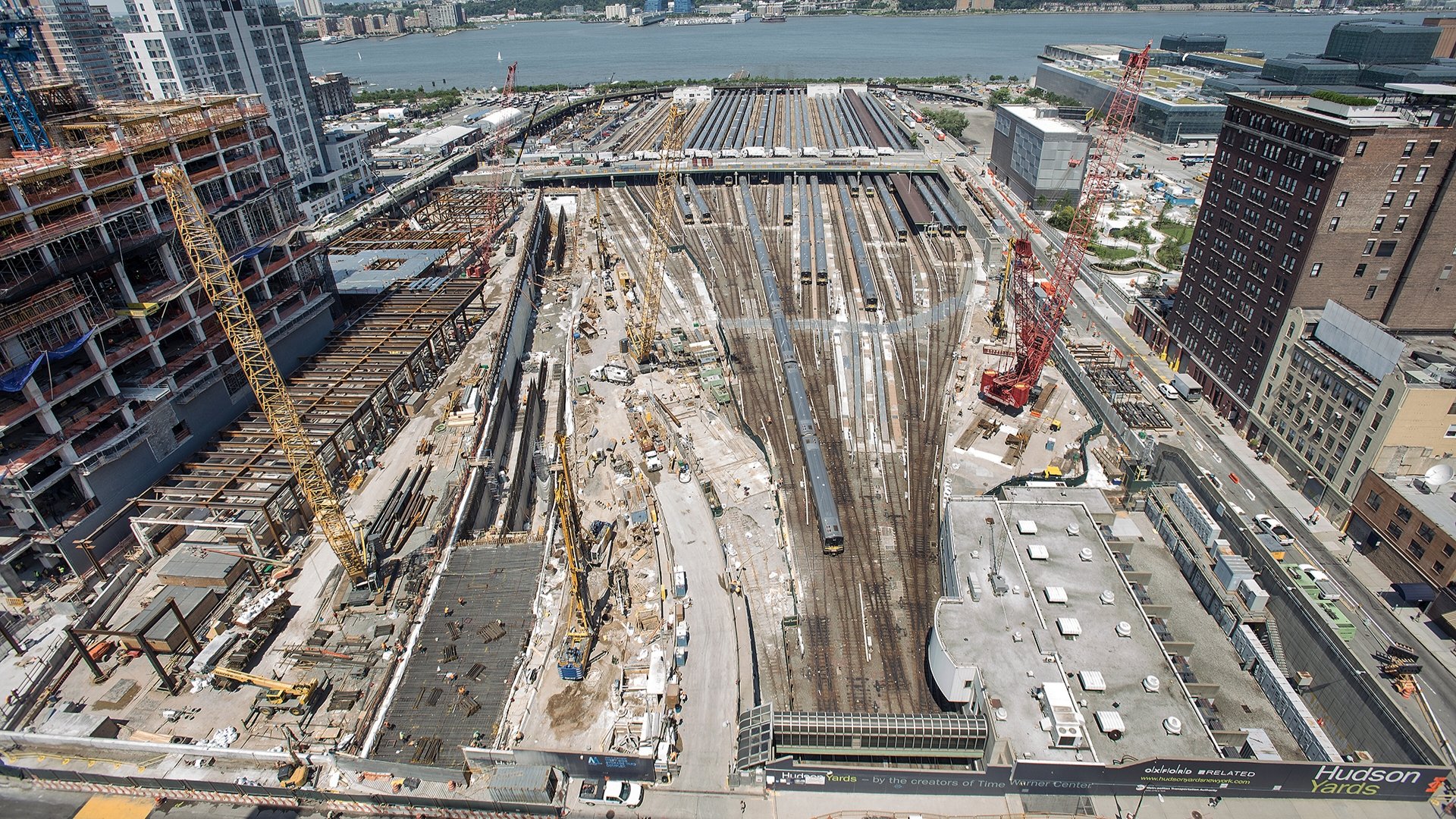
The $16 billion Hudson Tunnel project, connecting New Jersey to Penn Station in New York City, has emerged as one of the most closely watched infrastructure jobs in the country. Yet the broader funding environment surrounding such projects is far from settled.
The $1.2 trillion Infrastructure Investment and Jobs Act is set to expire on September 30, and lawmakers are currently debating a new surface transportation reauthorization bill. The most recent House appropriations bill included cuts to transit and Amtrak funding, adding further uncertainty to projects already underway.
Political disputes have threatened to stall individual projects as well. Chicago's $5.7 billion Red Line Extension broke ground in April despite ongoing friction, and the Hudson Tunnel project has separately faced a funding fight with the Trump administration over diversity, equity, and inclusion practices tied to the project.
Despite those headwinds, contract awards have continued at pace. A joint venture of Kiewit, Stacey and Witbeck, and Herzog was selected for a $3.5 billion California high-speed rail contract, covering construction of a 119-mile section between Bakersfield and Merced under a scaled-back plan aimed at getting trains running by 2033.
In Seattle, Sound Transit adopted a revised ST3 plan despite facing a $34.5 billion funding gap, fully financing several major transit projects in Washington state while deferring others.
The Hudson Tunnel project has continued to generate contract activity of its own. The Gateway Development Commission awarded a $711 million contract for the seventh of the project's ten construction packages, with a Skanska, Creamer, Sanzari, and New Jersey Schools Authority joint venture expected to begin construction on that package later this year.
In New York City, a joint venture of Skanska, Walsh, and Traylor Bros secured a separate $1.02 billion contract for a subway extension, just weeks after the same three firms won the larger Hudson Tunnel job.
Other major transit jobs have continued moving through construction. Los Angeles opened the first section of its $2.4 billion D Line subway extension this year, a decade-long tunneling project that has involved managing dangerous underground gases and ice age fossils uncovered during excavation work.
In Pennsylvania Station's case, the Department of Transportation and Amtrak named a partnership between Halmar and Skanska, known as Penn Transportation Partners, as master developer for an $8 billion renovation of the historic station.
Taken together, the projects reflect a rail construction sector that continues to attract large contractor joint ventures and significant capital commitments, even as the political and budgetary environment surrounding federal transportation funding remains unresolved heading into the autumn.
Comments (0)
Leave a Comment
No comments yet. Be the first to share your thoughts!