

The 2026 FIFA World Cup opens in less than 50 days. Several of its venues are still under construction.
Sixteen stadiums across the United States, Canada and Mexico are currently being gutted, rebranded and physically transformed to meet FIFA's requirements. The work ranges from corporate signage removal to full playing surface replacement, and in some cases, structural modifications to existing seating bowls.
FIFA's clean stadium policy sits at the centre of most of the visible work. The governing body requires all corporate naming rights to be stripped from venues during the tournament, as only official FIFA partners receive broadcast visibility during matches. Fifteen of the sixteen host stadiums have been renamed after their host cities or regions. MetLife Stadium in New Jersey, which will host the final on July 19, has gone further. The sponsor walked away from its naming rights deal entirely, leaving the venue without a commercial name at all heading into the biggest match it will ever host.
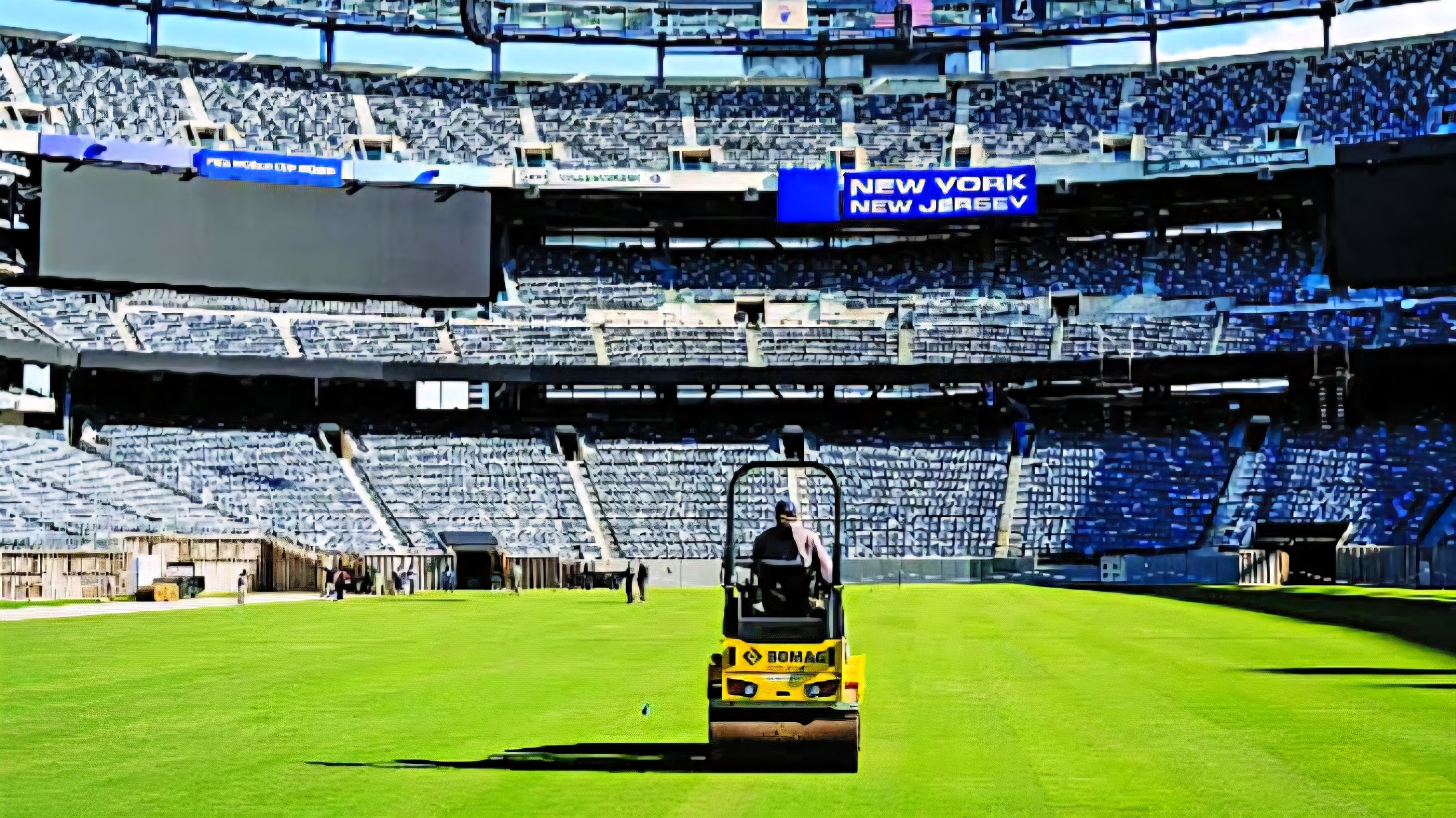
MetLife, now officially called New York New Jersey Stadium, laid its natural grass pitch on May 7, grown in Tennessee over a dedicated testing period. The grass was transported to the stadium and installed in rectangular chunks. It will be removed immediately after the final and replaced with artificial turf before the National Football League (NFL) season begins in September.
SoFi Stadium in Inglewood presents the most complex conversion of any venue. The stadium normally runs artificial turf for its NFL tenants, the Los Angeles Rams and Los Angeles Chargers, inside a semi-enclosed structure covering 3.1 million square feet. Installing a living natural grass pitch inside that environment requires precise temperature control, drainage engineering and lighting management that a conventional open-air stadium does not.
In Houston, NRG Stadium is a full-scale construction zone. Crews have been working to compress a pitch installation process that typically takes 13 weeks into just over a month. The natural grass, Kentucky bluegrass grown over 18 months in Colorado, will travel roughly 18 hours in refrigerated trucks before being laid across 81,000 square feet of engineered sub-layers designed for drainage, stability and temperature regulation. One stadium official described the playing surface as more critical than team travel, training sites or match scheduling.
The Estadio Azteca in Mexico City, the only venue to have hosted two previous World Cup finals, completed its own extensive renovation programme ahead of the tournament selection. The 87,000-seat stadium underwent structural reinforcement, drainage improvements and accessibility upgrades. It will host the tournament's opening match on June 11.
FIFA 2026 is the largest World Cup in the history of the tournament, expanded from 32 to 48 teams and spread across 16 venues in three countries. The construction and conversion challenge that comes with hosting that scale of event across existing North American stadiums built primarily for American football and baseball is one that tournament organisers have been managing, publicly or otherwise, for years.
Comments (0)
Leave a Comment
No comments yet. Be the first to share your thoughts!