
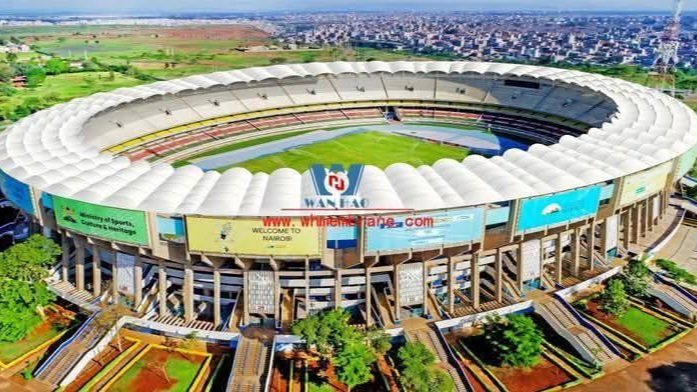

Kenya faces an intensive construction and renovation schedule following a Confederation of African Football (CAF) assessment that found the country's stadium infrastructure currently fails to meet required standards. The inspection report, which followed visits in February 2026, indicates that all three proposed venues in Nairobi are in various stages of construction or require significant corrective work to reach Category 4 status.
The report highlights that the national infrastructure programme remains in a mixed phase of development. While Kenya has the advantage of a strong metropolitan environment in Nairobi, including established transport and hospitality sectors, the actual sporting facilities are not yet ready for the continental showpiece.
The Moi International Sports Centre, Kasarani, long considered the country's primary stadium, is currently undergoing major upgrades. According to CAF, the venue requires extensive intervention, including a total reconstruction of the competition pitch to improve drainage and irrigation. Technical requirements also include the installation of a 3000-lux lighting system to meet modern broadcast needs, alongside new safety systems for fire detection and access control.
The Talanta Sports City project is being monitored as a critical new-build facility. While it offers a path to meeting CAF standards from the ground up, the project remains under construction with a shifting delivery timeline. Recent reports indicate the completion date has moved toward mid-2026, and CAF has demanded at least 80 percent completion of the facility within the coming months to remain on schedule.
The assessment for Nyayo National Stadium is less certain, with the facility described as having limited feasibility as a competition venue in its current state. CAF noted a lack of a detailed renovation master plan and suggested the stadium might be better suited as a training ground unless substantial structural expansions and modernisations are fast-tracked.
Government officials, including Sports Cabinet Secretary Salim Mvurya, have maintained that the projects remain on track despite these findings. The Ministry is currently working to secure a KES 3.9 billion hosting fee payment due to CAF by the end of March. The locals and sports stakeholders are closely watching these developments as the nation approaches a decisive implementation phase between March and August 2026.
CAF has scheduled the next major inspection for August, by which time Kenya must demonstrate tangible progress in system installations and structural works. The continental body emphasized that the period leading to late 2026 will be the final window to ensure stadiums are operationally ready before the tournament's 2027 kickoff.
To maintain the hosting rights within the joint Pamoja bid, the state must also address training infrastructure. Several secondary sites, including the Raila Odinga International Stadium and various community grounds, require pitch rehabilitation and lighting certifications of at least 500 lux to serve as compliant training bases.
Comments (0)
Leave a Comment
No comments yet. Be the first to share your thoughts!