
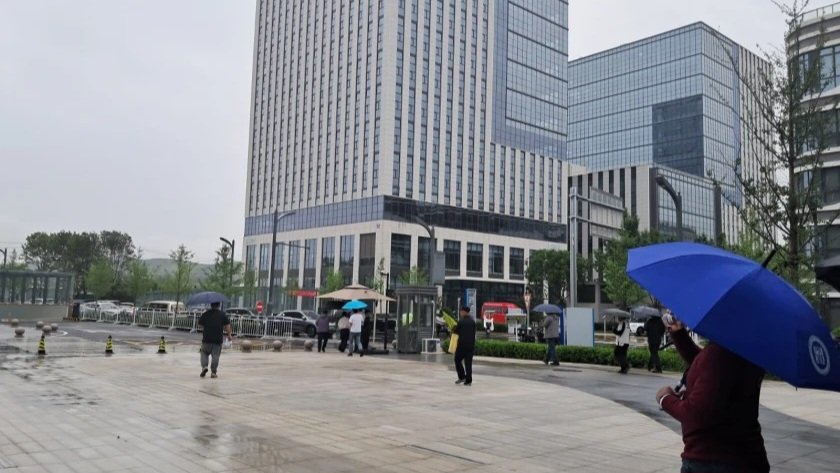

The physical landscape of the technology sector is undergoing a rapid transition as national governments increasingly view specialized industrial parks as essential economic assets.
In October 2025, China unveiled the ZGC (Jingxi) Artificial Intelligence (AI) Technology Park in Beijing, a dedicated development designed to support enterprises and build a complete ecosystem for technological development.
The specialized technology park functions as a centralized base for firms offering technical applications across manufacturing, meteorology, design, medicine, finance, and energy.
According to He Fen, the Managing Director of the ZGC, the specialized zone will play a critical role in accelerating domestic growth as China targets global leadership in the sector.
The infrastructure project supports established local platforms, including High-Flyer's DeepSeek and Alibaba's Qwen, while simultaneously providing office and research facilities for emerging startups like Zhipu AI.
Firms operating within the precinct focus on delivering advanced robotics, industrial 3D printing, and automated research systems, integrating software production directly with heavy industrial manufacturing.
A core driver behind the specialized industrial park is the push by the Chinese government to establish independent supply chains for critical components.
Domestic telecommunications provider Huawei has increasingly dominated the local semiconductor supply chain, stepping up manufacturing capabilities to meet the growing domestic demand for advanced computing hardware.
This infrastructure push aligns directly with state policy directives.
Early in 2026, the Chinese government introduced its latest five-year social and economic development plan, setting explicit goals to achieve total self-reliance in science and technology.
Beyond securing component manufacturing pipelines, the state strategy focuses heavily on driving down development costs.
Managing Director Fen noted that creating affordable software solutions remains a priority to ensure widespread adoption across both public services and private industrial operations.
The global impact of these localized technical platforms is already visible.
Data from a 2025 Global AI Adoption Report published by the Microsoft AI Economy Institute highlighted a substantial rise in international usage of the Chinese open-source platform DeepSeek.
The research revealed that the platform has secured significant market share in developing regions that were previously underserved by traditional technology corporations.
President Jinping confirmed that domestic research groups have secured major breakthroughs in the design and production of homegrown microchips, reducing the domestic market's reliance on imported hardware components.
The shifting landscape has caused concern among established Western firms, with Nvidia Chief Executive Officer (CEO) Jensen Huang acknowledging that the American chipmaker has lost ground within the Chinese market.
Comments (0)
Leave a Comment
No comments yet. Be the first to share your thoughts!