
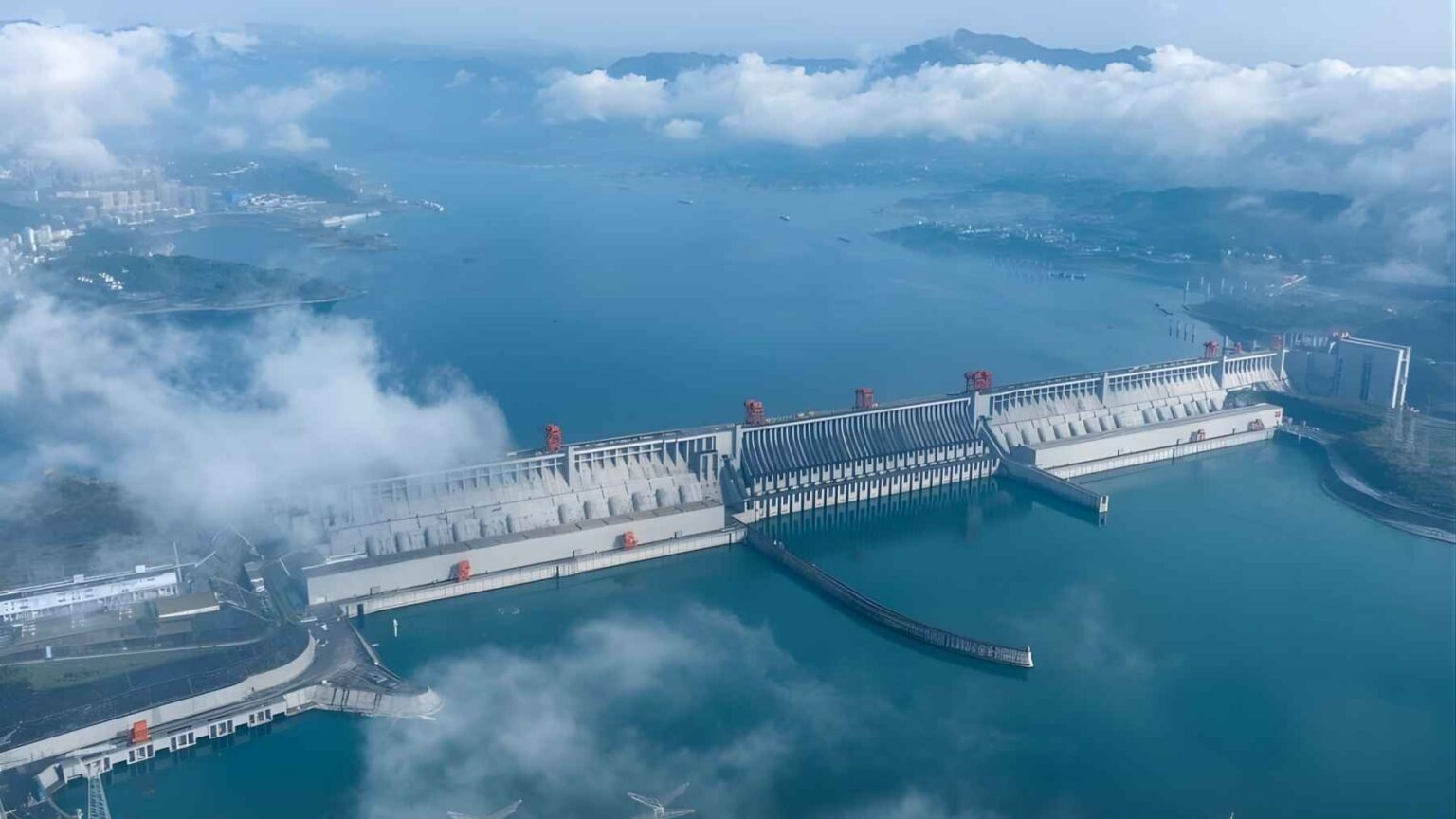

Construction authorities in China are shifting focus toward a massive new hydropower development on the Tibetan Plateau that is expected to surpass the electricity generation of the Three Gorges Dam by a factor of three. The proposed complex, situated in Medog County, carries an estimated price tag of approximately 1.2 trillion yuan and represents a significant expansion of the country’s renewable energy infrastructure.
The project centers on the Yarlung Zangbo River, where the geography offers a dramatic 2,000-meter drop over a 50-kilometer stretch known as the Great Bend. Engineers plan to utilize this natural elevation change to drive a series of five cascade hydropower stations. Once fully operational, these facilities are projected to generate about 300 billion kilowatt-hours of electricity each year, a volume roughly equivalent to the total annual power consumption of the United Kingdom.
This development follows the legacy of the Three Gorges Dam, a structure so massive that it physically influenced the planet’s dynamics. Completed in 2006 with its final turbines commissioned in 2012, the Three Gorges Dam holds 40 billion cubic meters of water. According to NASA researchers, the redistribution of this immense mass shifted the Earth’s axis by approximately 2 centimeters and lengthened the day by 0.06 microseconds.
While the Three Gorges project remains the world’s largest power station by installed capacity at 22,500 megawatts, the new Tibetan initiative seeks to harness even greater untapped potential in a more remote, high-altitude region. The plan involves digging four 20-kilometer tunnels through the Namcha Barwa mountain to divert water to lower elevations, maximizing the energy produced by gravity before returning the flow to the riverbed.
Construction of such magnitude in the Himalayas presents unique engineering hurdles, including the management of seismic risks and the logistical difficulty of transporting materials to the Tibetan Plateau. The region is known for high tectonic activity, and the project has drawn attention from downstream neighbors, including India and Bangladesh, regarding water security and sediment flow.
Beijing has maintained that the project is essential for meeting its 2060 carbon-neutrality goals and supporting the energy demands of its expanding data centers and industrial hubs. Government officials argue that the run-of-the-river design will allow water to flow naturally while providing a stable, clean energy source that reduces the national reliance on coal.
For the global construction industry, the project serves as a test of modern civil engineering limits. The sheer scale of the tunneling and the investment required place it among the most expensive infrastructure undertakings in history. As work progresses in Medog, the international community continues to monitor how this second intervention in planetary-scale infrastructure will impact both the regional environment and the global energy landscape.
Comments (0)
Leave a Comment
No comments yet. Be the first to share your thoughts!