
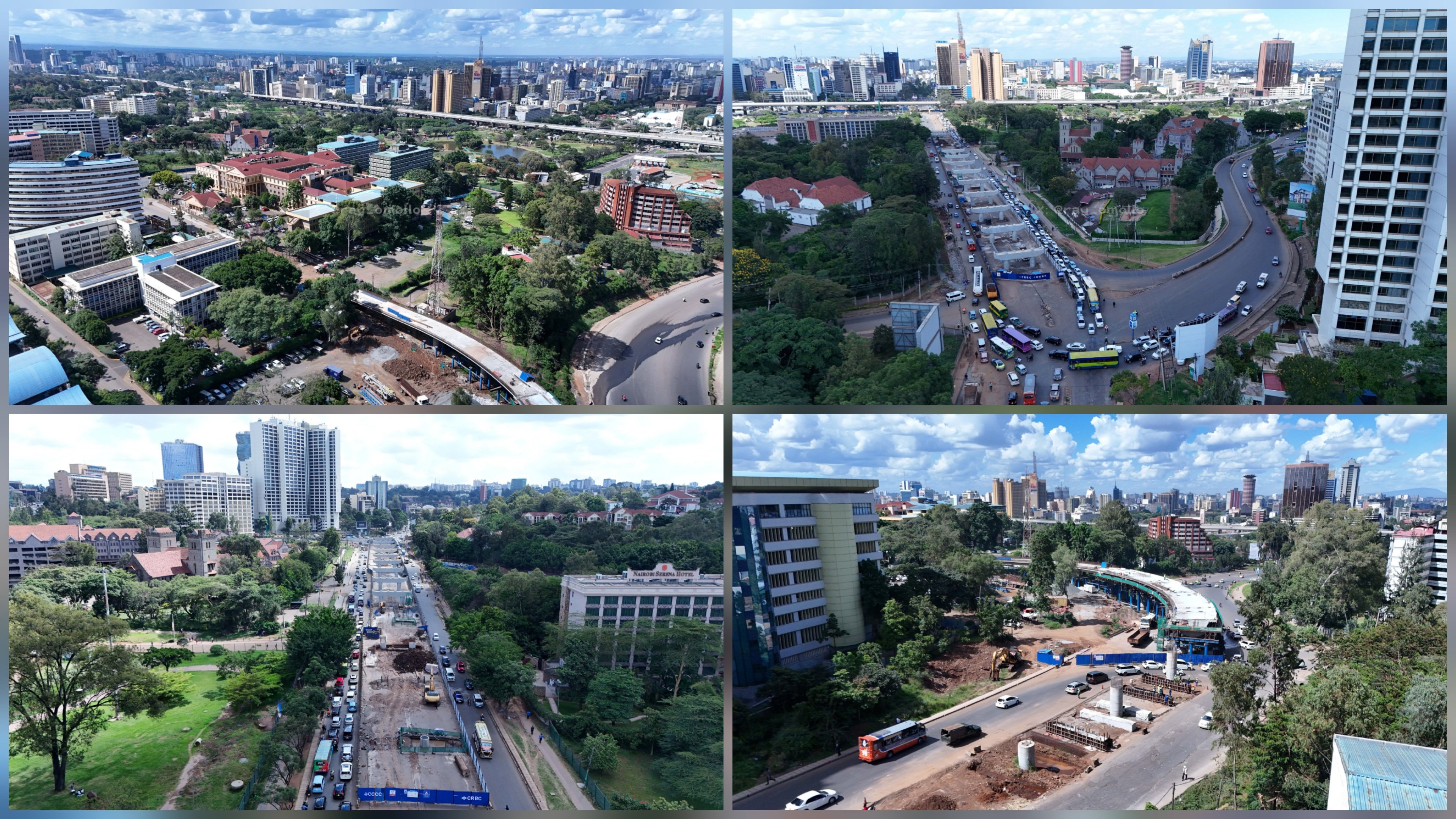

Construction of the Kenyatta Avenue Viaduct is moving into a critical phase as civil works become increasingly visible across the Nairobi city center. The project, managed by the Kenya Urban Roads Authority, is designed to address the persistent gridlock that has long hampered movement between Valley Road and the Central Business District.
Interior Principal Secretary Raymond Omollo confirmed on Monday that the installation of reinforced concrete piers and substructures is largely complete along the designated corridor. Current superstructure activities are concentrated around the NHIF Building, where contractors have already started elevating sections of the road deck.
The viaduct stretches approximately one kilometre, starting from the Integrity Centre and terminating near the Serena Hotel. By lifting through-traffic above existing intersections, the elevated dual carriageway aims to remove a significant bottleneck for motorists entering the city core from the western side of the capital.
Beyond motorized transport, the design incorporates integrated cycle lanes and pedestrian walkways. These features are intended to support non-motorized transport, a growing priority in Nairobi’s urban planning to ensure safer movement for commuters who do not use vehicles.
Engineers are also installing modern drainage systems as part of the civil works. These systems are being built to mitigate urban flooding, a recurring issue in the CBD that often contributes to rapid pavement deterioration and traffic paralysis during the rainy seasons.
The State Department for Internal Security and National Administration is maintaining a presence on-site to oversee traffic management and security compliance. This involvement ensures that the ongoing construction does not entirely halt movement on the busy Kenyatta Avenue artery.
This infrastructure intervention is part of a broader government strategy to modernize the capital’s road network. The project follows a period of stagnation that saw works resume under a new financing framework, with China Road and Bridge Corporation serving as the main contractor for the estimated Sh2.9 billion development.
The completion of the viaduct, expected within the next year, will complement other recent projects like the Ngong Road–Naivasha Road overpass. Once fully operational, the viaduct is projected to significantly reduce the time required to transit between the city’s western suburbs and the primary business district.
Comments (0)
Leave a Comment
No comments yet. Be the first to share your thoughts!