
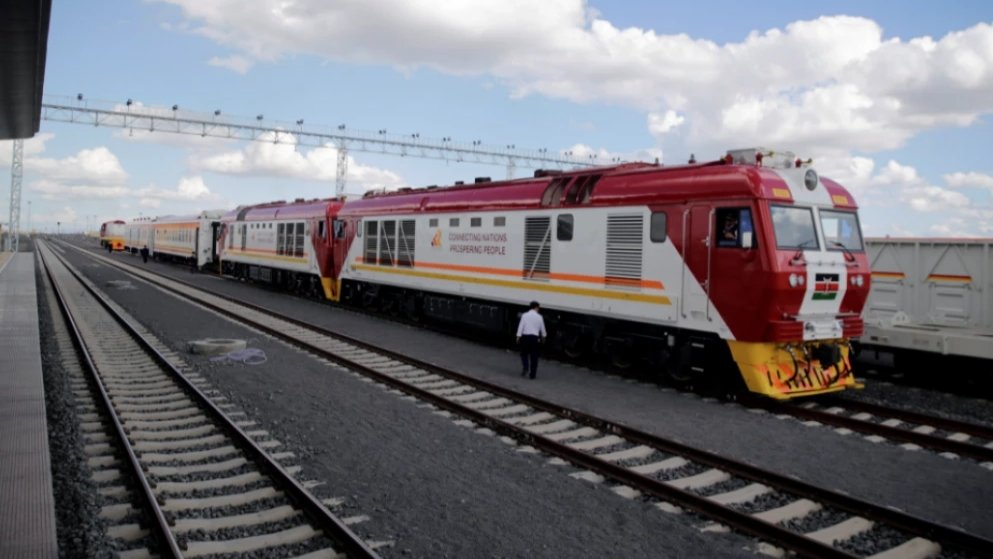

President William Ruto will preside over the groundbreaking ceremony for the Standard Gauge Railway extension to Kisumu on March 20, signaling the start of a long-awaited infrastructure push in western Kenya. The event follows cabinet approval two months ago for phase 2B, a 269-kilometer stretch designed to connect Naivasha to the lakeside city.
Kenya Railways Managing Director Philip Mainga outlined the timeline during a briefing in Kisumu on Tuesday, where local leaders gathered to discuss the project's details. He confirmed that construction would wrap up by June 2027, allowing for smoother transport of goods and passengers across the region. The line includes a 264-kilometer main track and an 8.6-kilometer spur to Kisumu port, with capacity to handle 4,000 tonnes of freight.
Work begins soon on identifying landowners and residents affected by the route, which requires about 5,000 acres for the rail corridor. Mainga stressed the need for community cooperation in this process, noting that the alignment is fixed and any alterations, even minor ones, could derail the entire plan. "The route has been finalised, identified and costed," he said. "We cannot change it simply because if you change even 100 metres of a railway line it will go offline. It is not like a road."
Local concerns surfaced quickly at the meeting. Kisumu West MP Roza Buyu pointed out potential disruptions, including the displacement of a school and several homes along the mapped path. "We know that the areas that are mapped will knock off one of our schools," she said. "We know that homes are going to be affected, so my people are really eager to hear from Kenya Railways on the issue of compensation." Mainga assured attendees that compensation efforts would prioritize fairness, urging leaders to help sensitize communities ahead of surveys.
Kisumu Governor Anyang' Nyong'o highlighted the broader economic ripple effects, describing the project as a catalyst for regional integration. "Kisumu stands to emerge as a multimodal logistics hub," he said. "It integrates rail, lake transport and road networks. This synergy will unlock commerce in Uganda, Tanzania, Rwanda, South Sudan and beyond." The extension aligns with ongoing efforts to revive lake transport on Victoria, potentially drawing cargo from neighboring countries that currently rely on slower road options.
The Standard Gauge Railway, or SGR, represents one of Kenya's largest infrastructure investments in recent decades. The initial Mombasa-to-Nairobi section, spanning 472 kilometers, opened in 2017 after construction by the China Road and Bridge Corporation with funding from the Chinese government. That phase transformed passenger and freight movement along the coast-to-capital corridor, cutting travel times from over 10 hours by road to about four by rail. Freight volumes have since climbed, with the line handling millions of tonnes annually, though operational challenges like high tariffs have drawn criticism.
The subsequent Nairobi-to-Naivasha extension, completed in 2019, added 120 kilometers and aimed to link inland dry ports. However, progress stalled amid funding disputes and shifting priorities, leaving the Naivasha-to-Kisumu leg in limbo until recent approvals. This latest phase revives ambitions for a full Mombasa-to-Malaba line, originally envisioned as part of the East African railway network connecting to Uganda.
Beyond transport efficiency, the project promises job creation during construction, with thousands of workers expected on site over the next year. Local suppliers could benefit from contracts for materials, while improved connectivity might spur agro-processing and tourism in Kisumu County. Yet questions linger over financing details, as the government has not disclosed fresh loan terms or budget allocations in public statements.
Environmental assessments for the route, conducted earlier, factored in wetlands near Lake Victoria, mandating measures to minimize ecological impact. Rail advocates argue the line will reduce carbon emissions by shifting heavy cargo from trucks, aligning with Kenya's climate commitments under international agreements.
As preparations ramp up, Kisumu residents anticipate both opportunities and upheaval. The port branch could revitalize maritime trade, dormant since colonial-era rail links faded. Cargo vessels on Lake Victoria once ferried goods to ports in Uganda and Tanzania, but infrastructure decay shifted reliance to roads plagued by congestion and accidents.
Mainga called for patience during land acquisition, emphasizing transparent valuations to avoid disputes seen in past projects. Buyu echoed this, urging swift communication to ease anxieties among affected families.
With groundbreaking just weeks away, the extension marks a concrete step toward integrating western Kenya into the national rail grid. Completion in 2027 would cap a decade-long effort to modernize transport, potentially reshaping trade patterns across East Africa.
Comments (0)
Leave a Comment
No comments yet. Be the first to share your thoughts!