
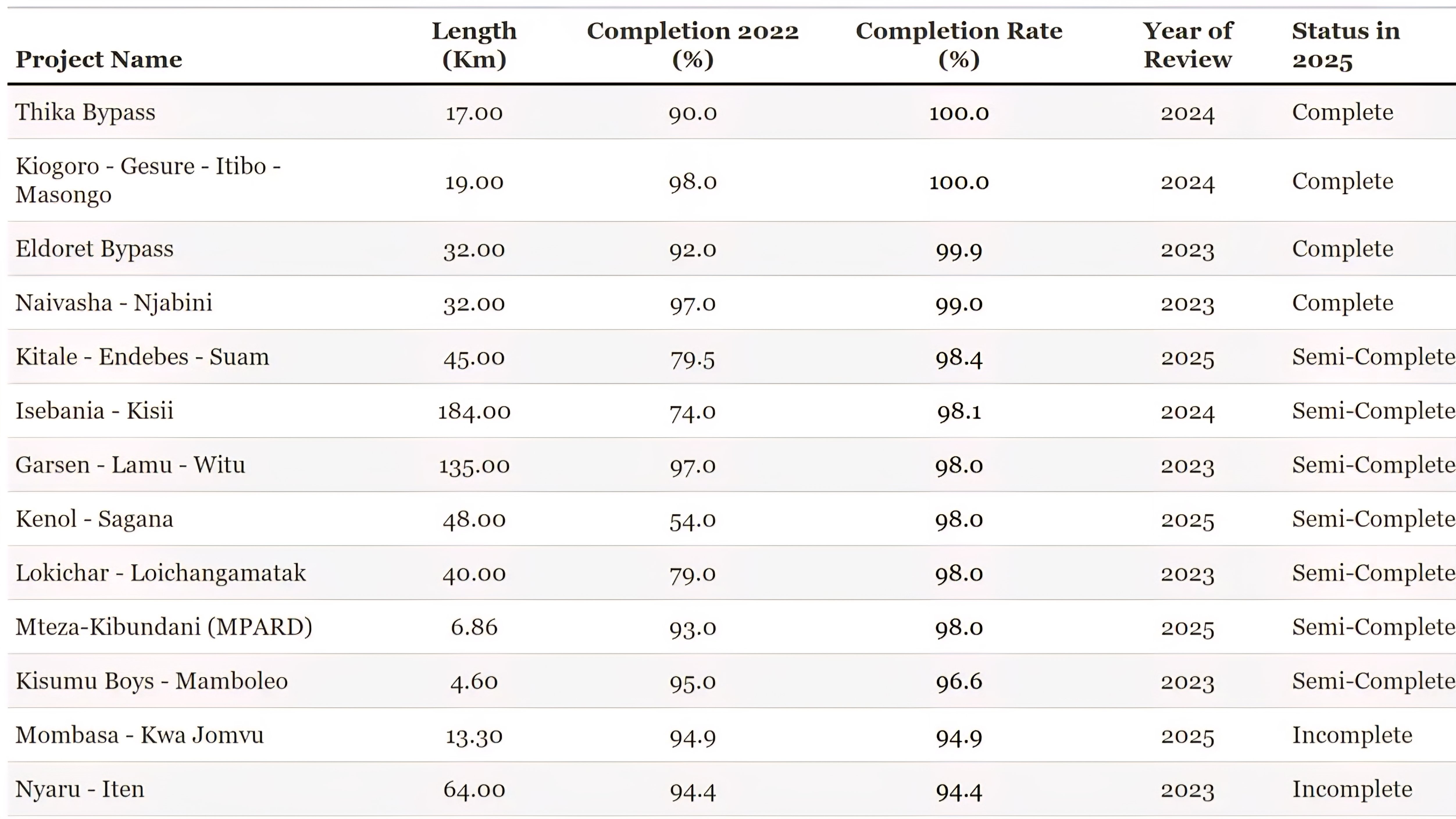

A comprehensive data assessment of major road projects inherited by the current administration in 2022 highlights a mixed record of completion across Kenya. The figures, compiled up to December 2025, track dozens of critical transport corridors that underwent transition between presidential terms.
According to the tracking data, only a handful of projects have achieved full completion. Among these finished routes are the 32-kilometer Eldoret Bypass and the 32-kilometer Naivasha to Njabini road, both of which reached one hundred percent status.
Several expansive highway contracts fall under the semi-complete category. The 46-kilometer Kenol to Sagana dual carriageway stands out here, alongside the 135-kilometer Garissa to Lamu to Witu link, which recorded strong progress, but fell short of total handover.
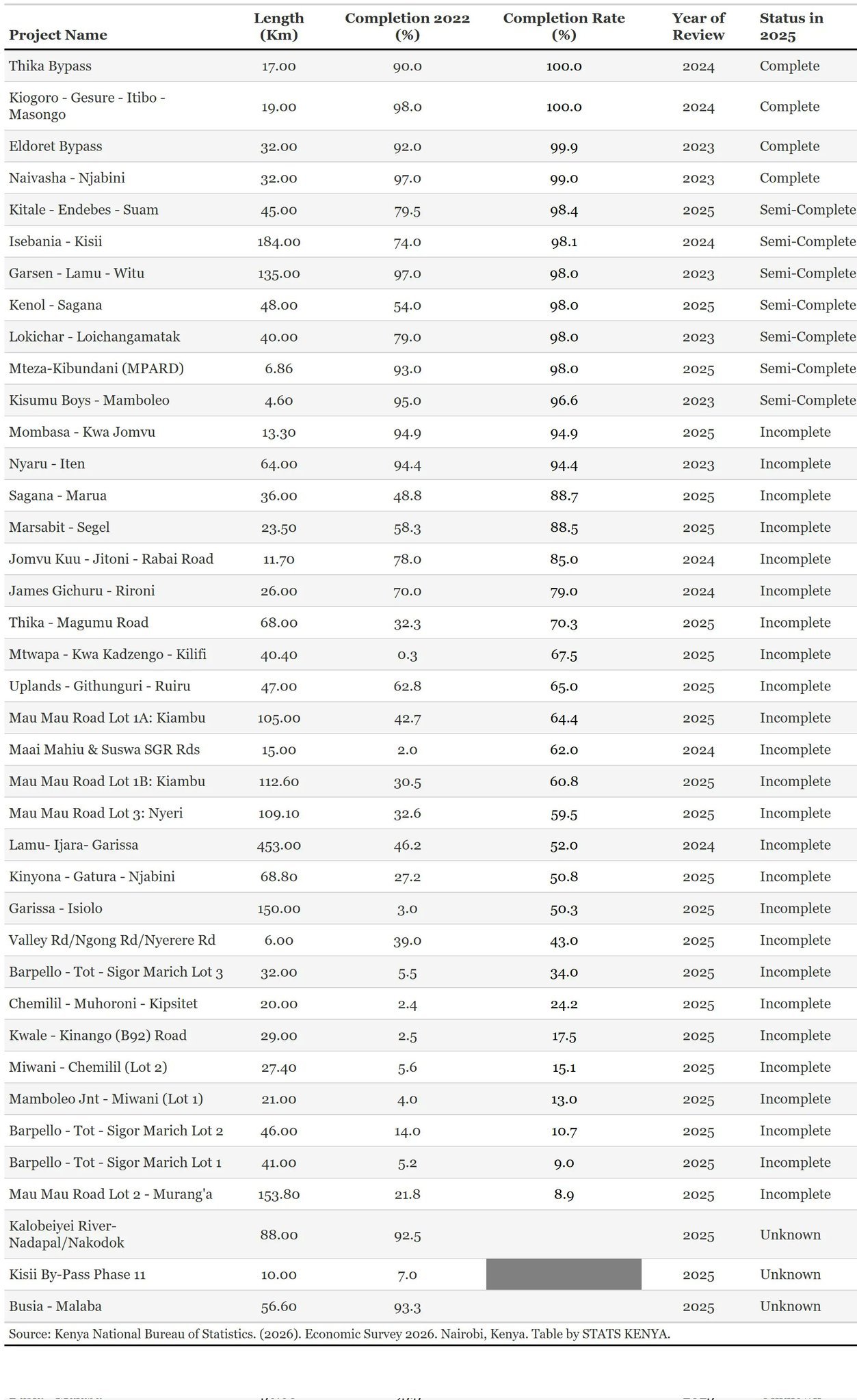
The Kenya National Highways Authority (KeNHA) manages most of these inter-county corridors, which are vital for regional trade. Other semi-complete roads include the 45-kilometer Kitale to Endebess to Suam highway, and the 40-kilometer Lokichar to Loichangamatak section.
Urban upgrades also show split results. For instance, the short, but critical 4-kilometer Kisumu Boys to Mamboleo road is classified as semi-complete, which means localized traffic disruptions continue to affect commuting times in the lakeside city.
However, a substantial portion of the inherited network remains distinctly incomplete. The data lists long-delayed infrastructure initiatives, including the 26-kilometer James Gichuru to Rironi highway expansion, which has stalled at a stubborn seventy-eight percent completion rate.
The multi-lot Mau Mau Road project represents another significant area of concern. Lot 1B in Kiambu County, covering 103 kilometers, has only attained a sixty-four percent completion mark, while the 15-kilometer Lot 2B in Nyeri County lingers at sixty percent.
Funding constraints and pending bills historically hamper these large public works, although President Ruto has repeatedly pledged to clear arrears to contractors. The Kenya Rural Roads Authority (KeRRA) faces similar fiscal hurdles, when managing lower-volume connectivity routes.
Other stalled arteries include the 68-kilometer Thika to Magumu Road, and the 40.4-kilometer Mtwapa to Kwa Kadzengo to Kilifi development. These links are vital for the tourism and agricultural sectors, but progress has remained sluggish.
Delays on the coast road affect transport efficiency between Mombasa and Malindi, which harms local businesses. Sector experts indicate that contractual disputes often pause active construction, if treasury disbursements face unexpected gaps during the financial year.
The current state of affairs emphasizes the massive backlog facing the Ministry of Roads and Transport. Inheriting over a hundred active sites presents administrative issues, because resource allocation must balance new campaign promises against old legal obligations.
Contractors on the Mau Mau network have periodically demobilized heavy machinery from site locations. This intermittent activity frustrates residents, who expected rapid completion after the transition of power three years ago.
The data also marks several projects as unknown, which indicates a total lack of verifiable reporting from certain remote jurisdictions. This transparency gap complicates independent monitoring of public infrastructure investments across the nation.
As the administration crosses the midway mark of its current tenure, finishing these legacy links is crucial. Observers note that outstanding roads will determine the overall infrastructure legacy of President Ruto, before the next electoral cycle begins.
Comments (0)
Leave a Comment
No comments yet. Be the first to share your thoughts!