
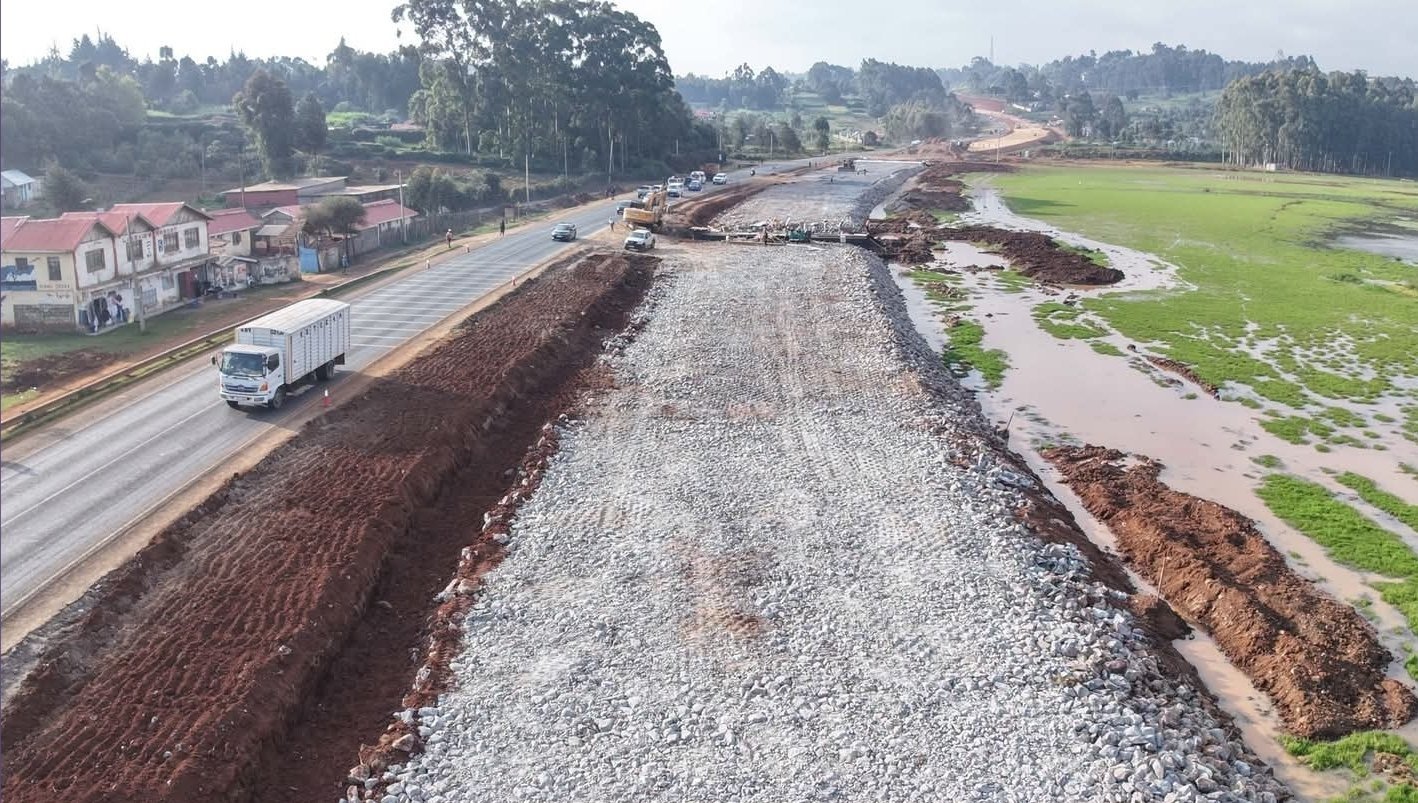

Heavy machinery is now working around the clock on the Rironi-Nakuru-Mau Summit Highway. Contractors are carrying out earthworks, road widening, drainage works and structural construction to convert this Northern Corridor bottleneck into a modern dual carriageway.
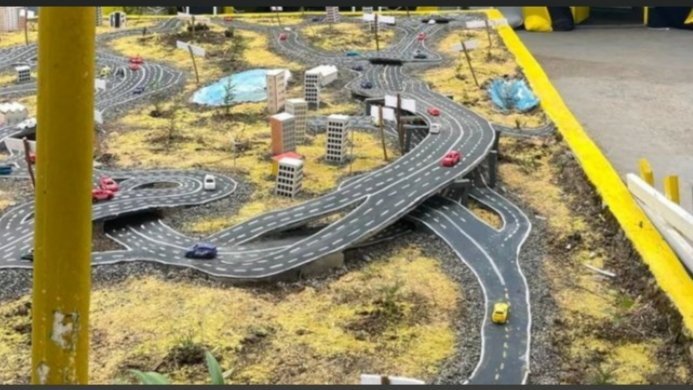
Rironi-Mau Summit Highway dualing project model /Kenyans
The project covers roughly 175 kilometres of the A8 highway between Rironi and Mau Summit, plus a 58-kilometre branch through Mai Mahiu and Naivasha. Crews are cutting into hillsides and filling low sections to create a wider, flatter road alignment.
This cut-and-fill process starts every major road upgrade. Excavators dig into ridges to lower high points while dump trucks haul the loosened material into valleys to build embankments. Engineers monitor moisture content closely during this stage.
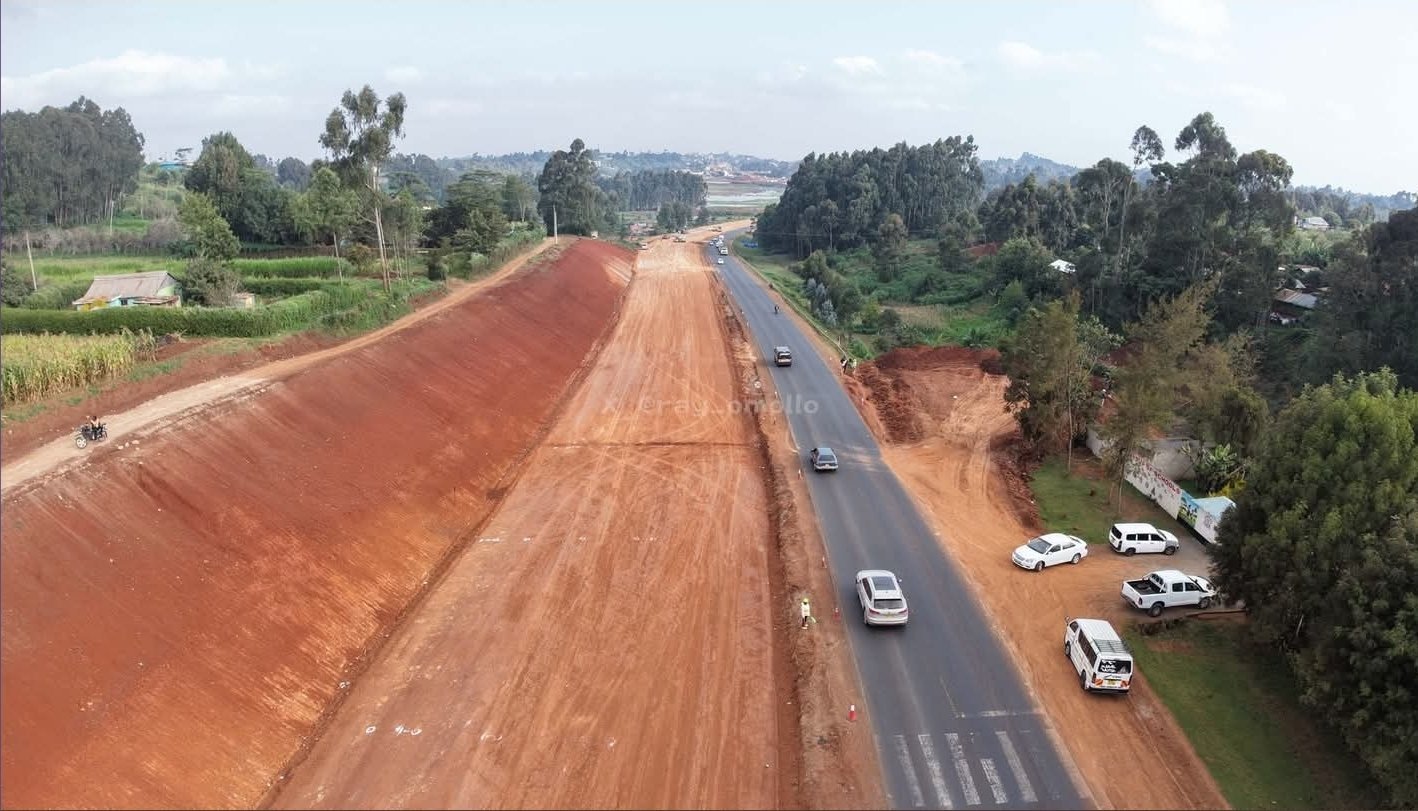
Compacted section July 6 /Handout
Compaction quality at this point determines how the finished road will perform. Poorly compacted fill can settle unevenly months later, cracking the pavement above it. Vibratory rollers pass repeatedly over each layer until density tests confirm the required strength. Assigned quality assurance officials have the responsibility of confirming this, led by teams from the Kenya National Highways Authority (KeNHA).
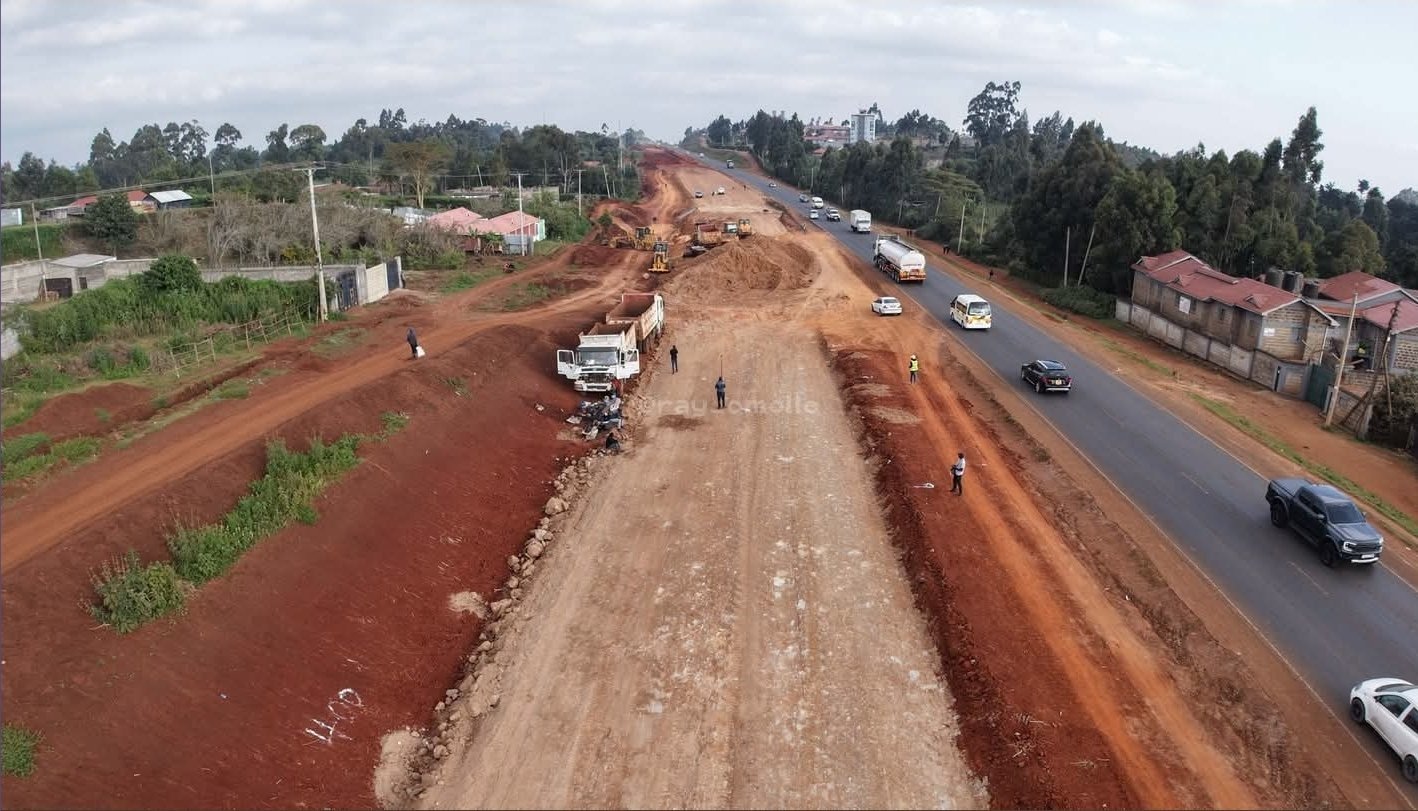
Cut, fill, compact /Handout
Once the subgrade is shaped and compacted, crews build up the pavement structure layer by layer. A sub-base of crushed stone or gravel sits above the subgrade, followed by a base course, then a dry lean concrete layer in sections needing extra rigidity.
Dry lean concrete, often shortened to DLC, is a low-cement concrete mix spread beneath the final surface. It spreads traffic loads evenly and resists cracking better than gravel alone, particularly under the highway's projected heavy truck volumes.
Bitumen surfacing goes on last, usually as two layers, a binder course followed by a thinner wearing course. Each layer must meet thickness and compaction targets before the next is placed, since shortcuts here shorten the road's working life.
Drainage work runs alongside the earthworks rather than after them. Culverts are being built under the carriageway at low points to carry seasonal streams and runoff safely beneath the road instead of across it.
Retaining walls will go up later in sections where the new lanes cut close to steep ground. These structures will hold back soil, protecting the widened carriageway from slippage on the escarpment's more unstable slopes, once earthworks reach those points.
In steeper, wetter sections, contractors are also installing gabion walls, wire baskets packed with stones, to hold cut slopes in place. Water passes through the gaps while the stones keep the soil from washing away during heavy rains.
The existing two-lane road stays open to traffic through most sections while new carriageways rise beside it. This keeps commercial and passenger traffic moving but requires diversions, temporary signage and speed controls near active work zones.
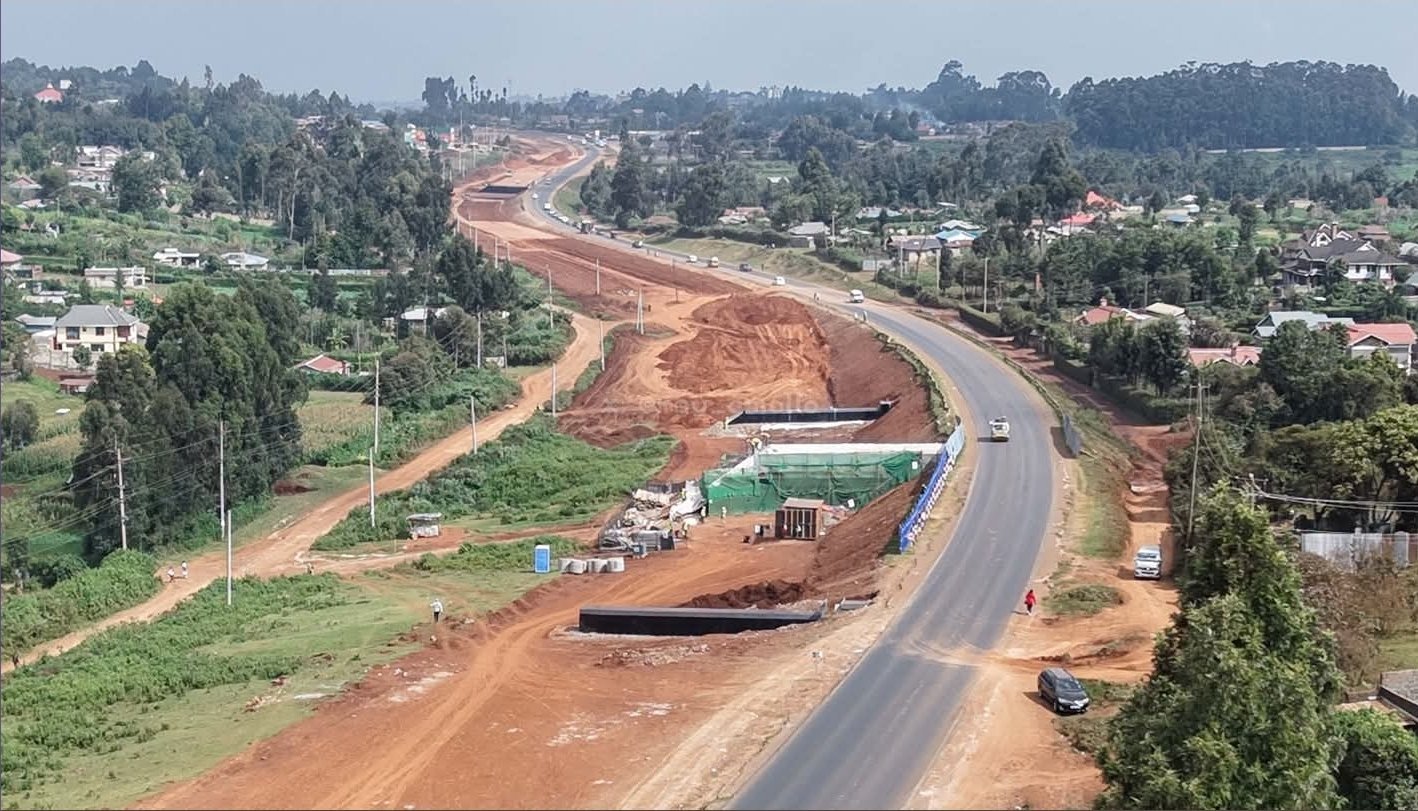
Culvert works /Handout
Smaller bridges and culverts are already going up at several points along the route, carrying the new lanes over streams and access roads. Larger structures, including the planned viaduct through Nakuru town, will follow once earthworks reach those sections.
Dedicated climbing lanes are planned for steep stretches, including the escarpment section. These extra lanes let heavy trucks crawl uphill at their own pace without slowing faster traffic in the main carriageway lanes.
Two contractors are handling different stretches at once. China Road and Bridge Corporation, working with the National Social Security Fund, covers sections including Rironi and Gilgil, while Shandong is advancing works around Kariandusi and Mau Summit.
The Rironi-Gilgil stretch is targeted for completion within 2026, with the wider Rironi-Naivasha-Gilgil and Rironi-Mai Mahiu-Naivasha sections expected to open by April 2027. The full corridor to Mau Summit is expected to follow.
Once open, the highway will operate as a toll road for about 30 years under its public-private partnership agreement, with a proposed tariff of roughly eight shillings per kilometre for the full stretch between Nairobi and Nakuru.
The Nakuru-Eldoret corridor, including the Mau Summit stretch, has recorded far too many fatal crashes over the years. Motorists are urged to drive with extra caution through active work zones as construction continues along the route.
Comments (0)
Leave a Comment
No comments yet. Be the first to share your thoughts!