
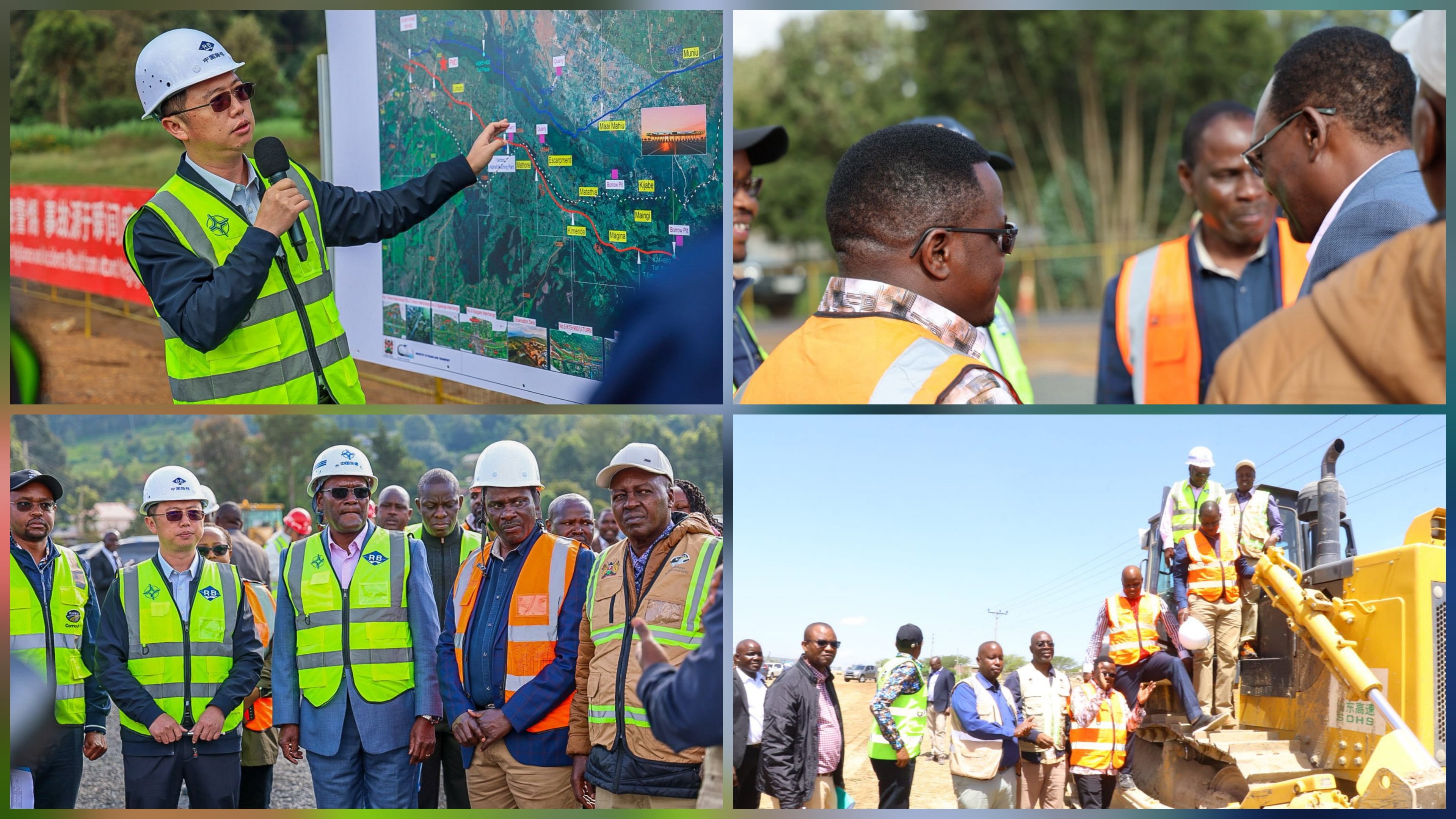

A high-level delegation of state officials has conducted an extensive site inspection along the Rironi–Nakuru–Mau Summit Highway Project, where large-scale implementation works are underway across multiple sections of the transport corridor.
The monitoring exercise was led by Public Private Partnerships (PPP) Director-General Eng. Kefa Seda, who was accompanied by National Treasury Principal Secretary (PS) Dr. Chris Kiptoo, State Department for Investment Promotion (SDPI) PS Cyrell Odede, and State Department for Roads PS Eng. Joseph Mbugua. Members of the PPP Committee also joined the tour to assess the rollout of the infrastructure investment.
The inspection team tracking the development focused on active operations, including major earthworks, excavation activities, culvert installation, and drainage works. Contractors are also advancing with embankment formation, fill layer processing, site clearance, and traffic management interventions across the designated project zones.
Work on the corridor is split between different commercial entities. The consortium consisting of the China Road and Bridge Corporation (CRBC) and the National Social Security Fund (NSSF) is currently executing construction activities along the Rironi to Gilgil section.
Meanwhile, Shandong Hi-Speed Group is responsible for the section extending from Gilgil to Mau Summit. Heavy machinery, engineering personnel, and additional technical teams have been deployed by the contractors to accelerate site progress.
The state expects the deployment of these resources to push the project toward its targeted completion and subsequent commissioning for public usage by June next year.
The expansion is being executed under a Design, Finance, Build, Operate, Maintain and Transfer (DFBOMT) framework, making it a critical asset under the country's public-private financing model.
The scope of the infrastructure development involves upgrading the corridor into dual carriageway sections, alongside rehabilitation, general upgrading, and the integration of dedicated toll infrastructure designed for long-term corridor management.
By expanding the capacity of the road, the government aims to ease traffic congestion, improve travel efficiency, and support cargo mobility along the Northern Corridor, which serves as a vital trade artery for regional connectivity.
Officials noted that the active construction on the ground reflects the growing capability of the national PPP framework to mobilize long-term private financing and technical expertise, reducing direct fiscal strain on the state while delivering national infrastructure.
Comments (0)
Leave a Comment
No comments yet. Be the first to share your thoughts!