
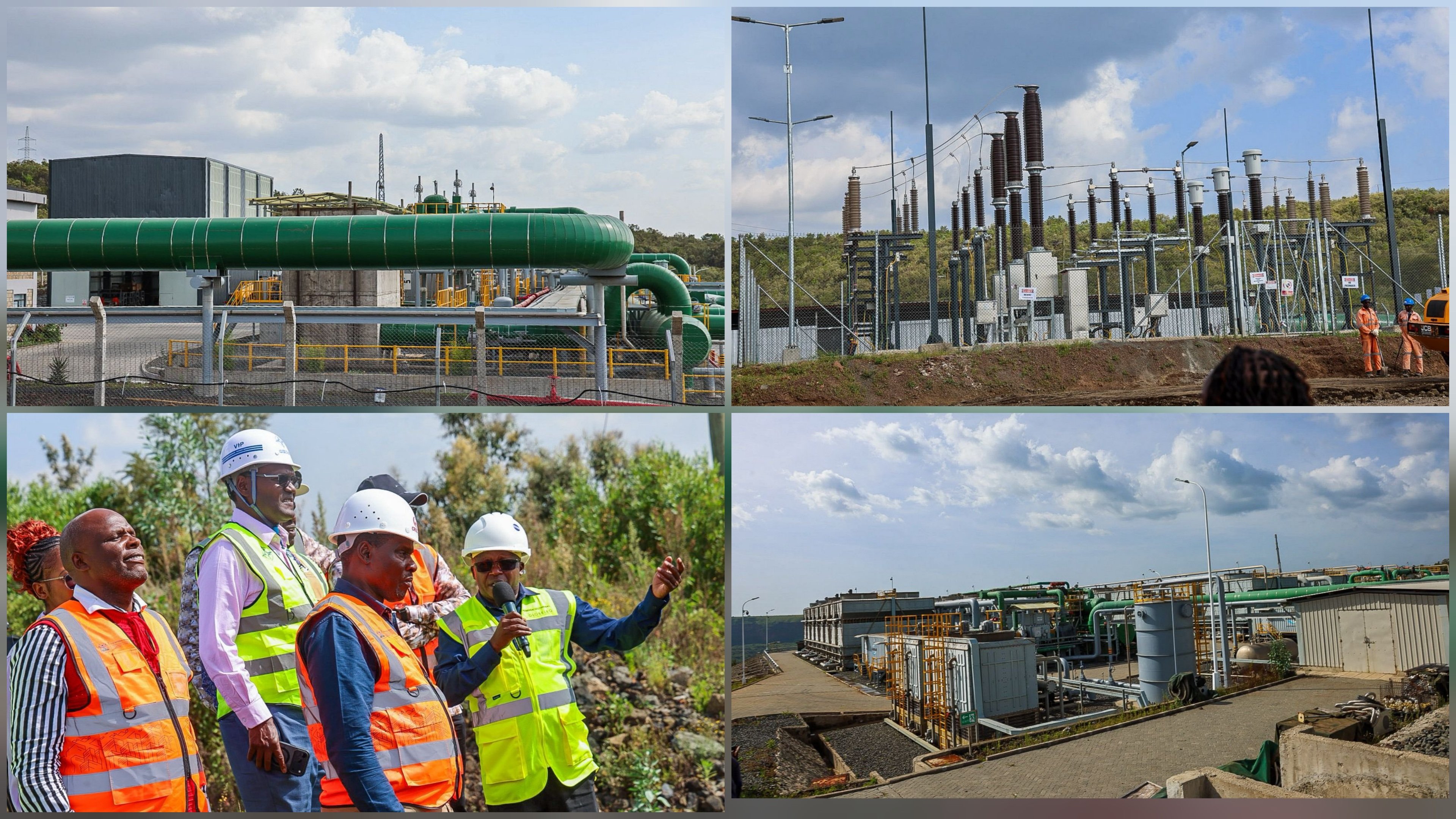

A senior government delegation has concluded an inspection tour of the Menengai Geothermal Development Project in Nakuru County, reviewing the field operations and the progress of the ongoing power generation programme.
The inspection was conducted by the Public Private Partnerships (PPP) Directorate Director General, Eng. Kefa Seda, alongside the Principal Secretary for the National Treasury, Dr. Chris Kiptoo.
They were joined by the Principal Secretary for Public Investments and Asset Management, Dr. Cyrell Odede, the Principal Secretary for Roads, Eng. Joseph Mbugua, and officials representing the PPP Committee.
The Menengai facility serves as an operational template for Kenya's infrastructure strategy, demonstrating how public sector intervention can absorb early-stage development hazards to attract commercial financiers.
Under the current framework, the state-backed Geothermal Development Company (GDC) manages the high-risk, capital-intensive upstream phase of the development.
This upfront work includes initial geothermal resource exploration, appraisal drilling, steam field development, reservoir management, and the construction of steam gathering infrastructure.
Once GDC verifies the steam supply, it routes the resource to independent power producers (IPPs) for electricity generation and eventual transmission into the national grid.
Officials note that this deliberate split substantially improves project bankability, lowers investor exposure to exploration uncertainty, and strengthens financing viability for large-scale energy networks.
The initial phase of the development targets a total capacity of 105MW, which is split equally across three separate 35MW power plants.
These three generation plants are being independently developed by Sosian Menengai Geothermal Power Limited, Globeleq Menengai Limited, and OrPower Twenty Two Limited.
Upon its full completion, the joint venture projects are intended to strengthen baseload electricity supply, enhance overall grid stability, and support industrial productivity.
The model provides a clear reference point for how state agencies can assume resource risks while leveraging private sector capital, operational expertise, and generation efficiency.
The strategy is becoming increasingly significant as national electricity demand rises, driven by economic expansion, manufacturing growth, and the ongoing push for long-term energy security.
Comments (0)
Leave a Comment
No comments yet. Be the first to share your thoughts!