

A version of this article appeared on Daily Nation.
The expansion of clean utility networks across East Africa highlights the contribution of technical professionals who established foundational infrastructure long before commercial project commissioning.
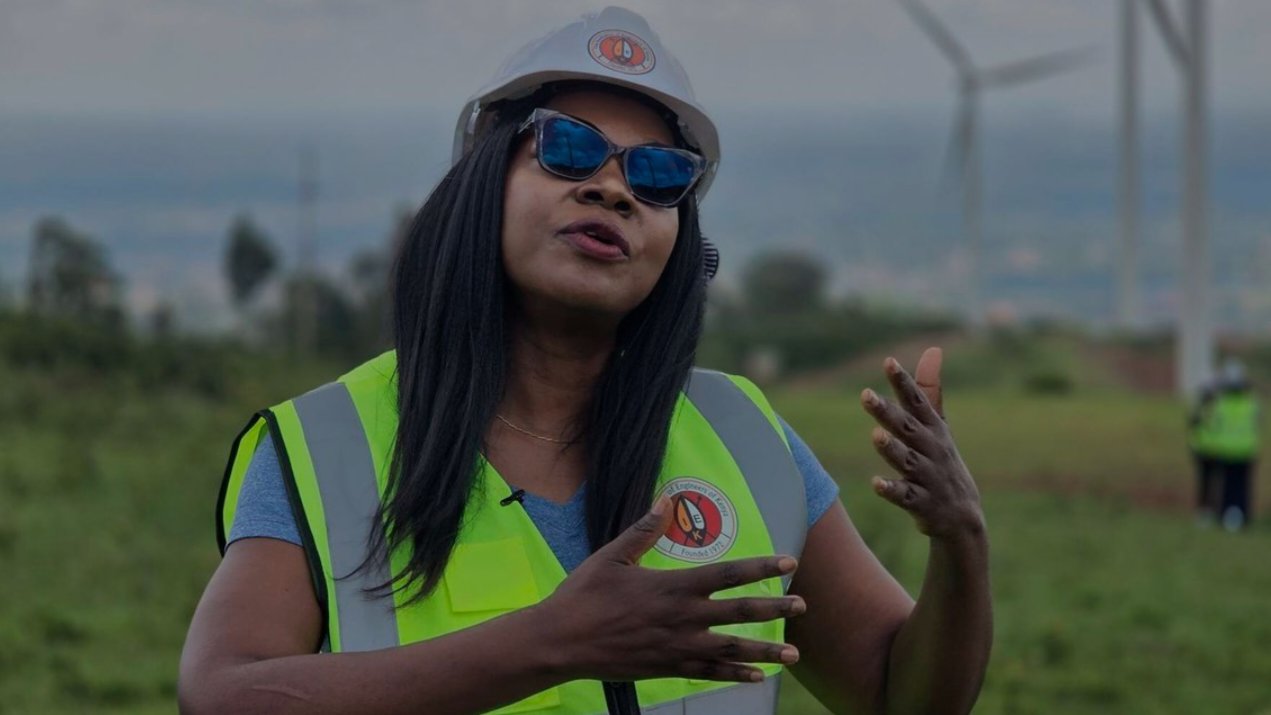
Engineer Jennifer Gache remains a central figure behind the deployment of the early wind energy framework in Kenya, utilizing specialised technical modeling to validate alternative power generation.
At a time when conventional thermal and hydro generation dominated the state grid, Gache advocated for alternative resource deployment across institutional levels.
Her initial technical evaluation faced skepticism from legacy operators who viewed large-scale wind arrays as an experimental utility format.
To refine local design capabilities, Gache completed specialized industrial training in wind power technology and predictive wind modeling in Malmö, Sweden.
This exposure allowed her to introduce rigorous data-driven engineering workflows to state energy planning committees upon her return.
She subsequently assumed the role of chief energy planner, managing regional supply forecasting alongside grid capacity pipelines.
During this tenure, she coordinated directly with the Ministry of Energy (MOE) to build the first comprehensive national wind energy map.
This infrastructure map served as the primary technical reference for independent power producers evaluating commercial wind resource viability across the country.
Her field engineering operations led to the installation of testing infrastructure in remote public corridors.
In Bubisa within Marsabit, and Loiyangalani within Turkana, Gache managed the structural specifications for 50-metre-high wind masts.
These test masts were deployed across 12 strategic sites to gather continuous meteorological data for public grid integration.
Beyond renewable infrastructure, Gache transitioned into early-stage thermal and nuclear baseline planning.
In 2009, she assumed the role of regional coordinator for inter-governmental sessions aimed at outlining the institutional requirements of a national nuclear power program.
Her engineering focus directed local resources toward building long-term technical capacity and defining the specialized physical infrastructure needed for future nuclear plants.
Through ongoing mentorship initiatives, Gache continues to advocate for structured professional pipelines for women entering heavy engineering fields across Africa.
Comments (0)
Leave a Comment
No comments yet. Be the first to share your thoughts!