
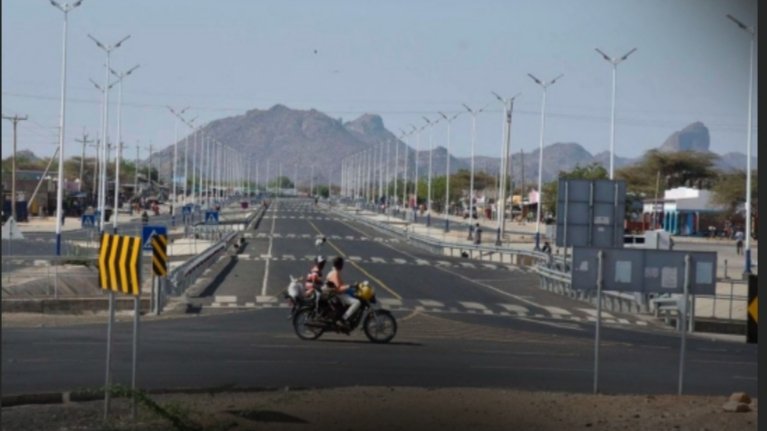

For decades, the vast and arid landscape of Turkana County has been associated with isolation and underdevelopment. Separated by rugged terrain and poor transport infrastructure, communities along the borders of Kenya, Ethiopia, and South Sudan have historically struggled to access markets, healthcare, education, and other essential services. Economic growth remained slow as traders and transporters faced major challenges moving goods across the region. Today, however, Northern Kenya is experiencing a major infrastructure transformation that is steadily changing the face of Turkana and positioning it as a strategic gateway for regional trade and investment.
Through joint efforts between the Turkana County Government, the Roads Levy Maintenance Fund (RLMF), and national government agencies, critical road networks are being rehabilitated and upgraded to improve accessibility and unlock economic potential. The latest milestone in this effort includes the completion and reopening of two major road sections covering a combined 115 kilometers in Turkana North and Kibish sub-counties.
One of the completed projects is the 45-kilometer Kaikor-Napak Road in Kibish, a strategically important route expected to improve mobility and support trade activities along the border region. The second is the 70-kilometer Lorogon-Nakwamoru Road in Aroo, which has undergone significant improvements to enhance surface quality, drainage systems, and year-round accessibility. Previously, sections of the road were regularly damaged during heavy rains and flash floods, making transport difficult for residents and businesses. The upgraded roads now provide safer and more reliable transport corridors for people, goods, and services.
According to Turkana County Chief Officer for Roads Mark Achilla, the projects are part of a wider plan aimed at strengthening key socio-economic corridors across the county. For professionals in the construction and engineering sectors, the successful delivery of these projects under harsh climatic conditions highlights the growing importance of climate-resilient infrastructure, proper drainage systems, and durable road grading techniques in arid and semi-arid regions.
The impact of these infrastructure projects is already being felt in the construction and real estate sectors. Improved road accessibility is expected to significantly reduce the cost of transporting construction materials such as cement, steel, ballast, and timber from major supply centers like Lodwar and Kitale. For years, poor roads made construction expensive, forcing many towns in Turkana to rely on temporary or semi-permanent structures. With better transport networks now in place, developers and investors are beginning to view the region as a viable destination for commercial and institutional projects.
The infrastructure boom is also attracting large-scale government investments that could further transform Turkana into a regional trade hub. The Kenya Revenue Authority (KRA) has identified areas such as Todonyang in Turkana North for the planned construction of a One-Stop Border Post (OSBP). The facility is expected to include office buildings, truck parking yards, cargo inspection areas, and warehouse facilities designed to support cross-border trade. Such developments are likely to stimulate demand for commercial buildings, housing, hospitality facilities, and logistics infrastructure across nearby towns.
Meanwhile, urban centers such as Kainuk, strategically located along the Kitale-Lodwar highway, are rapidly evolving into busy commercial and transport centers. Increased movement of trucks, traders, and travelers is creating opportunities for businesses, contractors, suppliers, and service providers. As economic activity expands, the demand for modern retail spaces, fuel stations, hotels, and storage facilities is expected to grow steadily.
Beyond economic benefits, the improved road network is also contributing to better security and social stability in the region. In the past, poor roads limited the movement of security personnel and emergency services, leaving many remote communities vulnerable to cattle rustling and cross-border conflict. Improved connectivity is now enabling faster response times, safer movement of humanitarian aid, and increased government presence in previously inaccessible areas.
Ultimately, Turkana’s road upgrades align with larger regional infrastructure programs such as the Horn of Africa Gateway Development Project (HoAGDP) and the broader LAPSSET corridor initiative. Together, these projects are reshaping Northern Kenya into an emerging trade and logistics corridor. As more feeder roads and public works projects are rolled out, Turkana is steadily moving from the margins of development to the center of East Africa’s infrastructure and trade future.
Comments (0)
Leave a Comment
No comments yet. Be the first to share your thoughts!