
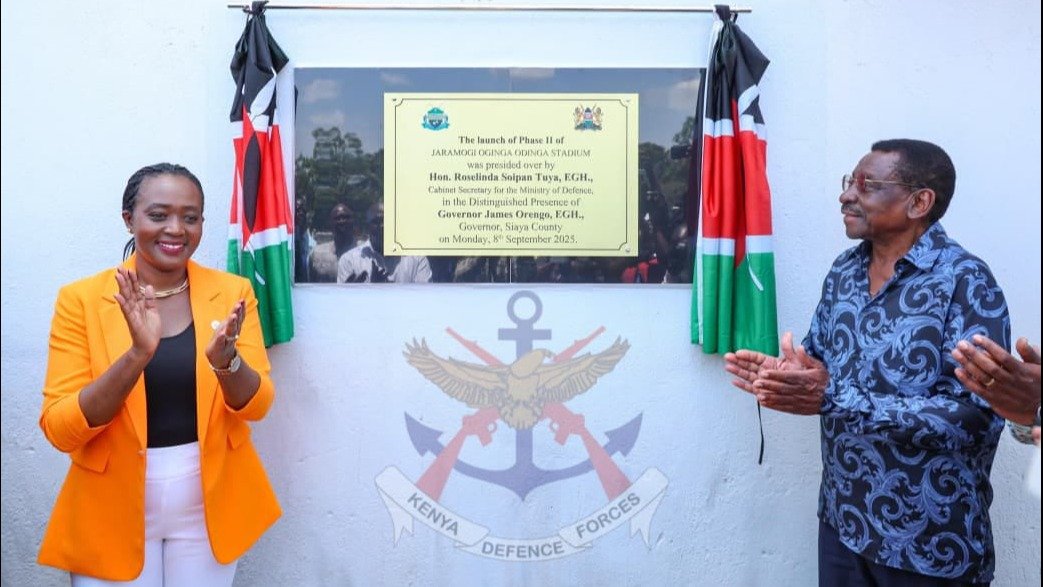

The question of Siaya's development sparks a passionate debate among its residents. While some see slow progress, others believe significant transformation is underway. The truth lies somewhere in between, driven by ambitious projects and a growing commitment to long-term growth. The county, like many others in Kenya, faces the intricate challenge of balancing immediate needs with sustainable, foundational change. For many years, Siaya's potential remained largely untapped, often overshadowed by its proximity to the more developed Kisumu County and by historical political dynamics. This perception of stagnation has fueled a sense of urgency among the local populace, who are eager to see tangible improvements in their daily lives.
One of the most significant initiatives aimed at unlocking this potential is the Lower Nzoia Irrigation Project, launched in 2018 with a KSh 7 billion investment. This project is far more than a simple irrigation scheme. It is a comprehensive strategy to control the destructive flooding of the River Nzoia, a recurring natural disaster that has historically ravaged farms and displaced communities. The project involves the construction of a large dam, extensive canal networks, and a system of dykes designed to protect thousands of acres of land. Although not yet fully complete, it is already yielding benefits. In recent years, local farmers have reported fewer instances of flood damage and are now able to cultivate their lands more consistently. This stability is the first step toward transforming the region from one of subsistence farming to a more productive agricultural hub, capable of producing surplus crops for both local consumption and sale. The project’s success, however, hinges on careful management and ensuring that its benefits are equitably distributed among all affected communities.
More recently, President Dr. William Ruto and Siaya Governor Hon. James Orengo announced a KSh 2.5 billion investment for 16 modern markets across the county. This collaboration between the national and county governments underscores a shared vision for economic empowerment. The markets are designed to be more than just selling points; they are intended to be centers of formal trade, providing traders with secure, hygienic spaces to operate their businesses. With construction already underway on two of these markets, the initiative promises to formalize local commerce, moving it away from informal roadside stalls and into structured, professional environments. This shift is crucial for empowering small-scale businesses, particularly women and youth who form the backbone of the local economy. The formalization of trade also facilitates better tax collection for the county, providing more revenue to fund other essential services and infrastructure projects.
Other signs of progress include a variety of smaller, yet equally important, developments. Affordable housing units are under construction, a direct response to the growing need for shelter in urbanizing areas like Siaya town, Bondo, and Ugunja. This urban renewal strategy is aimed at creating more livable, well-planned towns. The county has also invested in the blue economy, a sector that leverages its position on the shores of Lake Victoria. By promoting sustainable fishing practices and supporting fish processing and preservation, the county aims to create new economic opportunities and protect the lake's fragile ecosystem. Furthermore, the gradual tarmacking of rural roads is improving connectivity, making it easier for farmers to transport their produce to market and for residents to access essential services. This improved infrastructure is a quiet, but powerful, catalyst for economic and social growth.
While the pace of development may feel slow to those living through it, evidence suggests a multi-pronged strategy is in motion. From agricultural security and economic catalysts to urban renewal, Siaya is deliberately laying a foundation for resilience and prosperity. The challenge now is to accelerate this pace and ensure the benefits of these projects reach every citizen, from the farmer in Alego Usonga to the fisherman in Usigu. Siaya may not be sprinting, but its direction is clear, and it is moving forward with a measured, intentional stride toward a more prosperous future for all its people.
Comments (0)
Leave a Comment
No comments yet. Be the first to share your thoughts!