
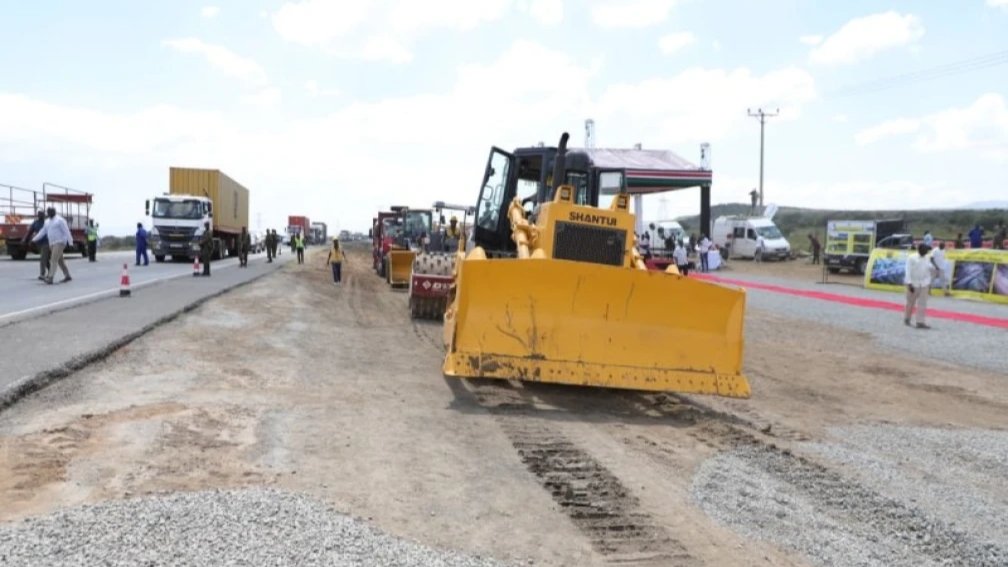

A 2017 design review for the James Gichuru–Rironi highway upgrade raised multiple red flags. Nearly a decade later, sections of the road are still under works and facing repeated closures.
The 25.3-kilometre stretch on the A104 highway was meant to be a relatively straightforward widening project. Consultants from India, Britain, South Korea and Kenya delivered a 222-page report in July 2017.
The review identified incomplete topographic surveys. The original survey covered only 25 to 30 metres of the corridor while the widened road required at least 50 metres.
Benchmark errors were also noted. Several reference points were missing and elevation figures needed corrections of more than a metre and a half at some locations.
The Bill of Quantities did not match the design drawings. Staff accommodation quantities were off by more than double and some items were entirely missing.
Bridge foundation designs raised further concerns. Soil-bearing capacities assumed in the original plans did not align with geotechnical survey results across multiple structures.
The project was awarded to China Wu Yi in 2017. Original completion was planned for August 2020.
By 2019, progress stood at only 25 percent while two-thirds of the timeline had elapsed. The World Bank later withdrew its financing share citing delays and land compensation issues.
Compensation figures for one section ballooned dramatically before being revised down. Landowners have pursued court cases over unpaid balances years later.
KeNHA has adjusted completion dates several times. The current target sits between August 2026 and June 2027.
Recent closures for surface dressing on supposedly completed sections have frustrated motorists. The full stretch remains an active construction zone in many places.
The project cost has also risen. Initial figures around KSh16-18 billion have climbed, with the government taking over full funding after the World Bank exit.
The James Gichuru–Rironi corridor forms part of broader efforts to ease Nairobi’s western access routes. Persistent delays have kept commuters facing diversions, dust and safety concerns.
KeNHA maintains that additional scope, including the Gitaru interchange, contributed to the slippage. Critics point to the early design and execution problems as root causes.
The saga continues to draw attention as one of the more protracted road projects in recent memory. Motorists using the route continue to navigate incomplete sections and ongoing works.
Comments (0)
Leave a Comment
No comments yet. Be the first to share your thoughts!