
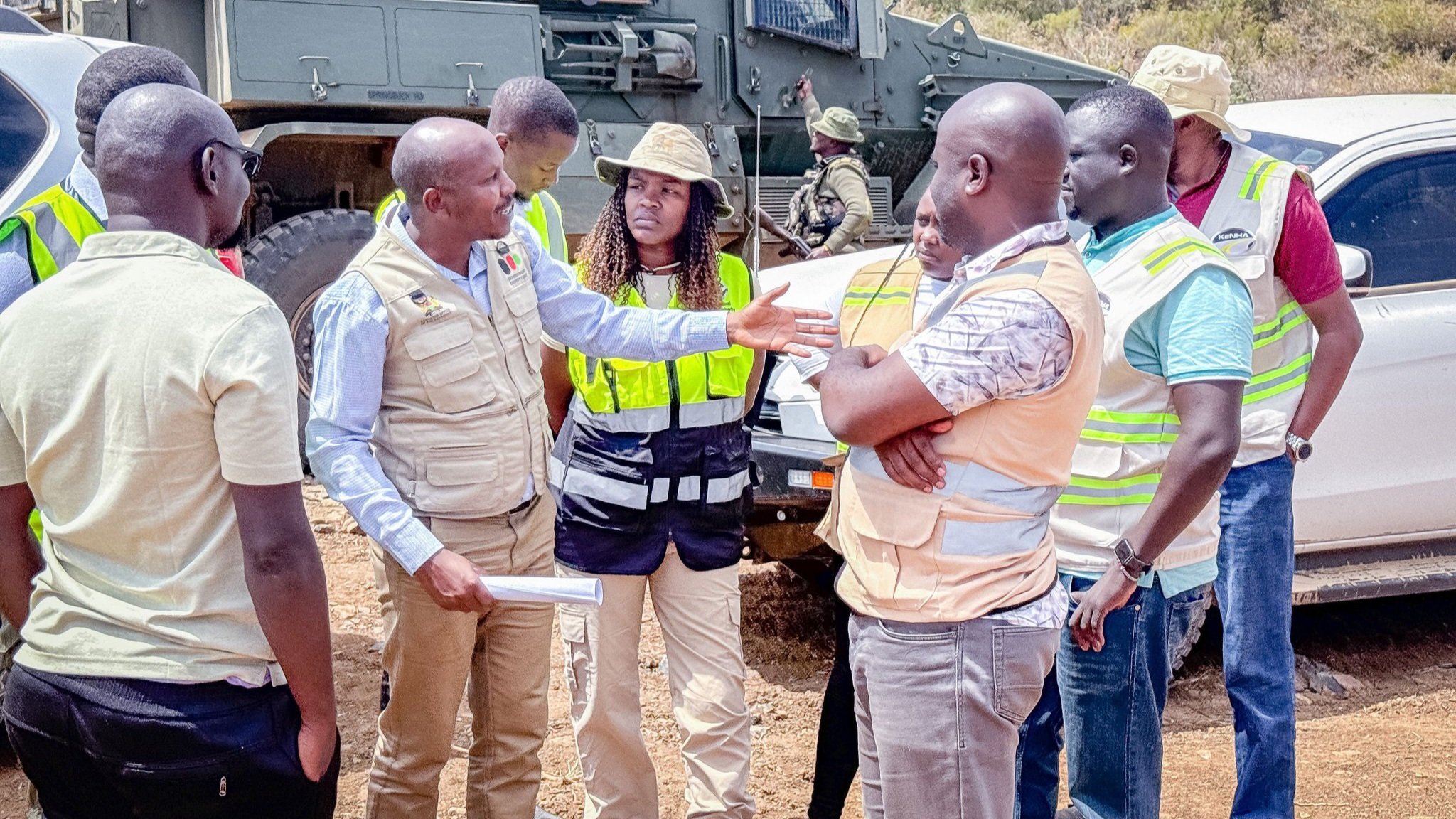

The Kenya National Highways Authority (KeNHA) has intensified field oversight across key transport corridors in the Upper Eastern region.
Regional management recently hosted representatives from the Government Delivery Unit (GDU) to inspect ongoing construction works.
The joint exercise focused on evaluating project progress and strengthening monitoring mechanisms. Ground teams visited several active sites, where engineers assessed physical developments and addressed operational challenges on the ground.
Led by Regional Director Eng. Howard A. M'mayi, the delegation conducted detailed site inspections across strategic road links. The team reviewed alignment plans, subgrade conditions, and earthwork activities.
Engineers examined critical structural components, subgrade preparations, and surface drainage installations during the site visits. Technical assessments focused on compliance with national standards, which ensure long-term durability of national trunk roads.
Representatives from the GDU emphasized the importance of timely execution and strict adherence to budgetary allocations. Public infrastructure investments require close monitoring, which safeguards public resources and delivers value for money.
Field teams navigated challenging terrain along remote corridors to examine ongoing civil works. Security personnel in armored vehicles accompanied the joint delegation, which provided safety during remote field operations.
Site reviews also extended to coastal areas along water bodies to inspect shoreline road alignments. Engineers evaluated erosion control measures, shoreline stabilization, and structural protection along exposed road sections.
Inter-agency collaboration remains central to accelerating project delivery across major national road networks. Technical teams held detailed discussions at each stop, which helped resolve site-specific engineering challenges efficiently.
The inspection tour highlighted key milestones achieved in heavy earthworks, drainage structures, and pavement layers. Direct field supervision ensures contractors maintain high quality control standards during execution.
Effective oversight helps identify potential delays early in the construction lifecycle. A joint monitoring framework allows technical teams to adjust timelines, which improves overall resource allocation and execution efficiency.
Road infrastructure developments in the region support regional integration and facilitate commercial transport routes. Improved connectivity reduces transit times and transport costs for freight operators moving goods across counties.
Contractors were directed to maintain continuous work schedules to avoid extended project timelines. Authority officials reiterated their commitment to maintaining strict supervisory protocols across all active contracts.
Regular field visits by monitoring agencies ensure public infrastructure projects meet performance metrics. Detailed technical reports compiled during the tour will guide upcoming implementation schedules for subsequent project stages.
The delegation concluded the exercise by mapping out priorities for subsequent construction phases. Coordination between road agencies and central monitoring units remains vital, as it accelerates nationwide infrastructure development.
Continued field inspections reflect a broader national strategy to complete key road networks efficiently. Technical evaluations will proceed across designated sectors, which maintains momentum across active engineering contracts.
The authority plans further joint inspections across additional infrastructure corridors in coming months. Technical teams aim to streamline delivery schedules, which ensures seamless execution of major regional projects.
An enhanced monitoring framework provides real-time data on contractor performance and material quality. Officials reaffirmed that supervisory visits will continue, until all designated road works reach full completion.
The exercise underscores government efforts to maintain quality control across national transport infrastructure networks. Strategic road projects remain pivotal for long-term economic development, regional trade, and community connectivity.
Comments (0)
Leave a Comment
No comments yet. Be the first to share your thoughts!