
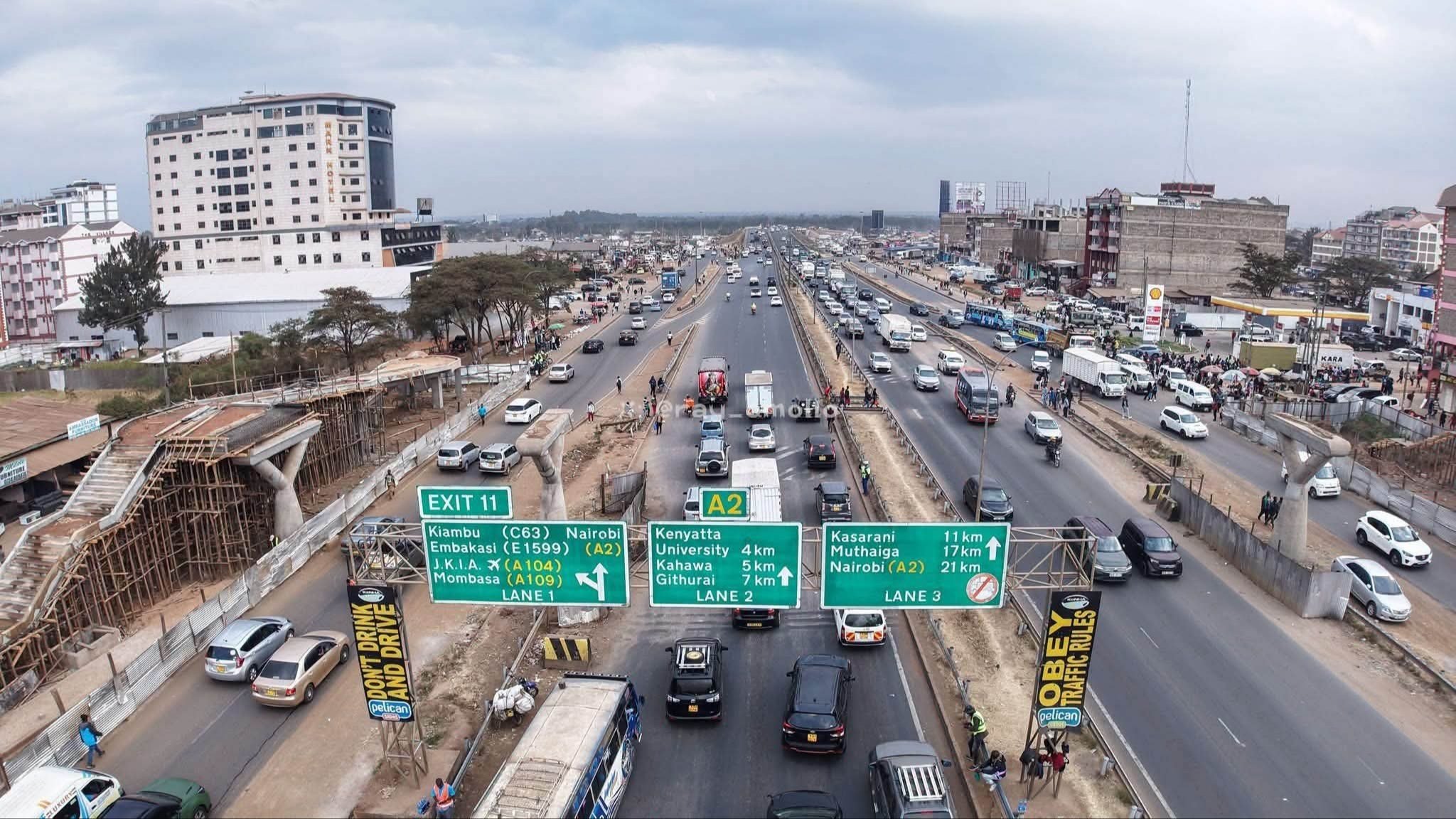

Construction of the Kihunguro footbridge along Thika Superhighway is gathering pace, bringing a long-awaited safer crossing closer for residents who have for years risked crossing one of the region's busiest highways on foot.
The structure is now rising at the Kihunguro section of the highway, near the Kihunguro Shell and Bypass roundabout in Biashara Ward, Ruiru.
Reinforced concrete piers have been cast on both sides of the carriageway, with formwork already stripped from some supports while others remain shored ahead of pier cap casting.
Foundation and approach works for the access ramp are progressing alongside the main piers, with the ramp structure taking shape on the ground level section that will lead pedestrians up to the deck.
The footbridge was approved after years of complaints from residents who had no dedicated pedestrian crossing at the location. The area has been associated with dangerous road crossings and pedestrian accidents since the Thika Superhighway was completed.
The Kenya National Highways Authority awarded the construction works to Ogal Construction at a reported cost of Sh100 million (approximately USD 775,000). The project was scheduled to take approximately 18 months, with construction commencing in October 2025.
The works are being funded through the Road Maintenance Levy Fund, the government mechanism that channels fuel levy collections into road rehabilitation and safety infrastructure across the country.
KeNHA had earlier announced temporary traffic disruptions on the Nairobi and Thika bound service lanes to allow construction of the bridge column bases and stub columns.
The project involves a bridge across the highway with stairs on one side and a ramp providing access from the other side. The arrangement is intended to make the crossing usable by pedestrians with mobility challenges as well as people carrying goods.
With the piers and pier caps nearing completion, the next phase involves casting the deck slab that will form the walking surface, followed by installation of the stairway and ramp structures and final safety railing works.
The need for such infrastructure has become even more apparent as authorities step up enforcement against unsafe pedestrian crossings, with a joint operation currently underway near the GSU Training School along the Eastern Bypass.
Several pedestrians have reportedly been arrested there for failing to use a designated footbridge and are expected to face court charges. The enforcement highlights a wider road safety problem facing Kenya's high speed urban highways.
Footbridges can only improve safety when pedestrians actually use them, while authorities also have a responsibility to ensure the facilities remain accessible and convenient to the communities they are built for.
The Kihunguro project is therefore coming at an important time. Once completed, it will give thousands of pedestrians who regularly cross the Thika Superhighway a designated alternative to navigating through fast moving traffic.
The problem has been raised repeatedly over the years. In 2021, it was also raised in Parliament, with a request for a footbridge at the Kihunguro Road junction to help pedestrians cross safely and reduce accidents.
The current project is part of a broader need for pedestrian infrastructure along major Kenyan highways. Thika Superhighway carries heavy traffic between Nairobi, Ruiru, Juja and the wider central Kenya region, making informal crossings particularly hazardous.
The latest construction progress means the long discussed solution is now becoming a physical structure rather than a proposal, though for motorists it still requires caution around the ongoing work zone.
The timing of the project also reinforces the importance of the current enforcement campaign. As more footbridges become available, pedestrians are increasingly expected to use designated facilities instead of dangerous shortcuts, and at Kihunguro, that separation is finally taking shape.
Comments (0)
Leave a Comment
No comments yet. Be the first to share your thoughts!