
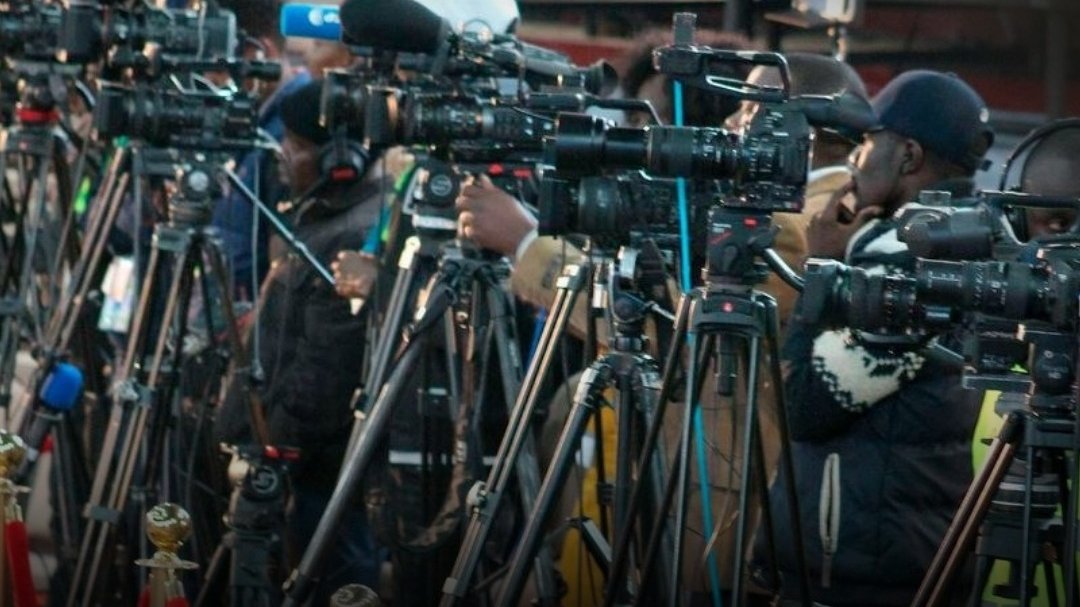

One year from today, more than 28 million Kenyans, going by the electoral commission's registration target, are expected to queue to elect the country's next crop of leaders.
They will do so in an election environment that would have been almost unimaginable when Kenya returned to competitive multiparty politics in 1992.
The biggest difference is sitting in the pockets of millions of voters.
Smartphones have turned ordinary Kenyans into potential photographers, witnesses and broadcasters, capable of recording events and distributing them to large audiences within seconds.
This is a fundamental change from 1992, when most Kenyans depended on newspapers, radio and television to find out what was happening beyond their immediate surroundings.
The transformation is reflected in the country's communications infrastructure.
The Communications Authority reported 84.1 million active mobile subscriptions by March 2026, while 78.7 million mobile devices were connected to Kenyan networks. Smartphones accounted for 63.7 percent of those devices.
Mobile broadband consumption reached about 800 million gigabytes during the same quarter, underlining the scale at which Kenyans now use connected devices to communicate and consume information.
Network coverage has also expanded dramatically. By June 2025, 4G population coverage had reached 97.3 percent, while 5G coverage stood at 30 percent.
This means that the 2027 election will take place inside an enormous digital communications network that barely existed during the first multiparty election of the current era.
A confrontation at a polling station can now be recorded by a voter, uploaded to social media and watched across the country before election officials or journalists have had time to respond.
The technology can strengthen election monitoring.
Videos recorded by voters can provide evidence of incidents, document the conduct of officials or security personnel and bring events in remote polling stations to national attention.
But the same technology creates another problem: speed can easily outrun verification.
An old video can be presented as a new incident. Footage from one county can be falsely attributed to another. Short clips can remove important context, while manipulated or completely fabricated material can spread rapidly.
That makes digital literacy and verification increasingly important as the election approaches.
The scale of the electorate will add to the challenge. IEBC is targeting approximately 28.5 million registered voters for 2027, compared with about 22.1 million registered for the 2022 General Election.
The commission is also planning for about 55,000 polling stations, up from 46,229 during the 2022 election.
Each polling station will therefore sit within a communications environment where voters, observers, journalists and political actors can potentially generate and distribute their own accounts of what is happening.
The recent Ol Kalou by-election offered a glimpse of what this could mean. Videos of incidents around polling stations circulated online, while the electoral commission later highlighted organised groups intimidating voters and officials as one of the major challenges encountered during the poll.
The 2027 election will magnify that phenomenon because the number of connected Kenyans, smartphones and available digital platforms is far greater.
There is also a major difference in how information can influence events.
In 1992, an incident at a polling station could take hours to reach a national audience. In 2027, a video recorded at 10am could become part of a national political argument before midday.
Political parties will therefore be operating alongside millions of independent content creators, many of whom will not see themselves as journalists but will nevertheless produce material that shapes public understanding of the election.
For the IEBC and other institutions responsible for electoral security, this presents a new communications challenge. Responding to allegations will increasingly involve not just issuing statements but establishing what happened, where it happened and whether the material circulating online is genuine.
Kenya's communications revolution has effectively added millions of potential eyes and cameras to the electoral process.
It will not guarantee a cleaner election, nor will every piece of citizen-generated footage be accurate.
But it will make the 2027 election fundamentally different from the election Kenya held in 1992.
Source: Nation Africa, “50 Million Cameras: The Election Kenya Did Not Have in 1992.” Additional figures and context are from the Communications Authority of Kenya and IEBC.
Comments (0)
Leave a Comment
No comments yet. Be the first to share your thoughts!