
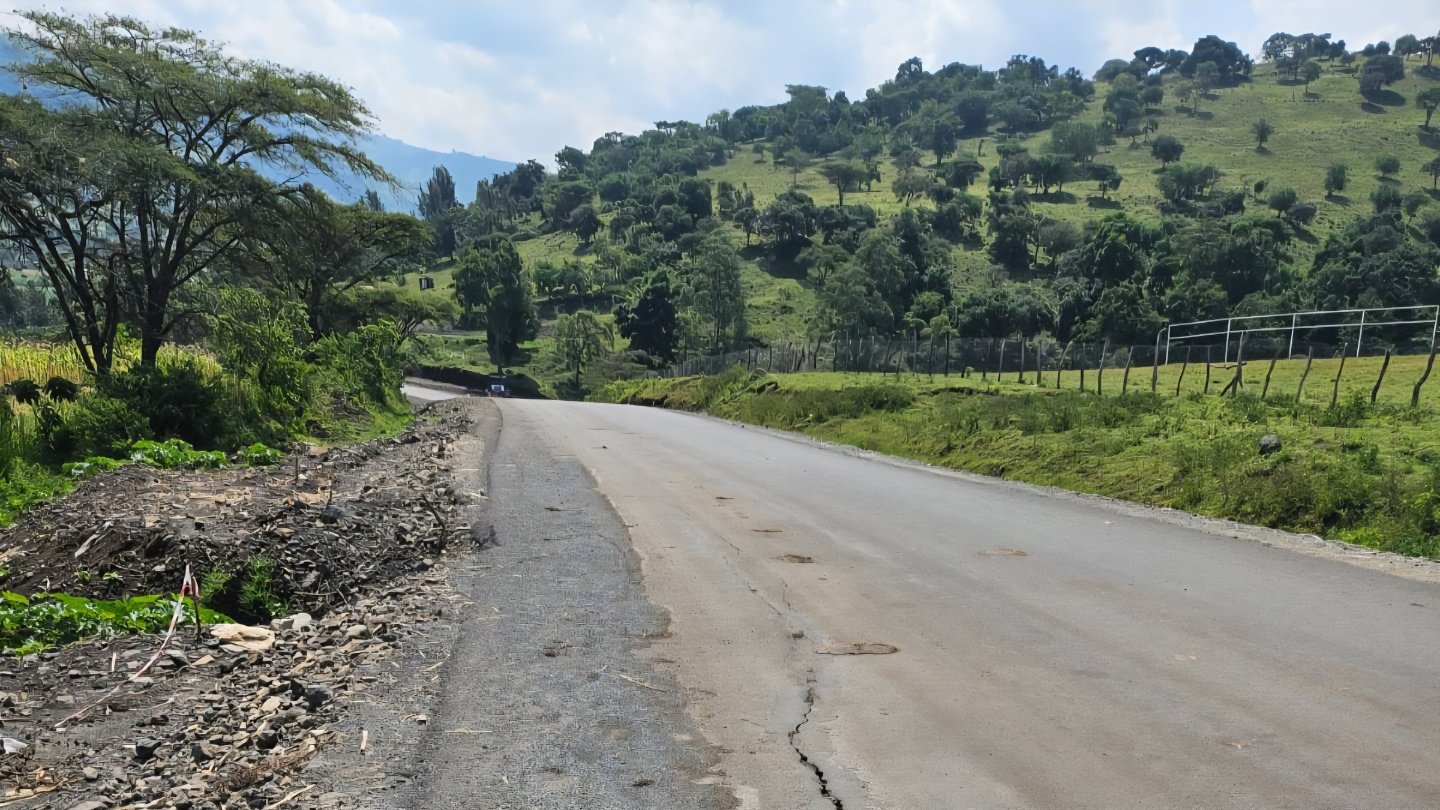

A version of this article was posted on X by Cpt. Kibet.
A newly paved section of the Kopere-Timboroa road has developed structural cracks, triggering widespread public criticism over the quality of civil engineering works executed on the project.
The infrastructure project, which falls under the oversight of the Kenya Rural Roads Authority (KeRRA), is meant to establish a reliable transport corridor connecting agricultural zones within Nandi County, but the recent structural defect has raised questions regarding quality compliance.
Engineering concerns emerged publicly after photographic evidence surfaced showing an extensive longitudinal fracture running along the outer edge of the newly laid asphalt surface. The visual evidence points to potential subgrade instability or compromised base layers, which are critical elements in standard pavement construction.
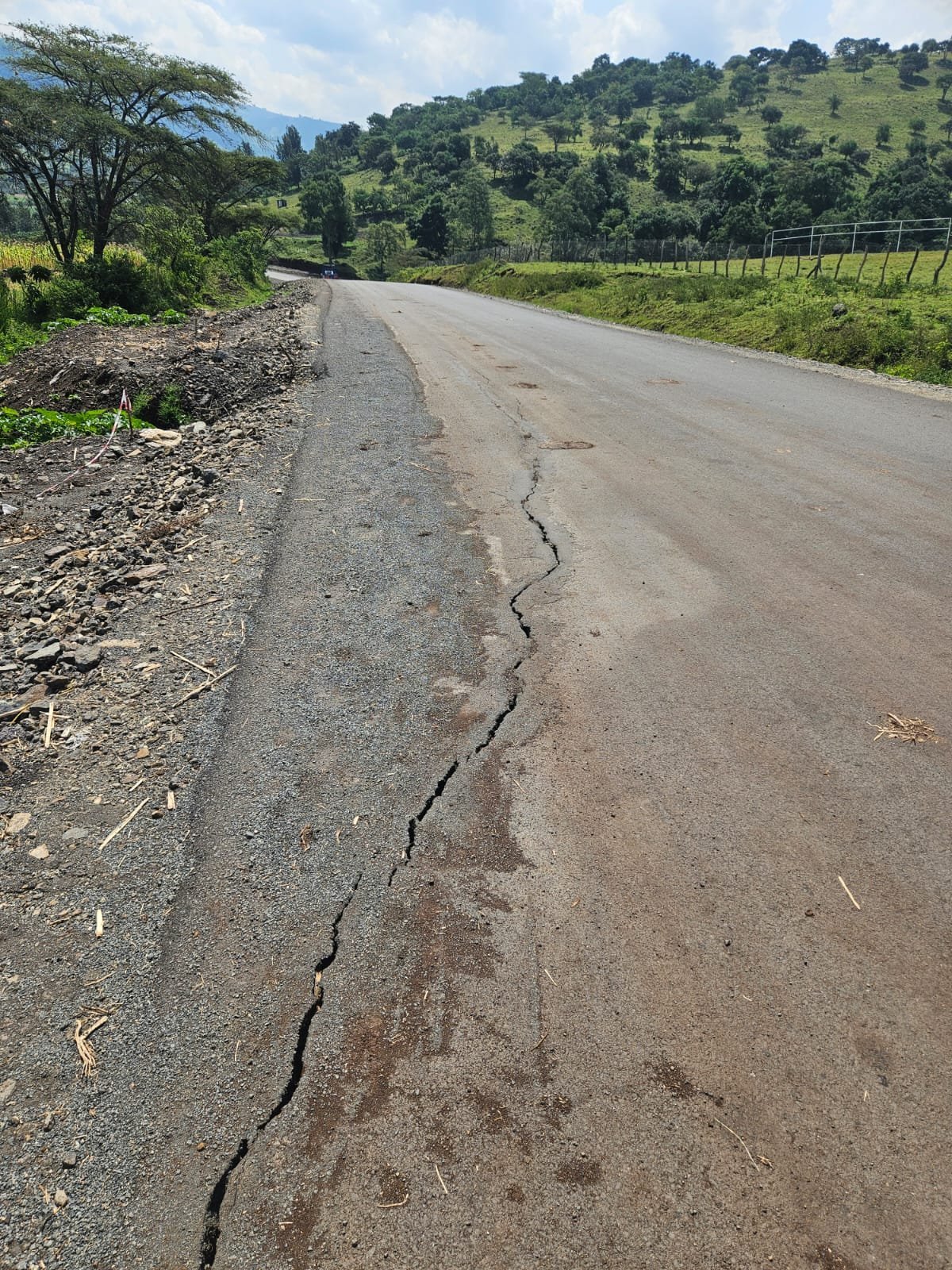
Local motorists and residents have expressed disappointment, stating that the infrastructure asset should not exhibit such failure modes so early in its service life. Many depend on the route for moving agricultural products.
Stecol Corporation (STECOL), the engineering firm contracted to execute the upgrading works, faces scrutiny over its handling of the preliminary earthworks. Critics argue that poor soil compaction and inadequate drainage preparation may have led to the severe embankment shifting visible on site.
Members of the public have actively escalated the matter to government officials via social communication channels, calling for immediate technical audits. They want an official assessment of the structural integrity of the corridor.
Among those tagged in the public appeals is the Cabinet Secretary (CS) for Roads and Transport, Davis Chirchir, alongside senior technical directors at the state corporation managing rural road assets.
Historically, the fifty-six kilometre highway corridor has encountered multiple implementation hurdles. Previous political discussions surrounding the infrastructure asset highlight that delays and performance concerns have lingered over the project for several years, though local leaders have continually advocated for its successful completion.
Engineering experts note that longitudinal cracking near pavement shoulders frequently stems from poor slope stabilization or weak lateral support, which, if left unaddressed, will accelerate subgrade failure, leading to a complete collapse of the outer lane.
The Kenya Rural Roads Authority (KeRRA) regularly monitors construction compliance across the national network, but it has not issued a formal technical report detailing the exact cause of the failure or the specific remediation steps required from the contractor.
Contractual frameworks typically bind construction firms to a defects liability period, meaning Stecol Corporation would be legally obligated to repair the failed sections at its own cost, if the damage is attributed to non-compliant execution.
For residents of Tinderet Constituency, the proper completion of the corridor remains a high priority. Local farmers require a fully durable, reliable all-weather asset to transport coffee and tea to regional processing plants, but these current engineering flaws threaten to delay full operational usage.
As public demands for accountability intensify, independent construction auditors suggest that a thorough core drilling test and soil stability analysis should be carried out along the entire affected alignment. This approach ensures that any underlying systemic structural deficiencies are identified, and corrected before final project handover.
Structural durability remains paramount for public safety and fiscal responsibility in public infrastructure delivery. Until KeRRA or Stecol Corporation addresses the physical defects visible on the alignment, the safety of heavy commercial vehicles traversing the rural transit route will remain an unresolved logistical concern for regional transport operators.
Comments (0)
Leave a Comment
No comments yet. Be the first to share your thoughts!