
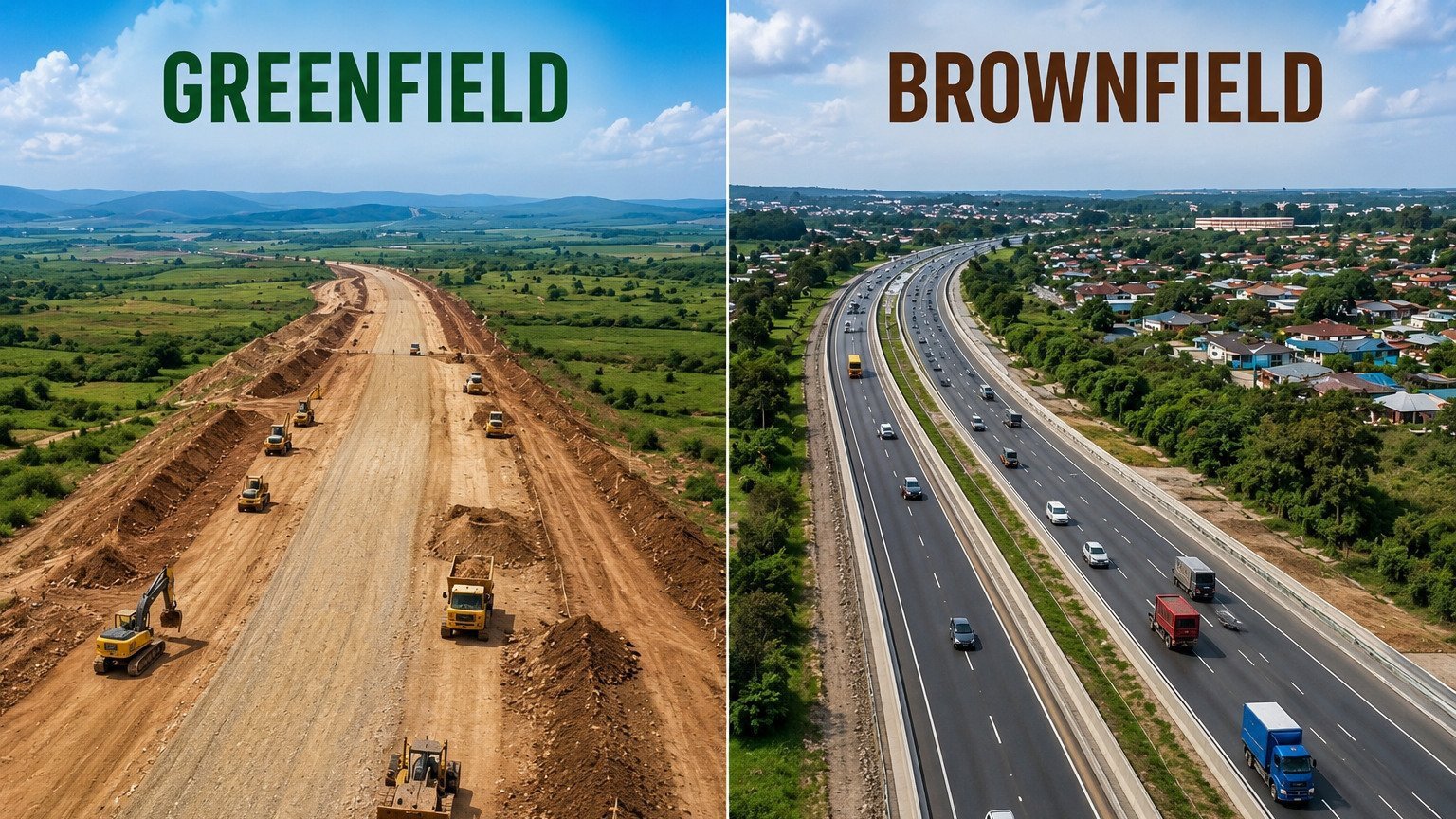

The government has dropped plans to construct an entirely new greenfield expressway connecting Nairobi and Mombasa. Instead, transport authorities will expand the existing A8 highway corridor into a tolled four-lane dual carriageway.
Kenya National Highways Authority (KeNHA) will execute the revised project across the 461-kilometer stretch. The National Treasury rejected earlier standalone greenfield proposals, directing state engineers to prioritize widening the active highway alignment.
A greenfield build would have required acquiring extensive land holdings and conducting corridor surveys from scratch. In contrast, expanding the existing road footprint significantly lowers upfront capital expenditure and shortens construction timelines.
Under the updated design, the arterial route will feature controlled access and grade-separated interchanges. The government has issued a Request for Proposals (RFP) to procure a transaction advisor, which will guide the financial procurement process.
Private developers will build and maintain the expanded road under the Public-Private Partnership (PPP) Act. The project concessionaire will subsequently collect toll fees across the corridor to recover initial private capital outlay.
Civic groups and motorists are raising critical questions regarding tolling public infrastructure funded with taxpayers' money. Broad concerns center on whether non-paying drivers will retain a genuinely free alternative route along the busy corridor.
If authorities toll the existing A8 highway directly, ordinary commuters may face mandatory fees for daily travel. Infrastructure analysts stress that national transit policies must safeguard equitable access for low-income road users, who rely on public highways.
Commercial freight operators moving cargo from the Port of Mombasa stand to gain reduced transit times. However, fleet owners worry about elevated logistics costs, which could eventually trickle down to consumer retail prices.
State engineers maintain that adding extra lanes while integrating town bypasses will lessen disruption for roadside traders. The upgraded alignment seeks to maintain seamless connectivity with regional feeder roads along the vital Northern Corridor.
Government agencies are currently evaluating advisor bids to determine precise toll structures and user exemptions. Officials expect the dual-carriageway to relieve chronic freight bottlenecks between the capital city and the coastal hub.
As procurement advances, civil society advocates urge transparency in defining free service lanes for local traffic. Strategic decisions finalized by transport ministry officials in coming months will impact national mobility for decades.
The National Treasury aims to balance private investor cost recovery with baseline public accessibility. Technical teams continue refining lane configurations and site layouts before heavy earthmoving equipment moves onto the active corridor.
The A8 corridor expansion remains central to trade across East and Central Africa. Neighboring landlocked countries rely on this primary arterial route for cargo moving inland from the Indian Ocean coast, making efficient transit essential.
Infrastructure strategies under President Ruto prioritize leveraging private capital to fund primary highway upgrades without expanding national debt. Choosing a brownfield path reflects fiscal restraint, while addressing urgent road capacity limits.
Public participation forums will examine fee frameworks, entry points, and local access routes along the route. Commuters, motorists, and commercial logistics firms continue monitoring the transition closely, as final project details emerge.
Shifting from a greenfield design to a brownfield expansion represents a practical turn in highway development. Transport authorities hope the modified plan delivers a modern highway, while balancing public interest and fiscal realities.
Comments (0)
Leave a Comment
No comments yet. Be the first to share your thoughts!