
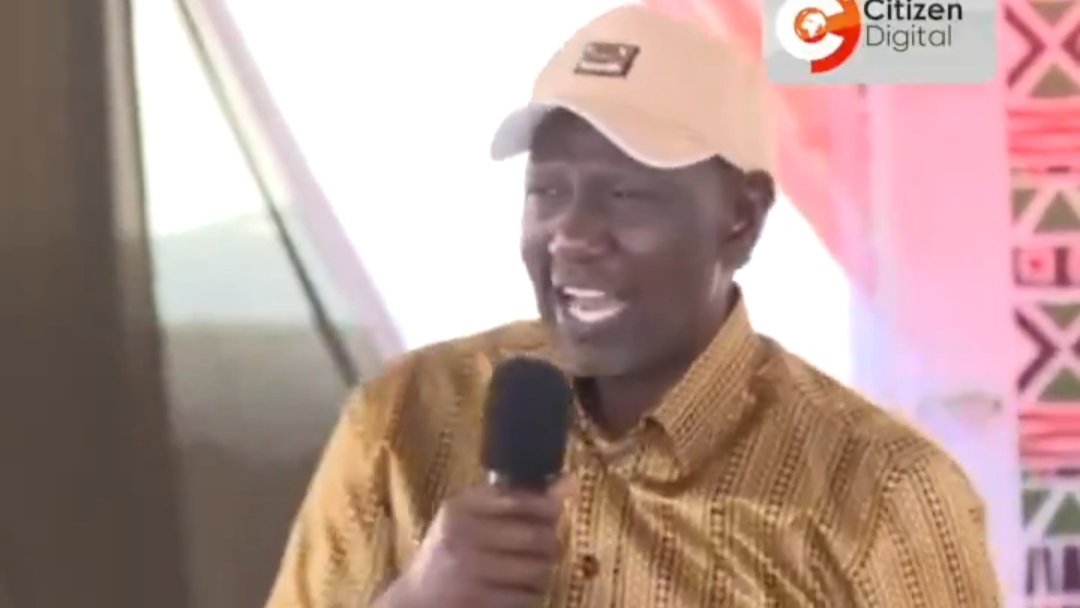

President William Ruto has announced that at least 10 dams will be constructed in Northern Kenya as part of efforts to expand irrigation and strengthen food production in drought-prone areas. The statement came during a recent address where he outlined priorities for the region's water infrastructure.
Northern Kenya, encompassing counties such as Turkana, Marsabit, Mandera, Wajir, Garissa, Isiolo and Samburu, faces chronic water scarcity and relies heavily on rain-fed agriculture or pastoralism. Recurrent droughts have led to livestock losses, food shortages and humanitarian aid needs. Ruto's pledge focuses on capturing seasonal runoff through dams to enable controlled irrigation, shifting communities toward more reliable crop farming.
The announcement aligns with the government's broader water harvesting strategy. Earlier pledges from Ruto include constructing 50 mega dams nationwide, alongside 200 medium dams and thousands of smaller ones, to bring up to 2.5 million acres under irrigation over the coming years. Of that total, 1.5 million acres are targeted for northern and coastal regions. Specific mega dam projects already flagged for the north and adjacent areas include Lowaat in Turkana, Basalinga in Isiolo and High Grand Falls along the Tana River, which could serve parts of Garissa.
The State Department for Irrigation has confirmed plans to start work on six large-scale dams in 2026, with several located in northern or ASAL counties such as Turkana, Isiolo and Baringo. These would form the initial phase of the larger commitment. Irrigation PS Ephantus Kimotho has described the push as essential for climate resilience, job creation in rural areas and reducing reliance on food imports.
Construction of dams in arid zones involves significant engineering challenges. Sites require geological surveys to ensure foundation stability, spillway designs to handle flash floods and reservoir capacities that balance storage with evaporation losses in hot climates. Access roads, often unpaved or seasonal, complicate material delivery and heavy equipment movement. Environmental impact assessments are mandatory to address displacement of communities, wildlife corridors and downstream water flows.
Funding for such infrastructure typically draws from national budgets, development partners like the World Bank and African Development Bank, and public-private arrangements. The Thwake Dam, a flagship multipurpose project in the southeast, has set a precedent with its blend of external financing and government contributions. Similar models could apply to northern dams, though costs per dam vary widely depending on size, location and design.
The initiative comes amid criticism from opposition figures. Former Deputy President Rigathi Gachagua, in February 2026 remarks, accused the government of failing to deliver on past promises for water pans, dams and irrigation in northern counties like Wajir and Mandera. He cited unfulfilled pledges to irrigate large swathes in the Mandera Triangle and called for a national disaster declaration to address ongoing drought.
For the construction sector, these dam projects represent potential opportunities in earthworks, concrete placement, hydraulic structures and ancillary infrastructure like canals and access roads. Local firms often participate in subcontracts, while major civil engineering companies handle main contracts. The scale of the national plan—50 mega dams—could sustain demand for specialised skills in dam building, water resource management and related fields over the medium term.
No detailed timelines, specific dam names beyond those already public, or confirmed budgets for the 10 northern dams were provided in the announcement. Implementation will depend on feasibility studies, financing arrangements and environmental clearances.
Comments (0)
Leave a Comment
No comments yet. Be the first to share your thoughts!