
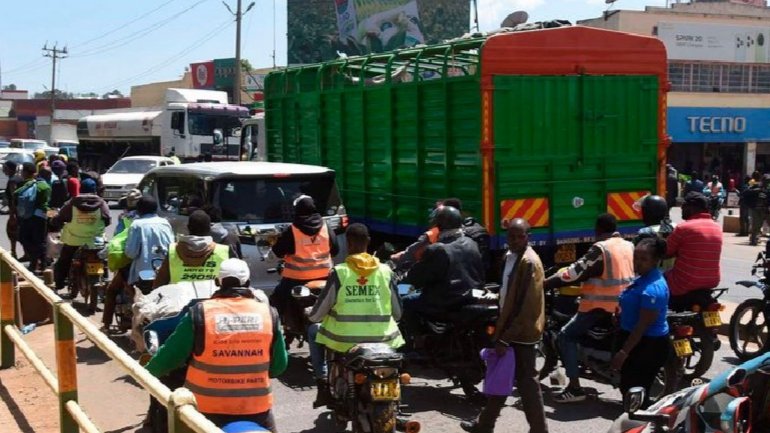

Kenya’s boda boda industry has grown into one of the country’s most important economic engines. It provides livelihoods for millions of young people and offers affordable last-mile transport across urban and rural areas.
According to a 2025 Viffa report, the sector contributes close to four percent of Kenya’s gross domestic product. It generates more than $5 billion annually. Motorcycles have become indispensable for both riders and commuters.
However, rapid growth has brought serious challenges. Rising road accidents, safety concerns and criminal misuse have put the industry under intense public scrutiny.
National Transport and Safety Authority data shows that by early December 2025, 4,400 Kenyans died on the roads. Of these, 1,148 were riders and 432 were pillion passengers.
In response, the government proposed the Public Transport (Motorcycle Regulation) Bill 2023. The legislation seeks to bring structure and accountability to the largely informal sector.
The Bill introduces mandatory rider registration at county level. It establishes County Motorcycle Transport and Safety Boards, tightens licensing and training requirements, and improves safety standards.
It also proposes regular motorcycle inspections, passenger and cargo restrictions, and the use of tracking technologies. These measures aim to enhance security and accountability.
George Song’e, an e-mobility champion, argues that these reforms are both reasonable and overdue. He notes that improving oversight can save lives and restore public confidence in the sector.
Countries that have successfully implemented similar measures have recorded better helmet usage, reduced accident rates and improved road safety. Professional training can also help riders develop sustainable businesses.
Beyond safety, formalisation opens economic opportunities. A regulated industry attracts investors, financial institutions and technology providers. It improves access to insurance, financing and innovations such as electric motorcycles.
Despite these benefits, the reforms have faced resistance from some riders. Many view the new requirements as costly and burdensome, especially given existing challenges like high fuel costs and loan repayments.
Song’e acknowledges these concerns. He stresses that successful reforms must balance safety, accountability and economic realities. Implementation should involve riders, associations and other stakeholders.
The creation of new county regulatory bodies has also drawn criticism. Some fear duplication of the National Transport and Safety Authority’s mandate and potential bureaucracy.
Others question whether strict rules can be enforced uniformly across Kenya’s diverse regions. Weak enforcement of existing laws remains a bigger problem than the absence of new regulations.
Song’e believes meaningful reform is essential. When done thoughtfully, the changes can transform boda boda into a safer, more professional and sustainable industry.
The future of the sector depends on the government’s ability to create a framework that protects both lives and livelihoods. Achieving this balance is critical for Kenya’s broader transport and economic goals.
Comments (0)
Leave a Comment
No comments yet. Be the first to share your thoughts!