

The Government of Kenya has initiated a strategic shift in technical training to prepare local workforces for upcoming industrial projects, including a planned multi-billion-shilling oil refinery in Lamu.
Ministry of Investments, Trade and Industry (MITI) Cabinet Secretary, Lee Kinyanjui, stated that the country must build capacity in highly specialized fields, so that local youth secure high-paying jobs.
During a tour of the Kenya Industrial Research and Development Institute (KIRDI) Techno Centre in Nairobi, Kinyanjui explained that the proposed $17 billion refinery, which is backed by the Dangote Group, would require advanced technical skills.
"We have a huge refinery coming up in Lamu and the entire construction will require specialized skills," Kinyanjui noted, adding that the state wants to know where the welders and other technical personnel will come from.
The Cabinet Secretary emphasized that Kenya cannot afford to wait until these massive opportunities arrive before preparing its workforce, as local youth risk being sidelined in major projects.
Historically, the lack of certified high-pressure welders in East Africa has forced developers to source personnel from abroad, but this drives up project costs and limits local employment.
Besides welding, Kinyanjui highlighted a growing need for mechanics skilled in electric vehicles, although this is driven by the ongoing revival of the local automotive sector.
According to the ministry, these well-paying, high-impact jobs require immediate, deliberate action, if the country is to avoid reactive planning after the investments have been fully established.
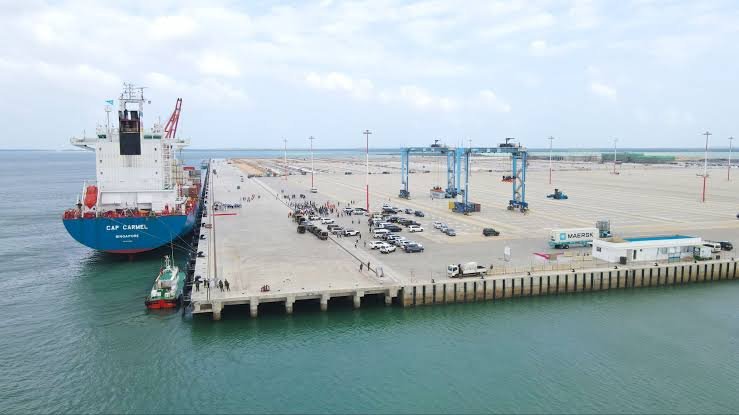
The planned 700,000-barrel-per-day refinery in Lamu has emerged as a focal point for national development, although it must align with efforts to unlock the Lamu Port-South Sudan-Ethiopia Transport (LAPSSET) Corridor.
This massive maritime and logistics corridor is designed to connect the coastal region with landlocked neighboring markets, which include South Sudan and Ethiopia.
To support this industrial push, the state is spending Sh8.56 billion to complete the KIRDI facility in South B, Nairobi, which is scheduled for completion by the end of 2027.
The facility will house advanced research laboratories, product testing infrastructure, and business incubation spaces, which are designed to help local innovators and industries scale up their technologies.
Kinyanjui indicated that the state is also decentralizing these training programs to counties, although it is tailoring curriculum development to the specific economic activities of different regions.
This approach ensures that training centers outside Nairobi can produce technicians, who are equipped to support localized manufacturing, maritime logistics, and large-scale industrial projects.
In Lamu, the sheer scale of the proposed refinery means that shipbuilding and heavy industrial infrastructure will require thousands of qualified, certified welders.
Furthermore, the project has begun attracting regional interest, but Tanzanian billionaire Mohammed Dewji has pledged Sh12.9 billion towards the Lamu oil refinery development.
Without timely intervention, international contractors on such massive projects often rely on imported labor, which is a scenario the Kenyan government is actively working to prevent.
The ministry expects that the upcoming Horn of Africa Trade Ministers Meeting will further strengthen these regional training frameworks, which include bilateral infrastructure agreements.
By positioning KIRDI as the primary vehicle for industrial innovation and skill development, the state hopes to build a competitive local workforce.
The move has been welcomed by regional logistics stakeholders, who view the development of local capacity as crucial for the sustainability of the LAPSSET corridor.
With preliminary engineering work and soil testing already initiated at the Lamu site, the race is on to match Kenya's labor upply with impending industrial demands.
Comments (0)
Leave a Comment
No comments yet. Be the first to share your thoughts!