
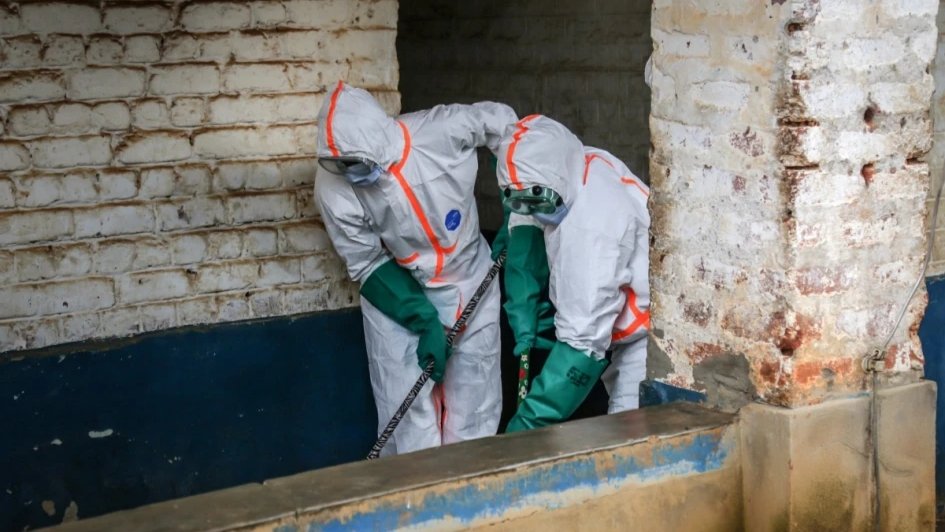

The Ministry of Health has placed 25 counties on high or very high Ebola risk alert. The classification aims to strengthen the country’s defences against the virus spreading from neighbouring Uganda and the Democratic Republic of Congo.
Public Health Principal Secretary Mary Muthoni revealed the list during a briefing at Afya House on Tuesday. Very high-risk counties include Nairobi, Mombasa, Uasin Gishu, Busia, Kisumu, Bungoma, Trans Nzoia, Siaya, West Pokot, Turkana, Homa Bay and Migori.
High-risk counties are Vihiga, Kakamega, Nakuru, Kericho, Nandi, Kiambu, Machakos, Kilifi, Makueni, Taita Taveta, Isiolo, Elgeyo Marakwet and Garissa. Factors such as population movement, border proximity and transport hubs influenced the ratings.
The ministry has already activated emergency operation centres in 26 counties and trained more than 1,000 health workers. Screening teams have checked over 67,000 travellers at 26 points of entry, including 13,548 in the past day.
From a construction angle, the risk alert is expected to speed up work on isolation wards, quarantine centres and upgraded screening facilities in the affected counties. Counties near borders such as Busia, Migori and Turkana may see quicker rollout of modular isolation units and laboratory improvements.
Major hubs like Nairobi and Mombasa could require larger upgrades to hospitals and emergency centres. These often involve specialised ventilation, decontamination areas and secure access systems to handle potential cases safely.
The government is weighing 21-day quarantine rules for travellers from affected areas. This would increase demand for suitable isolation infrastructure across the flagged counties.
The alert adds pressure on ongoing plans for health facilities, including the disputed US-backed centre at Laikipia Air Base which remains on hold after court orders.
Contractors in the health sector may find fresh opportunities in both small screening posts and bigger hospital retrofits. Northern and western counties face extra logistical hurdles due to terrain, yet their risk status could unlock dedicated funding.
Screening infrastructure at borders and airports typically includes observation areas, sample handling spaces and staff quarters for round-the-clock operations. Minor works such as partitioning buildings or improving sanitation are also likely in county hospitals.
Kenya has so far reported no Ebola cases. The county-by-county risk map gives a clear focus for preparedness efforts in the weeks ahead.
Health officials continue to stress vigilance at all entry points. The proactive steps reflect lessons from past disease outbreaks where early infrastructure readiness proved critical.
For the construction industry, this situation points to potential short and medium-term projects across multiple regions. Experience shows that such alerts often translate into a mix of fast-tracked retrofits and new modular facilities.
Stakeholders will watch how national and county budgets respond to the risk designations. The emphasis remains on keeping Kenya free of the virus while building stronger response capacity.
Comments (0)
Leave a Comment
No comments yet. Be the first to share your thoughts!