
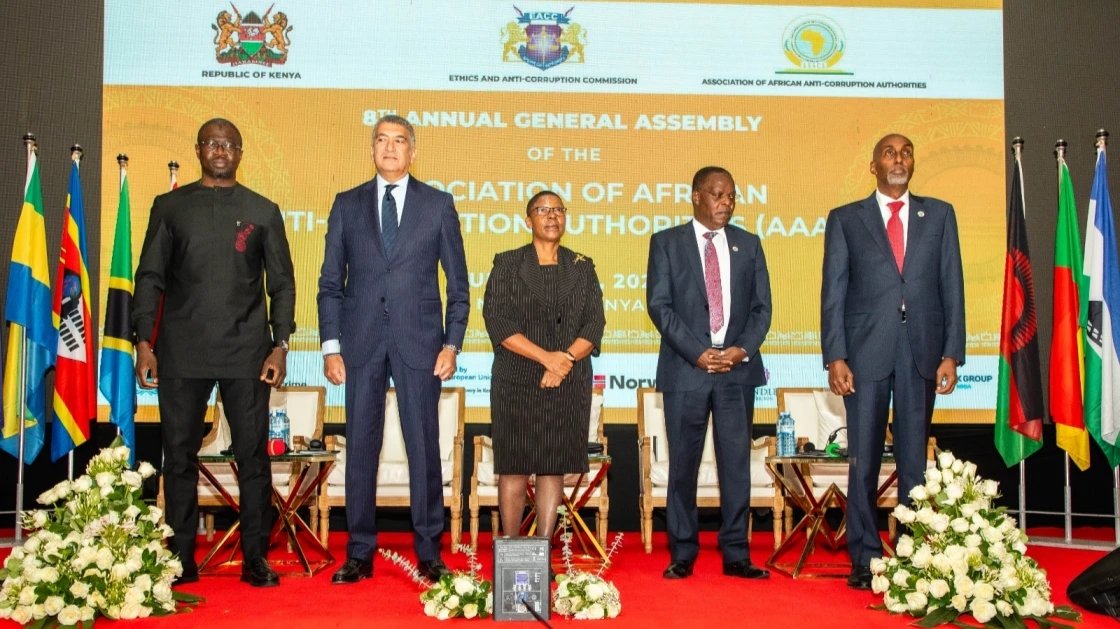

African leaders officially opened the Centre for Anti-Corruption Studies and Research in Africa in Nairobi on Wednesday. The new institution, known as CEREAC, is the first of its kind on the continent. It will focus on research, training and technical support against corruption.
The launch took place during the 8th Annual General Assembly of the Association of African Anti-Corruption Authorities at the Kenya School of Monetary Studies. It drew heads of more than 45 anti-corruption institutions from 43 African countries.
Ethics and Anti-Corruption Commission CEO Abdi Ahmed Mohamud said the centre came after four years of planning. The idea gained ground at the fifth assembly in Burundi in 2022. Kenya received the nod as host in January 2024.
Mohamud pointed out that corruption now crosses borders easily. Networks use digital finance, virtual assets and complex setups to hide proceeds. National measures fall short against such threats.
"The fight against corruption is no longer merely a national concern; it is a continental and global imperative," Mohamud told delegates.
Attorney General Dorcas Oduor spoke for President William Ruto. She said graft blocks economic progress and sustainable development. Africa loses hundreds of billions of dollars each year to illicit flows, tax evasion and procurement fraud.
Those funds could build schools, hospitals, roads and water systems instead. The message hit home in Kenya, where big infrastructure contracts need strong safeguards.
EACC Chairperson David Oginde pushed for more artificial intelligence, blockchain and real-time tracking. Traditional tools lag behind new digital corruption methods.
CEREAC will handle applied research, policy advice, training and capacity building. It has legal personality and financial autonomy. It should help agencies review their efforts and spot fresh risks.
AAACA President General Hisham El Rakaybi signed the visitors' book at the ceremony. He called for tighter coordination and technical support between member states.
Kenya's selection as host shows faith in its anti-corruption setup. The centre fits into wider goals under Agenda 2063 and the African Union Convention on Preventing and Combating Corruption.
In the construction sector, the launch arrives as Kenya moves on road upgrades, housing programmes and energy schemes. Clean procurement stays vital to guard public money.
Assembly sessions also examined cross-border investigations, mutual legal assistance and asset recovery. These matters come up often in infrastructure deals that cross several countries.
The centre will not replace national bodies. It aims to back them with shared knowledge and usable tools. Success depends on moving research into real joint work.
Comments (0)
Leave a Comment
No comments yet. Be the first to share your thoughts!