
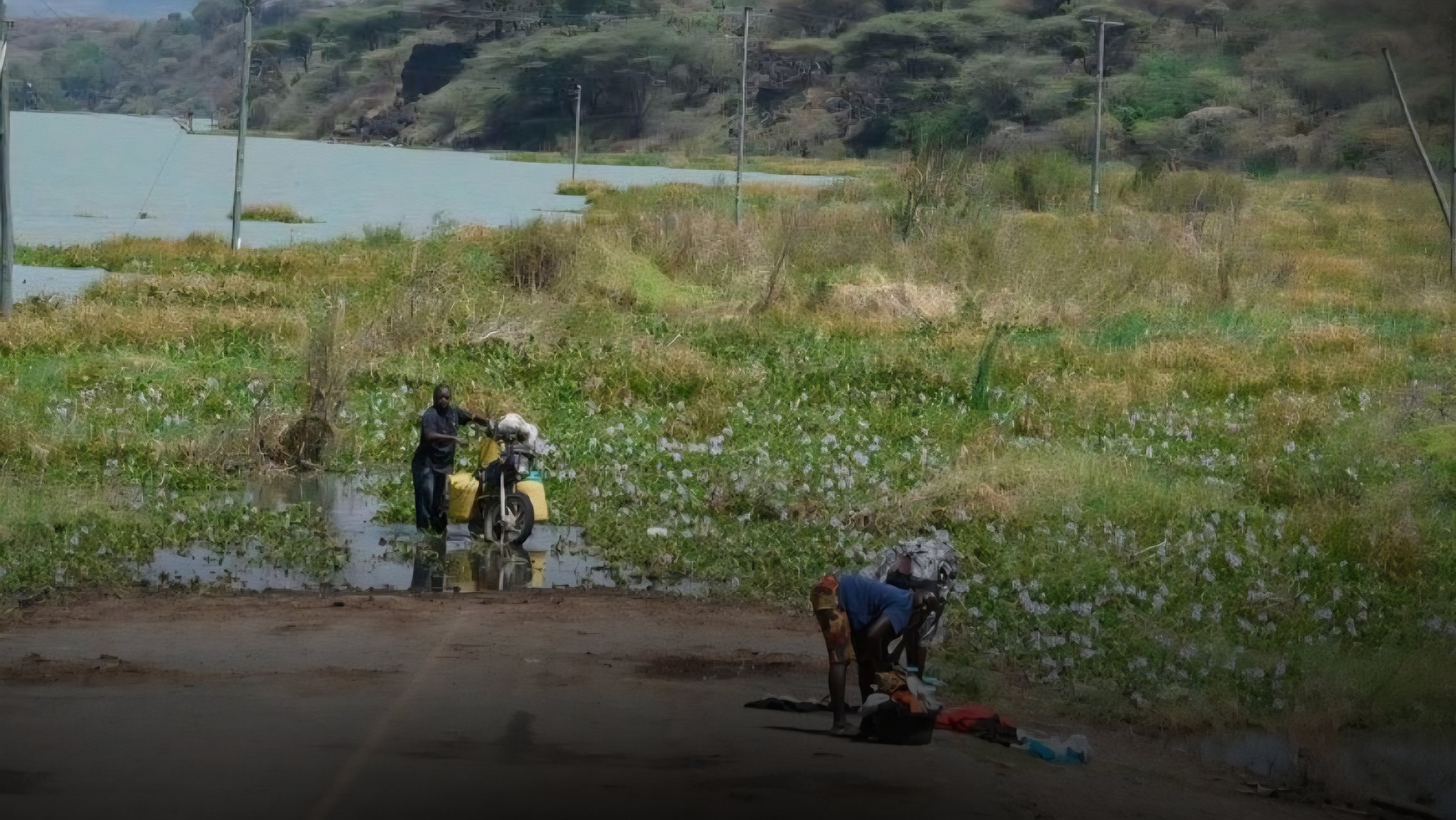

Rising floodwaters from Lake Baringo and Lake Bogoria continue to destroy public infrastructure across Baringo County, forcing families to abandon submerged homes. Essential roads, bridges, and civic buildings remain under water following years of relentless shoreline expansion across the basin.
Transport along the critical Marigat to Chemolingot highway has stalled as major road sections sit beneath deep water. Drivers must navigate waterlogged corridors with extreme caution, while several isolated villages remain accessible only by small wooden boats.
Public education infrastructure faces unprecedented destruction after swelling lake waters invaded school grounds across the county. Loruk Comprehensive Primary School sits mere meters from the shoreline, while Nosukuro Primary School lies completely submerged, leaving hundreds of pupils without functional classrooms.
To halt the ongoing destruction of civil infrastructure, the Ministry of Defence (MoD) is preparing an emergency engineering intervention. National government officials aim to evacuate excess water out of the swelling basin through heavy civil drainage structures and diversion systems.
Principal Secretary (PS) for Defence Dr Patrick Mariru met with senior irrigation officials and Brigadier Titus Sokobe to finalize the project design. The proposed infrastructure will redirect overflow water toward a proposed 100,000-acre agricultural irrigation network across Baringo and Turkana counties.
Under the technical outline, military engineering units will construct underground evacuation tunnels alongside primary, secondary, and tertiary canals. These engineered drainage networks will channel heavy floodwaters away from damaged roads, while supplying needed water to semi-arid farming zones.
Geological and civil engineering experts urge immediate intervention, as rising freshwater levels threaten to merge Lake Baringo with Lake Bogoria. Uncontrolled overflow into the alkaline lake would trigger an ecological disaster, while permanently destroying nearby transport links and residential structures.
Rising water levels throughout the Rift Valley basin have persisted for over a decade due to increased rainfall, catchment shifts, and tectonic activity. Submerged public works have isolated rural communities, while exposing displaced residents to dangerous aquatic wildlife including crocodiles and hippos.
The Kenya National Highways Authority (KeNHA) and regional public works officers continue assessing structural damage along flooded transit routes. Alternative detours remain scarce, which forces local traders to rely on dangerous waterborne transport to move essential goods across the region.
Evacuating surplus lake water provides a practical engineering solution to protect civil structures from further structural degradation. Converting a severe flooding hazard into a controlled agricultural water supply could stabilize regional infrastructure, provided military technical teams construct the main canals without delay.
Preliminary technical surveys for the main canal route are currently underway, as multi-agency teams complete initial site inspections. Restoring key transit corridors remains a top priority for regional logistics, while long-term drainage systems are being planned to mitigate future flood crests.
Engineers expect the civil works to reduce hydraulic pressure on shoreline settlements once heavy excavation begins along the designated channels. Restoring submerged road links will eventually allow municipal authorities to rebuild destroyed health facilities, drinking water points, and municipal market stalls.
Local communities expect military engineering units to deploy earthmoving equipment and commence primary trenching in coming months. Successful construction will safeguard vital transport arteries, while supplying dependable irrigation water to semi-arid agricultural schemes throughout Kenya’s northern rift.
National infrastructure planners emphasize that long-term resilience requires integrating heavy civil engineering with sustainable catchment management practices. Protecting critical transport corridors from future aquatic expansion remains vital for economic stability across the western Rift Valley region.
Comments (0)
Leave a Comment
No comments yet. Be the first to share your thoughts!