
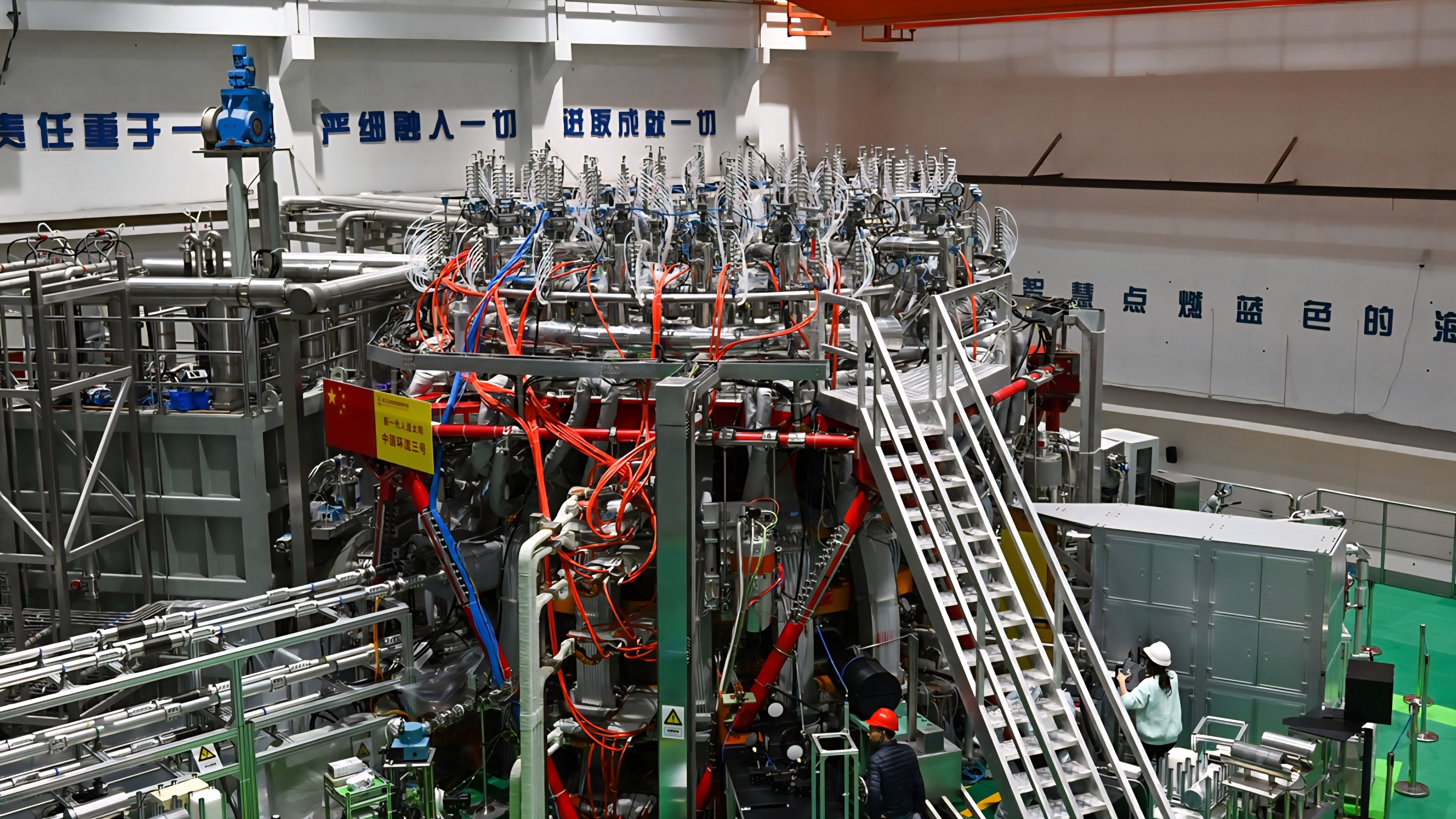

China is moving to commercialize nuclear fusion technology after formally listing the sector as a priority in its 15th Five-Year Plan. The document identifies fusion as a key frontier for the country's future growth, shifting the focus toward large-scale industrial applications.
Central to this push is the HL-3, the nation's new-generation "artificial sun" located in Chengdu, Sichuan Province. Developed by the CNNC Southwestern Institute of Physics, the facility serves as a primary testbed for the extreme physics required to generate clean power.
The inclusion in the national plan suggests a coordinated effort to move beyond experimental milestones. While previous decades focused on plasma stability, the current mandate emphasizes the creation of a viable industrial chain.
Engineers at the Chengdu site are currently refining the magnetic confinement systems. These components are essential for holding plasma at temperatures significantly hotter than the core of the sun.
For construction and energy observers in Kenya, the development reflects a broader global race to secure baseline power that does not rely on fossil fuels. Such infrastructure requires massive specialized cooling systems and reinforced housing structures.
The 15th Five-Year Plan serves as the primary blueprint for Chinese state investment. By naming fusion specifically, the government is signaling to state-owned enterprises that the timeline for pilot power plants is accelerating.
International collaboration remains a factor, though the HL-3 project increasingly demonstrates China's desire for domestic technological sovereignty. The facility has already broken several records for plasma duration and heat intensity.
The transition to an industrial phase will require the development of new materials capable of withstanding intense neutron bombardment. This creates a secondary market for specialized metallurgical construction and high-precision engineering.
Logistical challenges remain, particularly regarding the integration of such high-output reactors into existing electrical grids. However, the policy shift indicates that the technical hurdles are now viewed as manageable within the next decade.
As the 15th Five-Year Plan takes effect, the global energy sector will be watching the Sichuan facility closely. The move could redefine how major infrastructure projects are powered across the globe if the industrialization phase yields a stable prototype.
Comments (0)
Leave a Comment
No comments yet. Be the first to share your thoughts!