
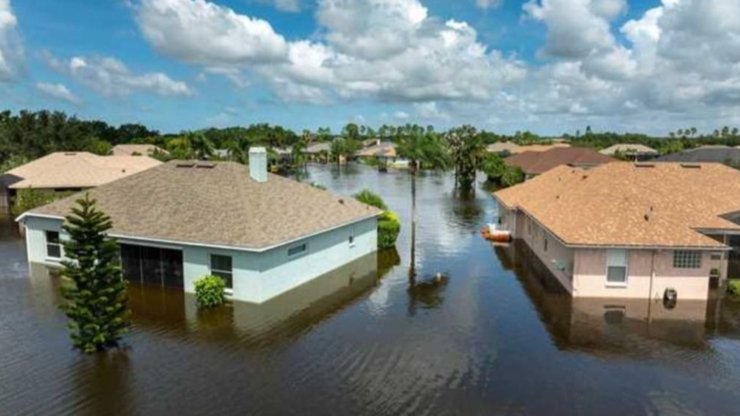

A house that looks attractive on a dry day can lose appeal when heavy rains turn the compound into standing water. As Kenya faces more unpredictable weather, climate resilience is moving higher on the list of factors that influence property value and long-term maintenance costs.
The National Disaster and Operation Centre has flagged 18 counties, including Nairobi, Mombasa and Kisumu, as high-risk areas for El Niño expected in October. For property buyers, developers and homeowners, the ability of a building to handle intense rainfall, heat and flooding is no longer a secondary concern.
Architect Wycliffe Waburiri, immediate former president of the East African Institute of Architects, says designers can no longer ignore the weather conditions a building will face. He stresses the need to design with the full range of elements in mind, from heavy rain and strong sun to wind and temperature swings.
One of the simplest starting points is the roof. Roof pitch, gutters and downpipes determine whether rainwater is directed away from the structure or allowed to sit and eventually find its way inside. An appropriate pitch allows water to flow off. Gutters must be kept clear of debris, and downpipes must have sufficient capacity.
Blocked gutters cause water to overflow onto walls and foundations. Persistent moisture damages finishes and contributes to dampness and mould. Climate-proofing often begins with these basic elements rather than expensive technology.
What happens outside the house is equally important. Many homeowners cover compounds with concrete or cabro for cleanliness. Waburiri warns that excessive hard surfaces prevent rainwater from soaking into the ground. Soft landscaping that allows infiltration helps reduce rapid runoff.
In cities such as Nairobi, large areas of buildings, concrete and paving mean that rainwater runs quickly into drains and rivers instead of being absorbed. The result is the flooding that has become familiar in many neighbourhoods.
Civil engineer Dr Damaris Oyaro, a lecturer and council member at the Institution of Engineers of Kenya, says stormwater management must form part of estate planning from the earliest stages. Engineers should study the natural slope of the land, soil type and expected rainfall before designing channels, culverts and pipes.
Altering natural water pathways without proper drainage almost guarantees flooding. Buyers should check whether a compound sits lower than the road, whether the property lies near a river or natural drainage path, and whether the estate has working stormwater channels.
Raised foundations create a buffer against temporary floodwater. Site design should direct water towards proper channels rather than allowing it to collect around the building. Trees and vegetation help create cooler microclimates, particularly useful in hotter areas such as Juja, Kajiado and Syokimau.
Cross ventilation improves indoor comfort and air quality. Poor circulation can contribute to dampness and what is sometimes called sick building syndrome. During viewings, buyers are advised to open windows, check air movement, look for damp patches and note how much direct sun different rooms receive.
Waburiri recommends three priorities for those working with limited budgets: careful site selection, appropriate building materials with good thermal performance, and a functional roof design suited to both heavy rain and high temperatures. Fashionable designs that ignore local climate can prove costly in daily use.
These features are beginning to influence how properties are valued and marketed. Proper drainage, raised plinths, mature trees, natural ventilation and rainwater harvesting may increasingly appear alongside the usual list of bedrooms and parking spaces.
Comments (0)
Leave a Comment
No comments yet. Be the first to share your thoughts!