
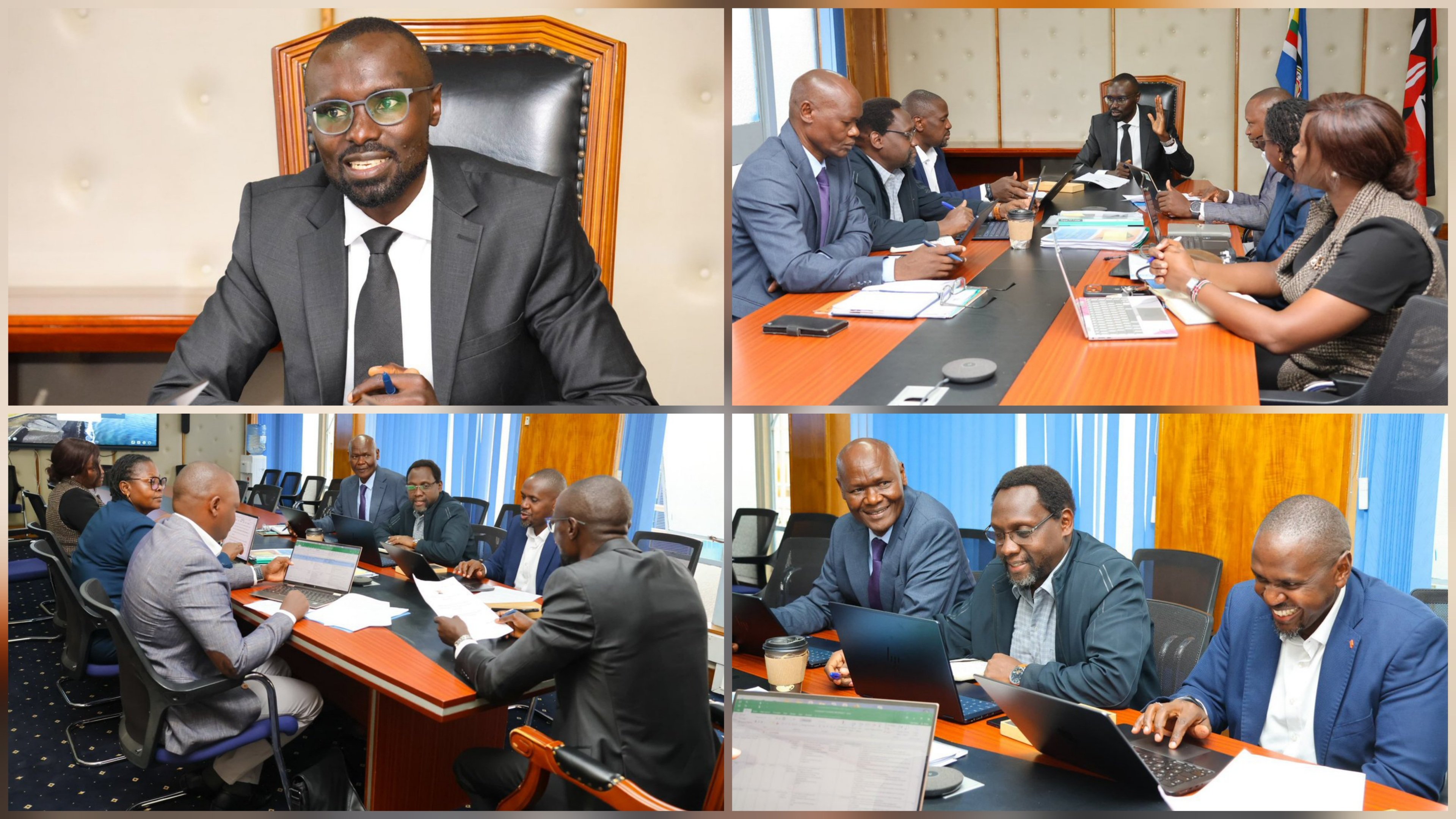

Cabinet Secretary for Water, Sanitation, and Irrigation, Eng. Eric Mugaa has formally reviewed a technical brief detailing the proposed Kenya Resilient Irrigation for Sustainable Economies (KRISE) project.
The briefing, presented by officials from the State Department for Irrigation on April 30, 2026, marks the latest movement in the government’s efforts to restructure the management of national water resources for agricultural use.
The KRISE initiative is designed to address historical inefficiencies in the sector by focusing on five specific pillars. These pathways are intended to shift the current landscape from traditional, state-heavy management toward a more decentralized and technologically integrated model.
The first priority of the project involves the promotion of farmer-led irrigation. This approach seeks to empower individual landholders to manage their own water systems, reducing the reliance on large-scale centralized schemes that often face maintenance challenges.
In addition to individual efforts, the Ministry is targeting the development of high-performing public and community irrigation schemes. These projects are intended to operate under more rigorous performance standards to ensure that public investments translate into measurable crop yields.
A critical component of the KRISE project is the unlocking of irrigation potential in Arid and Semi-Arid Lands (ASALs). These regions, which make up the majority of Kenya’s landmass, have historically remained underutilized due to water scarcity and a lack of distribution infrastructure.
Strengthening water security for irrigation development serves as the fourth pillar. This involves not only the construction of physical assets like dams and pans, but also the protection of existing watersheds to ensure a consistent supply during dry seasons.
Finally, the initiative emphasizes enhancing sector coordination and partnerships. The Ministry aims to streamline how different government agencies and private sector stakeholders interact to avoid the duplication of projects and the waste of technical resources.
During the engagement, Eng. Mugaa highlighted the necessity of adopting high-level, innovative management approaches. He noted that the primary objective of these structural changes is to boost productivity across the country’s existing schemes.
By improving the efficiency of these systems, the Ministry expects to see a direct correlation in the improvement of farmer incomes. Higher yields and more reliable harvesting cycles are seen as the primary drivers for economic stability in rural areas.
The technical brief comes at a time when the administration under President Ruto has placed a heavy emphasis on food security as a pillar of national development. Irrigation is viewed as the most viable method to insulate the agricultural sector from the unpredictable weather patterns currently affecting the region.
The KRISE project aligns with broader infrastructure goals to move away from rain-fed agriculture, which has left the economy vulnerable to frequent droughts and fluctuating food prices.
The implementation of these five pathways will require significant capital investment and technical oversight from the State Department for Irrigation. Detailed timelines for the rollout of specific KRISE-funded projects are expected to be released following further internal reviews by the Ministry.
Comments (0)
Leave a Comment
No comments yet. Be the first to share your thoughts!