
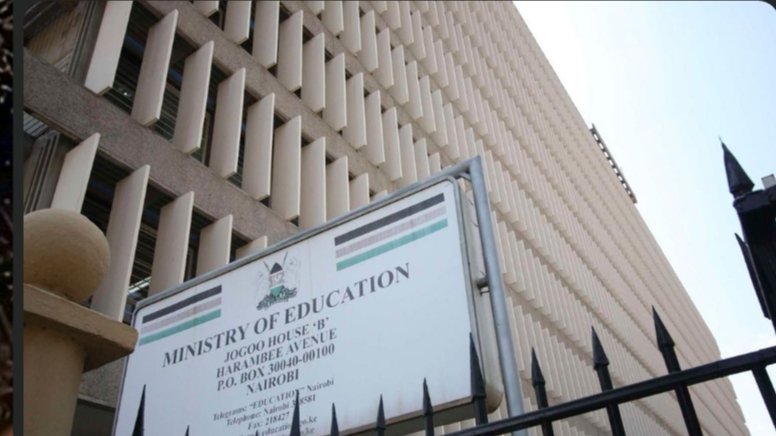

Foreign-curriculum schools face tighter State oversight under a proposed law that would give the Cabinet Secretary for Education power to approve, license and accredit foreign education systems.
The provision is contained in the Basic Education Bill, 2025 currently before Parliament. Any person or institution seeking to offer a foreign system of education in Kenya must first obtain approval from the Cabinet Secretary.
The CS would then be required to make regulations governing the registration, licensing, accreditation and quality assurance of foreign education systems offered in the country.
“A person or institution seeking to offer a foreign system of education in Kenya shall apply to the Cabinet Secretary for approval,” reads Clause 24 of the Bill sponsored by the Ministry of Education.
The proposed legislation is set to affect schools offering international curricula, including British, American, German and French programmes, as well as Cambridge International and the International Baccalaureate.
The Bill does not specify which foreign curricula would fall under the new regime, leaving the details to regulations to be developed by the Cabinet Secretary.
Education Ministry Director General Elyas Abdi told the National Assembly Education Committee that there is currently no provision for international curricula such as IGCSE, British, American or German systems in the Basic Education Act.
The Bill’s provision marks a move towards explicitly placing foreign-curriculum providers within the national legal framework governing basic education.
The proposed controls would operate alongside a broader requirement that every public or private institution seeking to offer basic education in Kenya must be registered.
Registration would initially be provisional for one year, renewable for another year, until the institution has undergone quality assurance and receives written confirmation that its registration is final.
Schools would also have to meet prescribed requirements relating to teachers, learning facilities, premises, occupational health and safety, infrastructure and equipment.
An application for registration would have to provide details including the institution’s governance and management structure, qualifications and experience of its promoters and managers, programmes of instruction, teaching staff, infrastructure and financial capacity.
Foreign-curriculum schools would potentially face two layers of scrutiny: approval to offer the foreign system and registration as a basic education institution.
The proposed law appears to build on recommendations of the Presidential Working Party on Education Reform, which called for stronger quality assurance and a clearer framework for regulating education institutions.
The Working Party found weaknesses in Kenya’s quality assurance system, including gaps in existing standards and weak enforcement mechanisms. It recommended strengthening the Directorate of Quality Assurance and Standards.
Comments (0)
Leave a Comment
No comments yet. Be the first to share your thoughts!