

A version of this article appeared on Nation.Africa.
A sharp increase in student unrest and destructive dormitory fires has heavily disrupted learning across public schools, bringing institutional safety and infrastructural integrity under intense national scrutiny.
The pattern of destruction has forced several top learning institutions to close their gates indefinitely, leaving parents, administrators, and construction auditors questioning the systemic vulnerabilities within modern secondary school compounds.
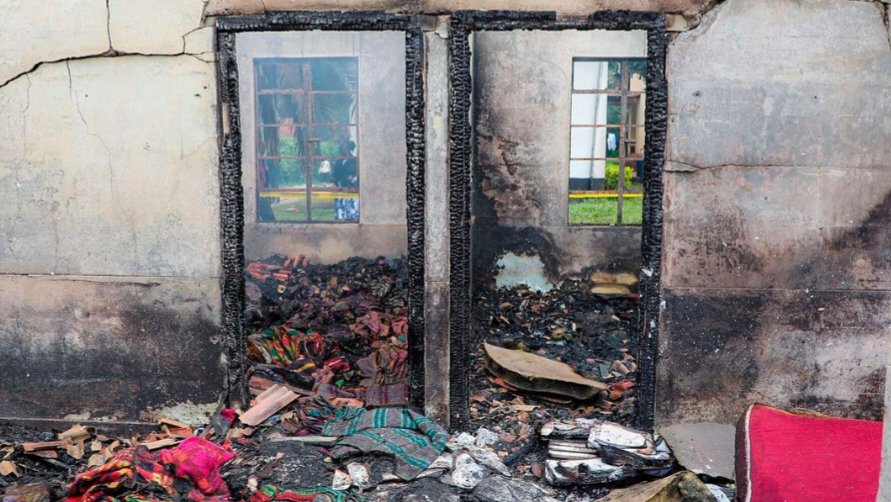
Tensions reached a critical point following a devastating dormitory fire at Utumishi Girls Senior Secondary School in Gilgil, an incident that claimed the lives of 16 students and triggered urgent calls for emergency preparedness reviews.
Structural assessments and fire safety compliance have moved to the forefront of the debate, as the rapid spread of flames points to wider gaps in architectural design, emergency exit accessibility, and early detection infrastructure.
The structural impact became evident at Lenana School in Nairobi, where a separate incident of student unrest led to the systematic destruction of key buildings, including classrooms, laboratories, the library, and the central school hall.
Security infrastructure was also targeted during the chaotic episode, with closed-circuit television (CCTV) networks completely destroyed before the school administration managed to secure the area and send learners home.
The Consortium of Secondary Schools Alumni Associations of Kenya (COSSAAK) has intervened, demanding an immediate nationwide audit of dormitory safety standards and emergency preparedness across all boarding facilities.
According to COSSAAK, the close frequency of these occurrences indicates a broad structural issue, but the Ministry of Education has maintained that the national school calendar will proceed without premature midterm breaks.
Education Principal Secretary (PS) Julius Bitok confirmed that the state invests 770 billion Kenyan shillings into the national education sector, warning that criminal destruction of infrastructure will face severe legal penalties.
The multi-agency teams, including regional police officers and teachers, have established close monitoring protocols, confirming that roughly 30 facilities in the Central Region alone have experienced severe disturbances over a short period.
Comments (0)
Leave a Comment
No comments yet. Be the first to share your thoughts!