
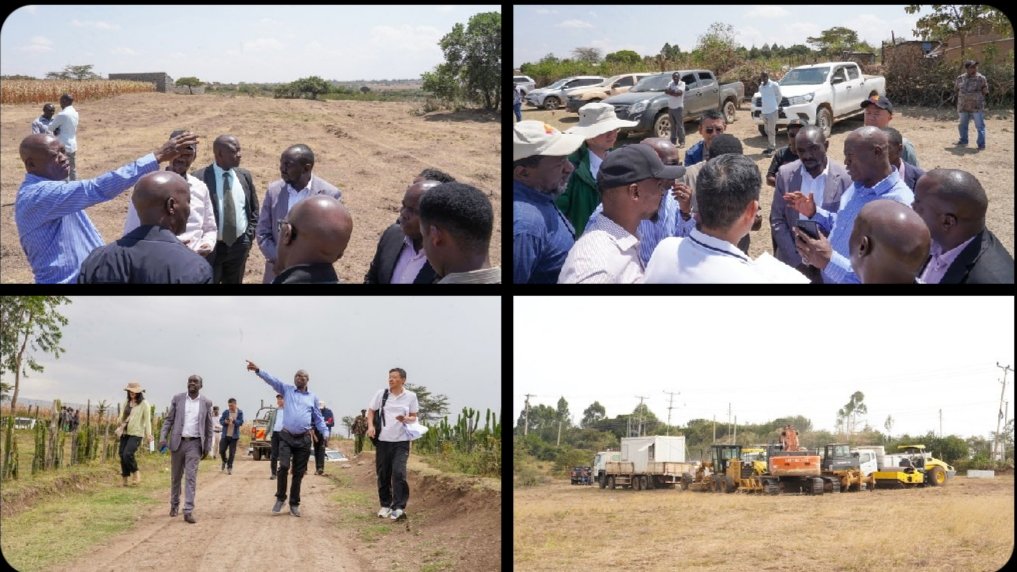

Kenya Railways has begun pre-acquisition surveys and boundary picking along the Naivasha–Kisumu–Malaba Standard Gauge Railway corridor. Construction of the line commenced on 1 July 2026. The Authority describes the project as a transformative investment expected to drive economic growth and improve regional connectivity.
Teams are identifying affected parcels of land to protect landowners’ rights, support fair compensation and prevent boundary disputes. Accurate mapping is also intended to reduce project delays and safeguard public resources. Communities along the route are expected to benefit from economic opportunities during and after construction.
The SGR extension aims to facilitate regional trade, lower logistics costs and strengthen economic integration within East Africa. Once complete, the line will link the existing Naivasha inland container depot with Kisumu and the Malaba border, improving access to Uganda and the wider region.
Transparent land processes remain critical for large infrastructure projects. Clear boundary identification and timely compensation help maintain community support and keep construction schedules on track. Kenya Railways has emphasised its commitment to a smooth and accountable acquisition process.
Land acquisition for linear infrastructure such as railways requires careful coordination with county governments, national land agencies and affected households. Pre-acquisition surveys establish the precise extent of impact and form the basis for valuation and negotiation. Boundary picking reduces the risk of later disputes that can halt works.
The Naivasha–Kisumu–Malaba corridor passes through agricultural and peri-urban areas. Fair and prompt compensation is essential to minimise resistance and protect the livelihoods of those whose land is required. Public participation during the survey stage helps build understanding of the project and its long-term benefits.
Rail transport offers lower unit costs for bulk freight compared with road haulage over long distances. Extending the standard gauge network westward is expected to ease pressure on the Northern Corridor road network and improve the competitiveness of Kenyan and regional exporters.
Kenya Railways continues to position itself as a key player in East African logistics. Completion of the western extension would create a continuous standard gauge link from the port of Mombasa to the Ugandan border, supporting the movement of containers, bulk commodities and eventually passengers.
Progress on land processes will largely determine how quickly civil works can advance along the full corridor. Early and transparent engagement with landowners remains the foundation for successful delivery.
Comments (0)
Leave a Comment
No comments yet. Be the first to share your thoughts!