
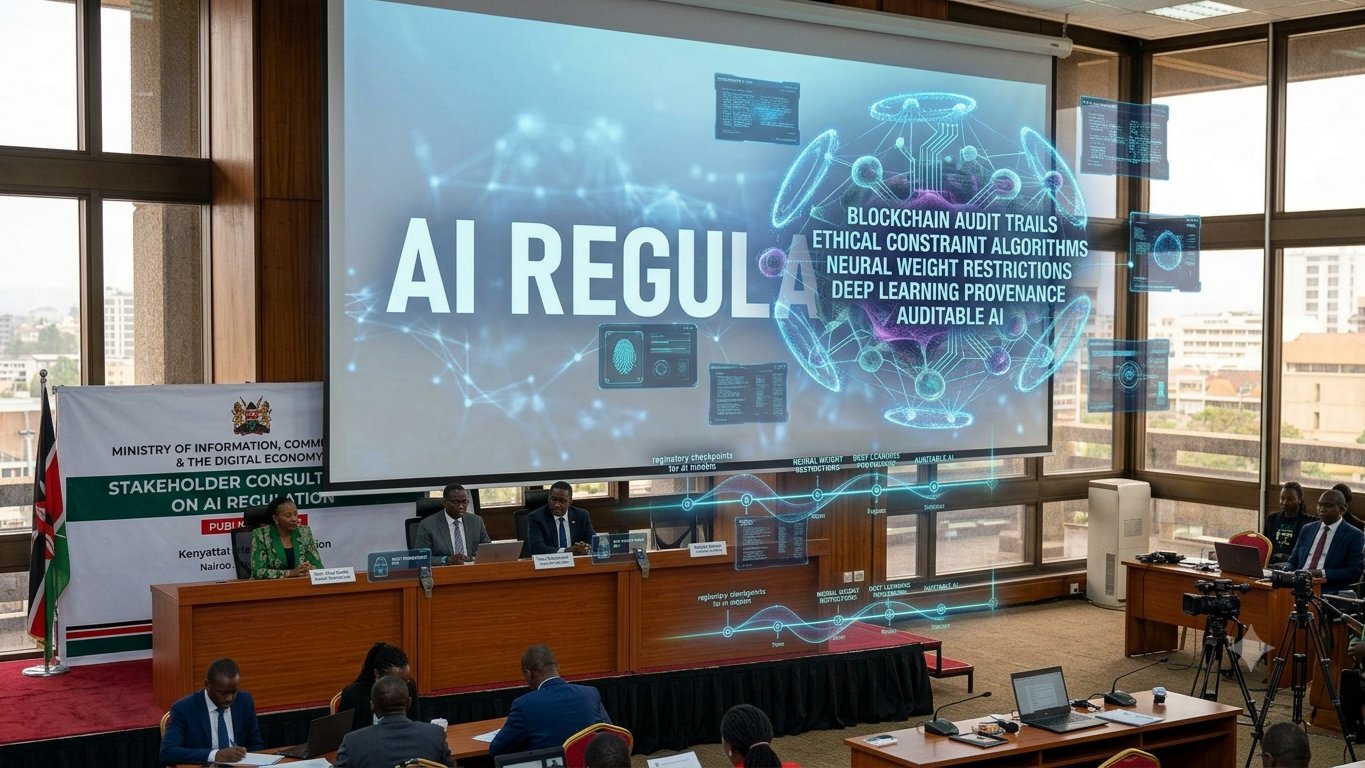

The Kenyan cabinet has established a Standing Cabinet Committee on Artificial Intelligence. The committee will steer the country’s national AI strategy and coordinate policy across government.
The move is designed to advance AI-driven innovation, productivity, public service delivery, job creation and inclusive economic growth. At the same time, the committee will ensure appropriate governance and safeguards are put in place.
Kenya has positioned itself as East Africa’s technology hub. The creation of a dedicated high-level body signals that the government is treating artificial intelligence as a strategic national priority rather than leaving development entirely to the private sector.
Proponents argue that coordinated leadership is essential in a fast-evolving field. Without a central committee, different ministries risk pursuing fragmented initiatives that could lead to duplication, policy gaps or conflicting regulations. A unified approach can help Kenya avoid common pitfalls seen in other countries.
The committee is also expected to address ethical and social challenges. Artificial intelligence raises important questions around data privacy, algorithmic bias, job displacement and national security. A dedicated body can develop frameworks that promote innovation while protecting citizens and safeguarding public interest.
Supporters say this step will strengthen Kenya’s competitiveness. Global powers and other African nations are investing heavily in AI. A structured national approach can help Kenya attract investment, develop local talent and build the infrastructure needed for AI to thrive.
Critics may argue that creating another committee adds to bureaucracy and may delay real progress. Some in the tech community believe Kenya should prioritise rapid experimentation and private-sector-led innovation rather than heavy government coordination.
There is also concern about implementation capacity. Many previous high-level committees in Kenya have struggled to deliver tangible results due to limited resources or overlapping mandates. The success of this committee will depend on clear powers, adequate funding and strong leadership.
Despite these potential challenges, the decision reflects growing recognition of AI’s transformative potential. From agriculture and healthcare to education and public administration, artificial intelligence can help solve long-standing development problems.
The committee is expected to work closely with the private sector, academia and international partners. Its success will be measured by how well it translates high-level policy into practical programmes that create jobs, improve services and build public trust in emerging technologies.
Comments (0)
Leave a Comment
No comments yet. Be the first to share your thoughts!