
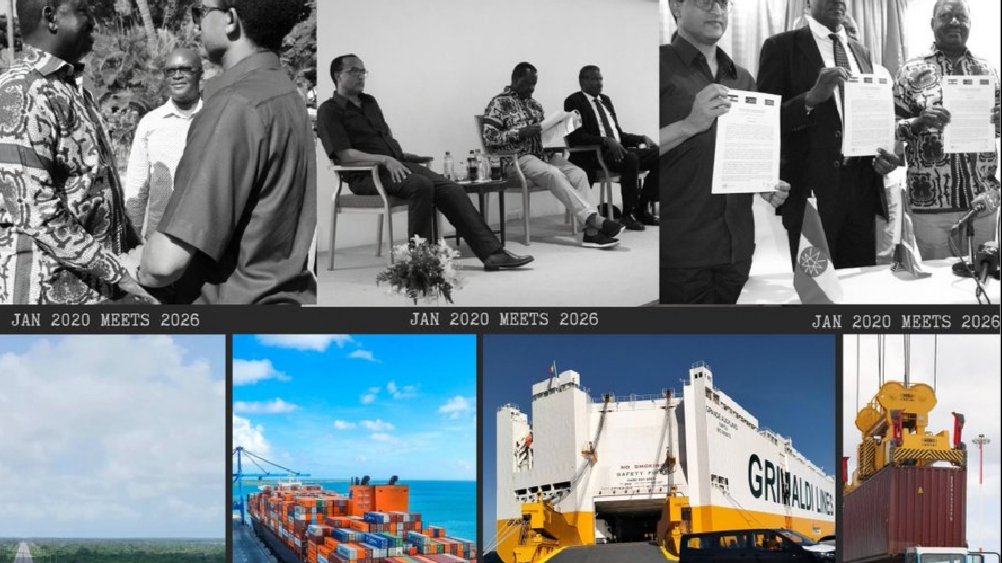

Six years after Kenya, Ethiopia and South Sudan held the first Ministerial Meeting on the LAPSSET Corridor in Mombasa, the LAPSSET Corridor Development Authority has released an update on progress at Lamu Port.
In 2020 the corridor had one completed berth, with Phase I still under construction and regional coordination being reinforced. By 2026 three Phase I berths are operational.
The authority reports growing vessel calls, increasing cargo activity and expanded shipping connections. Key regional investments are also breaking ground.
“The vision didn’t stay on paper. The transformation is already taking place,” the official LAPSSET account stated in a post marking the anniversary of the first ministerial meeting.
The Lamu Port-South Sudan-Ethiopia Transport Corridor is a multi-country infrastructure programme designed to improve connectivity between the three nations and open new trade routes to the Indian Ocean.
Phase I of the port at Lamu forms a central component of the project. The move from one completed berth in 2020 to three operational berths in 2026 marks the most visible physical advance highlighted in the update.
Officials point to rising vessel traffic and cargo volumes as evidence that the port is beginning to function as intended. Expanded shipping connections are also listed among the current developments.
Regional investments linked to the wider corridor are described as breaking ground, though the post does not specify individual projects or timelines beyond the berth count and activity indicators.
The first Ministerial Meeting in Mombasa six years ago brought together the three partner countries to coordinate planning and implementation of the corridor. The latest statement presents the intervening period as one of tangible delivery rather than continued planning alone.
Lamu Port sits at the Kenyan end of the corridor and is intended to serve as the maritime gateway for traffic destined for Ethiopia and South Sudan. Progress on the berths is therefore central to the overall programme.
The authority’s comparison between the 2020 and 2026 positions focuses on physical infrastructure and operational metrics. No additional figures on cargo tonnage, vessel numbers or investment values were provided in the update.
The post frames the current status as proof that the original vision is moving into reality. Three operational Phase I berths, together with reported growth in shipping activity, form the core of that claim.
Further details on the specific regional investments now under way were not included. The emphasis remains on the contrast between the single completed berth of 2020 and the three berths operating today.
Comments (0)
Leave a Comment
No comments yet. Be the first to share your thoughts!