
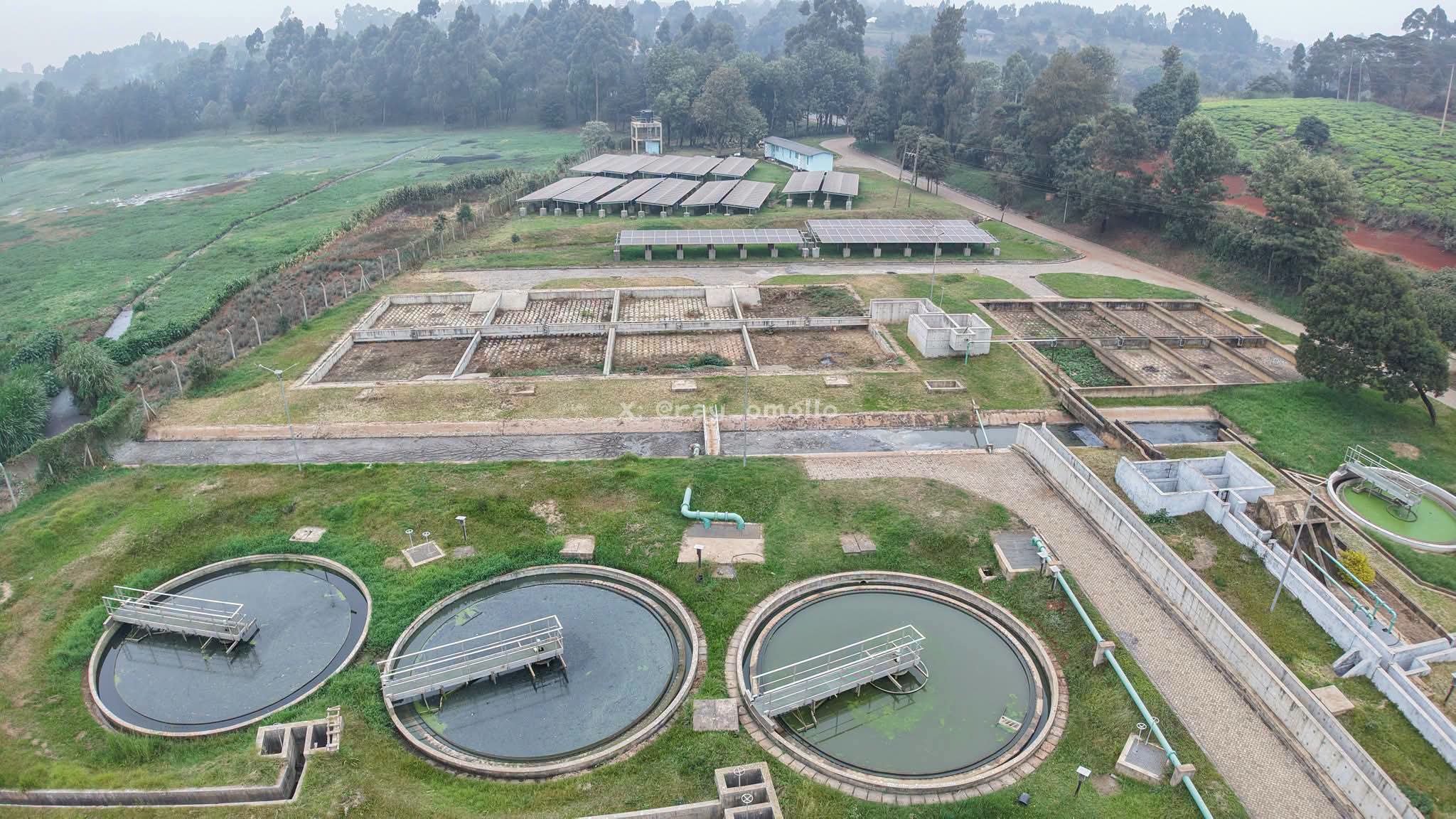

The Limuru Water Supply and Sewerage Project is a critical sanitation infrastructure investment modernising wastewater management in Limuru Town, Kiambu County. It responds to growing pressure on ageing urban sanitation systems constructed decades ago.
Those older systems can no longer adequately meet the demands of expanding populations, rapid urbanisation and rising economic activity. The project is implemented by the Athi Water Works Development Agency with funding from the National Government and the African Development Bank.
It addresses longstanding sanitation deficiencies through the expansion and modernisation of the town’s sewerage network and wastewater treatment systems. A solar power installation, currently under development, will further enhance the plant’s operational efficiency by reducing electricity costs.
Civil works have been completed and the project is awaiting final handover to the utility operator. Key interventions include the construction of a 32-kilometre trunk and secondary sewer network and 450 direct household sewer connections.
Other works cover the rehabilitation of the existing oxidation ditch and the construction of two new oxidation ditches, clarifiers, a pump chamber, sludge drying beds and boreholes. Supporting facilities include a control room and generator house.
These upgrades have increased the treatment plant’s capacity from 550 to 3,000 cubic metres per day. Limuru Town will receive 2,500 cubic metres of that capacity, eliminating the previous overload on the outdated facility.
The expanded infrastructure provides adequate capacity to meet current and future wastewater demand. Sewer coverage in Limuru’s urban area is expected to rise from 9 to 25 percent, delivering improved sanitation services to more than 35,000 residents.
The State Department for Internal Security and National Administration played a critical facilitative role in the project’s delivery. It coordinated national government agencies, strengthened intergovernmental collaboration and maintained a secure and enabling environment that supported uninterrupted implementation.
The project forms part of broader efforts to upgrade urban sanitation infrastructure in rapidly growing towns around Nairobi. Limuru has experienced steady population and economic growth that placed increasing strain on existing wastewater systems.
By expanding both the collection network and treatment capacity, the scheme aims to reduce the environmental and public health risks associated with inadequate sewerage. Direct household connections will allow more residents to move away from on-site sanitation solutions.
The solar power component is intended to lower long-term operating costs once the plant is fully handed over. Reduced electricity expenditure can free resources for routine maintenance and further network extensions.
Athi Water Works Development Agency has overseen construction while the National Government and African Development Bank provided the financing. The combination of domestic and development partner funding is common for large sanitation projects of this scale.
Final handover to the utility operator will mark the transition from construction to commercial operation. Once that step is complete, the new capacity and expanded network will become available for daily use.
The increase in sewer coverage from 9 to 25 percent represents a substantial improvement in service levels for Limuru’s urban population. More than 35,000 residents are projected to benefit from the upgraded system.
Coordination across government levels was highlighted as essential to keeping works on schedule. The secure environment maintained during construction allowed contractors to complete civil works without major interruptions.
Comments (0)
Leave a Comment
No comments yet. Be the first to share your thoughts!