
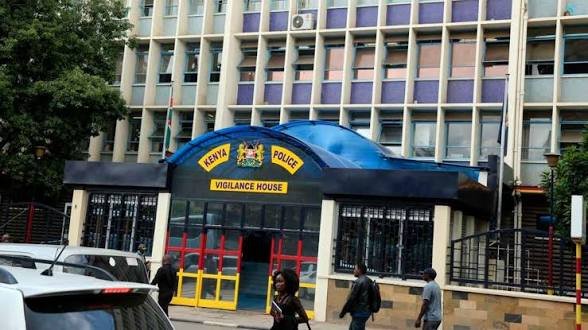

The operational stability of Nairobi's security network is under scrutiny following revelations that 68 percent of the city's police stations are situated on land for which they hold no
Inspector General of Police Douglas Kanja provided these details during a presentation to the Senate Committee on National Security, highlighting a systemic failure in securing the legal tenure of essential public infrastructure.
Out of 64 established police stations within the Nairobi region, only 20 possess the necessary ownership documentation. This leaves 44 facilities technically squatting on land that is increasingly targeted by private developers and land grabbers.
The lack of titles is not limited to small outposts. High-profile facilities in affluent or busy commercial zones, including Gigiri, Muthaiga, and Ngara, are among those operating without the protection of a deed.
The Starehe subcounty appears to be the most affected by this administrative oversight. In this densely populated area, the competition for real estate has historically led to aggressive encroachment on public utility plots.
Kanja informed the committee that the absence of these documents has made it difficult to prevent the piecemeal loss of police land. In some instances, private individuals have already moved to claim portions of the grounds where these stations sit.
Beyond the immediate threat of grabbing, the lack of title deeds complicates the long-term development of police housing and modern station blocks. Without proof of ownership, budgeting for permanent structural improvements often faces legal and audit hurdles.
This report comes at a time when the Auditor General has repeatedly warned about the vulnerability of National Police Service assets. Previous audits indicated that roughly 80 percent of police land across the country lacks proper titling.
The Ministry of Interior has been under pressure to coordinate with the Ministry of Lands to fast-track the titling process. However, the process is often slowed by missing historical records and the fact that many stations were built on land originally donated by communities or colonial entities without formal transfers.
Senator members expressed concern that the very institutions tasked with enforcing the law and protecting property are themselves unable to secure their own boundaries.
The committee has now tasked the police leadership to provide a clear roadmap for the recovery of contested parcels and the formal registration of all station land. Failure to do so, members warned, could see more security installations displaced by private commercial interests.
The situation in Nairobi is a microcosm of a broader national issue. While the government has previously announced initiatives to survey and title all public school and police land, the implementation has not kept pace with the rate of urban expansion.
President Ruto has previously emphasized the need for digital land records to curb fraud, but for these 44 stations, the priority remains the basic acquisition of a primary title to ward off imminent encroachment.
Without swift intervention, the cost of reclaiming this land in the future, or the expense of relocating these stations, will likely fall on the taxpayer.
Comments (0)
Leave a Comment
No comments yet. Be the first to share your thoughts!