
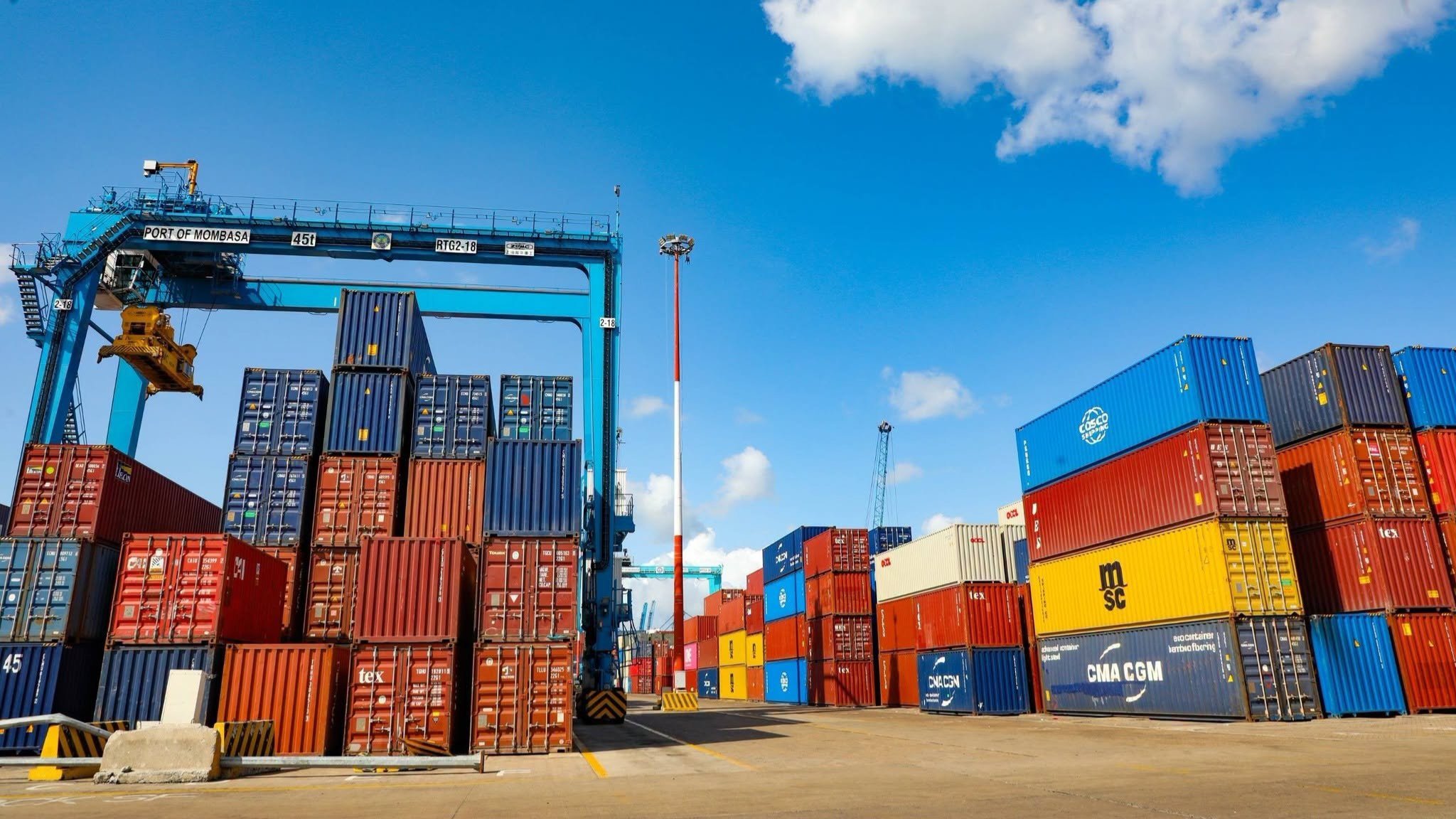

The Kenya Ports Authority (KPA) has updated its maritime manifest, revealing a substantial influx of shipping traffic along the East African coast. A newly released vessel schedule confirms that multiple international shipping lines have directed their fleets toward Kenyan waters, creating a busy two-week operational window.
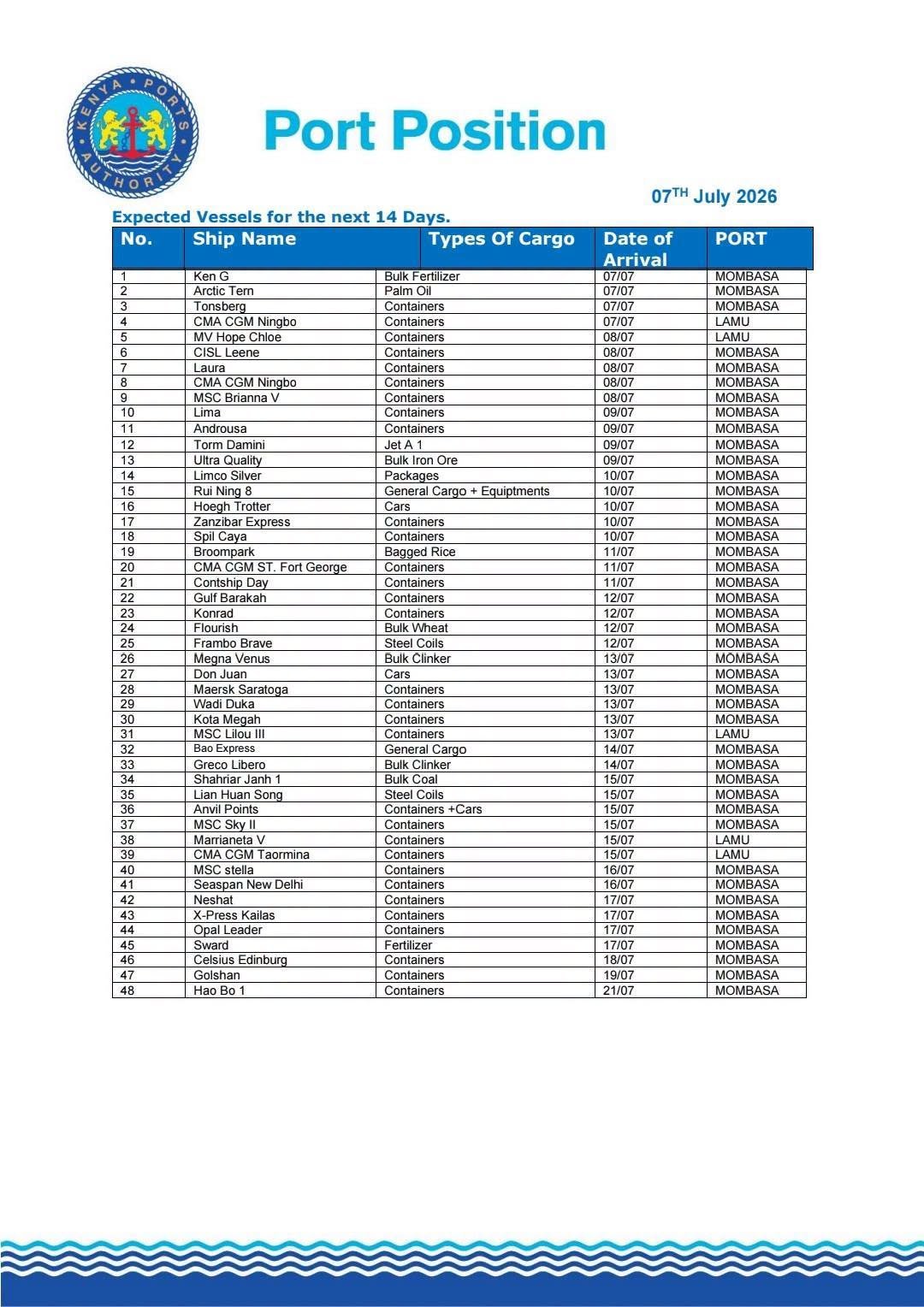
Logistics planners are preparing for a heavy workload at the primary coastal gateways. A total of 48 cargo vessels will call the Ports of Mombasa and Lamu over the next 14 days.
This coordinated arrival highlights the dual-port strategy managed by the state. The incoming traffic is distributed according to the specific handling capacities of each harbor, which determines where specific commercial goods are offloaded, when the ships dock.
The Port of Mombasa remains the primary destination for the vast majority of these incoming ocean liners. The older, more expansive gateway is scheduled to handle 43 vessels during this two-week period.
Operations at Mombasa will span across multiple specialized berths. The incoming fleet comprises 24 container ships, 10 conventional cargo vessels, seven car carriers, and two oil tankers, which will require precise logistical management.
Heavy infrastructure investments at Kilindini Harbour have expanded its capacity to handle thousands of Twenty-Foot Equivalent Units (TEUs). These modern berths allow for faster turnaround times for containerized trade, but the upcoming wave of arrivals will test the efficiency of local cargo handlers.
The government under President Ruto has emphasized the importance of maritime infrastructure in securing regional supply lines. Ensuring rapid customs clearance and cargo evacuation from the berths is vital, if the country wants to maintain its status as a regional logistics hub.
Meanwhile, the Port of Lamu is scheduled to receive a smaller, highly strategic segment of the incoming shipping line-up. The newer northern facility is expected to receive five container vessels and two car carriers.
Lamu represents a critical node in the larger regional infrastructure network. Developed under the Lamu Port-South Sudan-Ethiopia Transport (LAPSSET) corridor project, this deep-water port is designed to accommodate larger panamax-class commercial vessels.
The inclusion of two car carriers at Lamu indicates a broadening of its cargo profile. Previously focused heavily on bulk goods, the terminal is slowly diversifying its offloading operations, although container ships still dominate its schedule.
Clearing this volume of automotive and containerized freight requires substantial coordination with hinterland transport systems. The standard gauge railway and expanded road networks must absorb the cargo, when it leaves the port area.
The temporary surge in shipping volume directly impacts regional economies relying on Kenya for transit cargo. Landlocked nations like Uganda and Rwanda depend on these precise arrival schedules, which dictate supply chain stability across Central Africa.
Port administrators have confirmed that all berths are fully prepared to receive the incoming vessels. Specialized gantry cranes and terminal tractors have been serviced to minimize ship turnaround times, which prevents any expensive delays for international shipping lines inside the harbors.
The upcoming fortnight will serve as a practical test of Kenya's expanded maritime capacity. With 48 vessels arriving across both locations, the maritime sector must demonstrate its capability to manage high-volume trade.
Stevedoring teams and marine pilots are scheduled for round-the-clock shifts to handle the high density of shipping. KPA officials remain optimistic that the modern infrastructure will prevent any severe bottlenecks during the period.
Comments (0)
Leave a Comment
No comments yet. Be the first to share your thoughts!