
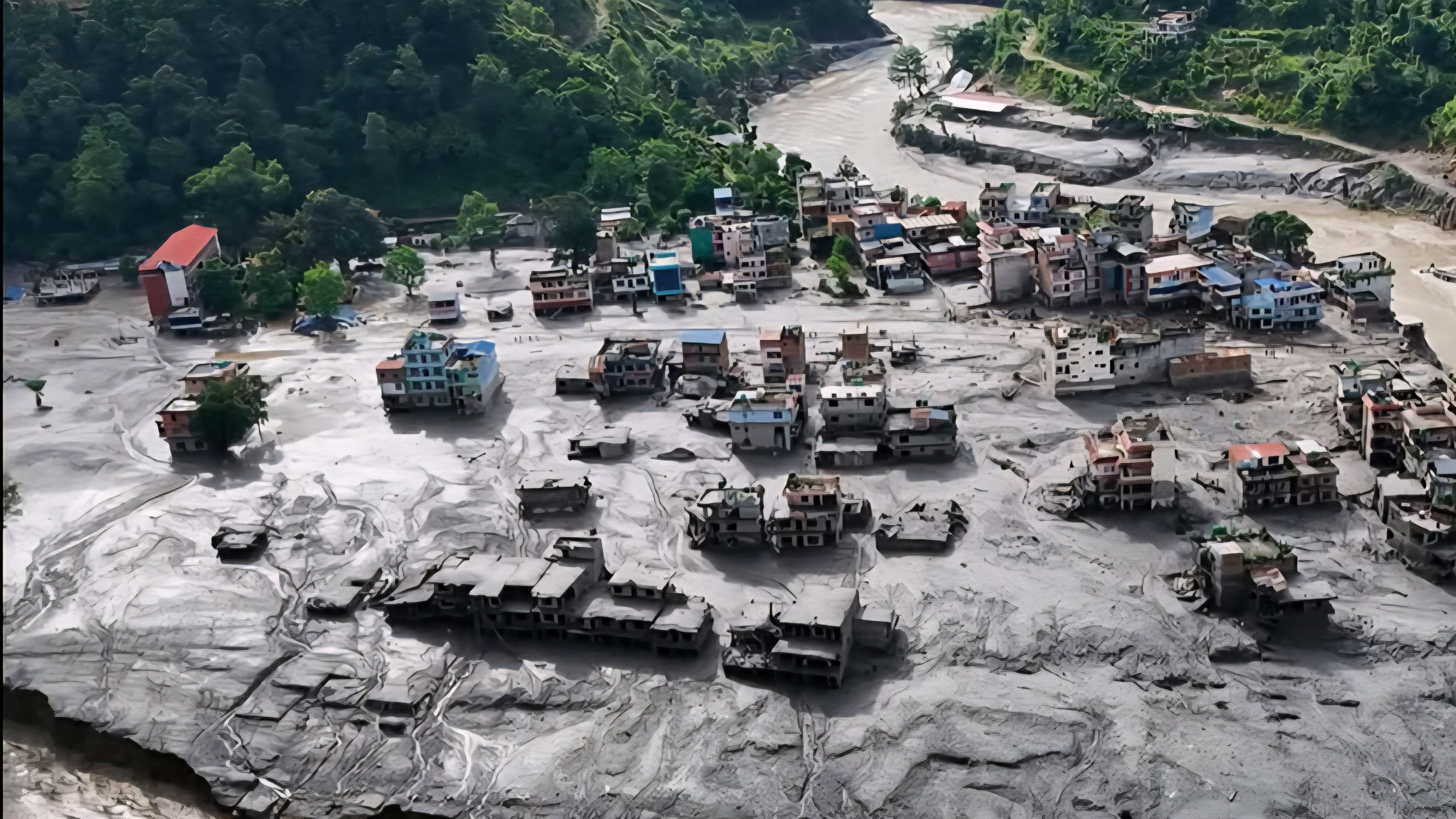

Search and rescue operations are currently underway along the mountainous border region connecting Nepal and China, following devastating floodwaters that swept through several local settlements. Emergency response teams have been deployed across the affected zones to locate survivors, clear heavy debris, and establish emergency access routes.
Official reports indicate that more than 160 people have been confirmed dead in the wake of the severe flooding. Authorities confirmed that over 1,300 individuals remain missing across the impacted villages, including hundreds of foreign tourists who were traveling or trekking near the border district when the surge occurred.
The sudden floodwaters completely wiped out multiple residential communities, leaving vast swathes of land inundated with thick mud, silt, and uprooted trees. Local physical infrastructure has suffered catastrophic destruction, with critical access roads, footbridges, and communication networks rendered entirely unusable by the moving water and mud.
The destruction of primary transport links has created massive logistical hurdles for response teams attempting to transport heavy machinery and emergency supplies into the affected river valleys. Engineers and rescue personnel are working under hazardous field conditions to clear landslip deposits and stabilize fragile embankments near residential zones.
Mountainous terrain along the border regularly presents severe structural risks during periods of intense rainfall, as river channels rapidly overflow into low-lying settlements built along riverbanks. The vulnerability of rural housing and basic regional infrastructure has complicated the deployment of emergency equipment and personnel in the immediate aftermath of the event.
Disaster management authorities, along with local security forces, are prioritizing the clearance of critical road corridors to allow heavy equipment to reach isolated disaster sites. Temporary medical camps and emergency shelters are being established near the boundary zones to support displaced residents while search teams work through dense mud deposits.
Ongoing monitoring efforts are assessing the stability of surrounding slopes and riverways to prevent secondary hazards from threatening active rescue crews. Field units continue to search through damaged buildings and river silt as local officials work to identify victims and establish contact with missing individuals.
Relief agencies continue to coordinate with government authorities to distribute emergency aid, clean water, and medical supplies to surviving community members. Operational updates remain ongoing as emergency response personnel continue their search efforts across the disaster zone.
Comments (0)
Leave a Comment
No comments yet. Be the first to share your thoughts!