
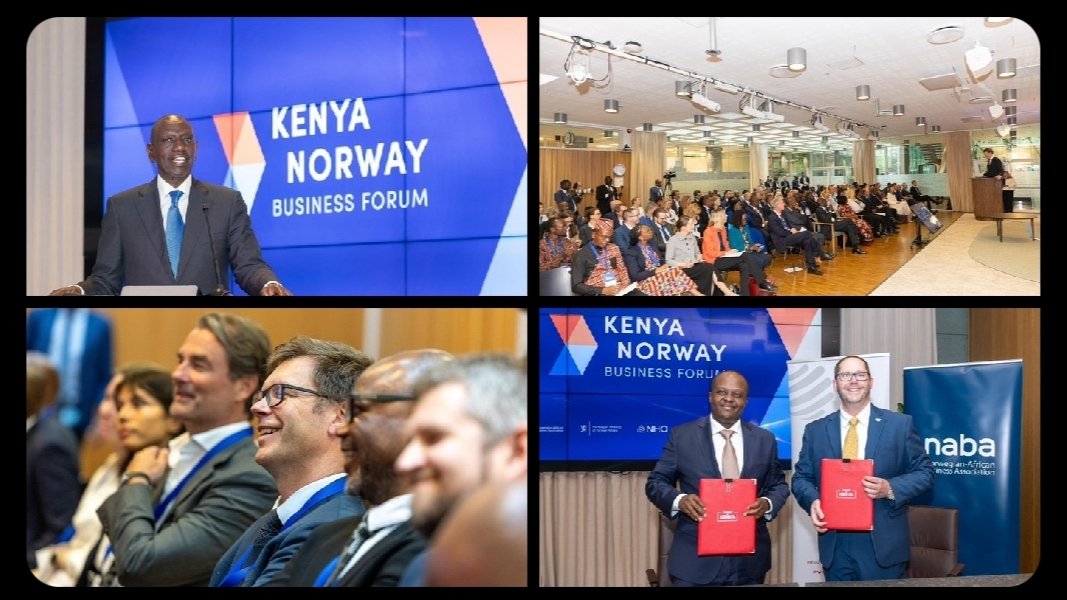

President William Ruto’s engagements in Oslo this week delivered several practical steps forward for Kenya’s economic partnerships. The trip focused on maritime cooperation and opened avenues for investment that could support long-term growth across key sectors.
Discussions with the Norwegian Shipowners’ Association produced a firm commitment. Wilhelmsen Ship Management and other operators pledged to recruit 1,000 Kenyan seafarers by 2030. The first 120 positions are slated for this year.
This deal offers direct employment for trained maritime professionals. It also creates pathways for skills development and steady remittance flows back to Kenyan households.
Such placements strengthen ties with international fleets. They enhance operational standards for Kenyan workers entering the global shipping industry.
Beyond jobs, the meetings explored new shipping routes. These would connect Mombasa and Lamu ports more directly with Norwegian harbours. Improved connectivity promises to boost trade volumes and supply chain reliability.
Participants further examined ways to expand shipbuilding capacity along Kenya’s coast. This area holds potential for significant construction activity. New yards and repair facilities would generate demand for engineering expertise and local contractors.
Green trade corridors formed another important topic. These initiatives aim to cut emissions in maritime transport. Kenyan priorities in sustainable development align closely with Norwegian experience in this field.
Ruto addressed the Norwegian-Kenyan Business Forum during the visit. He emphasised Kenya’s young workforce and its role as a gateway to Africa’s 1.4 billion consumers. The pitch highlighted opportunities in infrastructure and renewable energy.
Existing cooperation under the National Electric Mobility Programme received positive mention. Talks extended to green industrialisation and agriculture. These sectors offer scope for technology transfer and joint projects.
A meeting with Masud Gharahkhani, President of the Norwegian Parliament, reinforced bilateral relations. The leaders discussed parliamentary diplomacy and democratic governance. They also noted Norway’s support for peace efforts in South Sudan.
The visit underscores the value of targeted diplomacy. It shifts focus from general statements to measurable outcomes like the seafarer recruitment target.
Kenya’s blue economy stands to benefit substantially. Ports, shipping services and coastal infrastructure could see increased activity. This includes potential upgrades that involve construction and engineering work.
Observers point to the broader advantages of such international engagements. They help integrate Kenya into global supply chains. Future port modernisations and green facilities could follow from these foundations.
Follow-up work remains necessary on recruitment details and project timelines. Kenyan agencies will coordinate with Norwegian partners in coming months.
Overall, the Oslo trip highlights Kenya’s strategic positioning. It attracts investment while creating jobs and building capacity in critical areas.
The outcomes reflect a pragmatic approach to partnerships. They promise tangible gains for workers, contractors and the wider economy in the years ahead.
Comments (0)
Leave a Comment
No comments yet. Be the first to share your thoughts!