
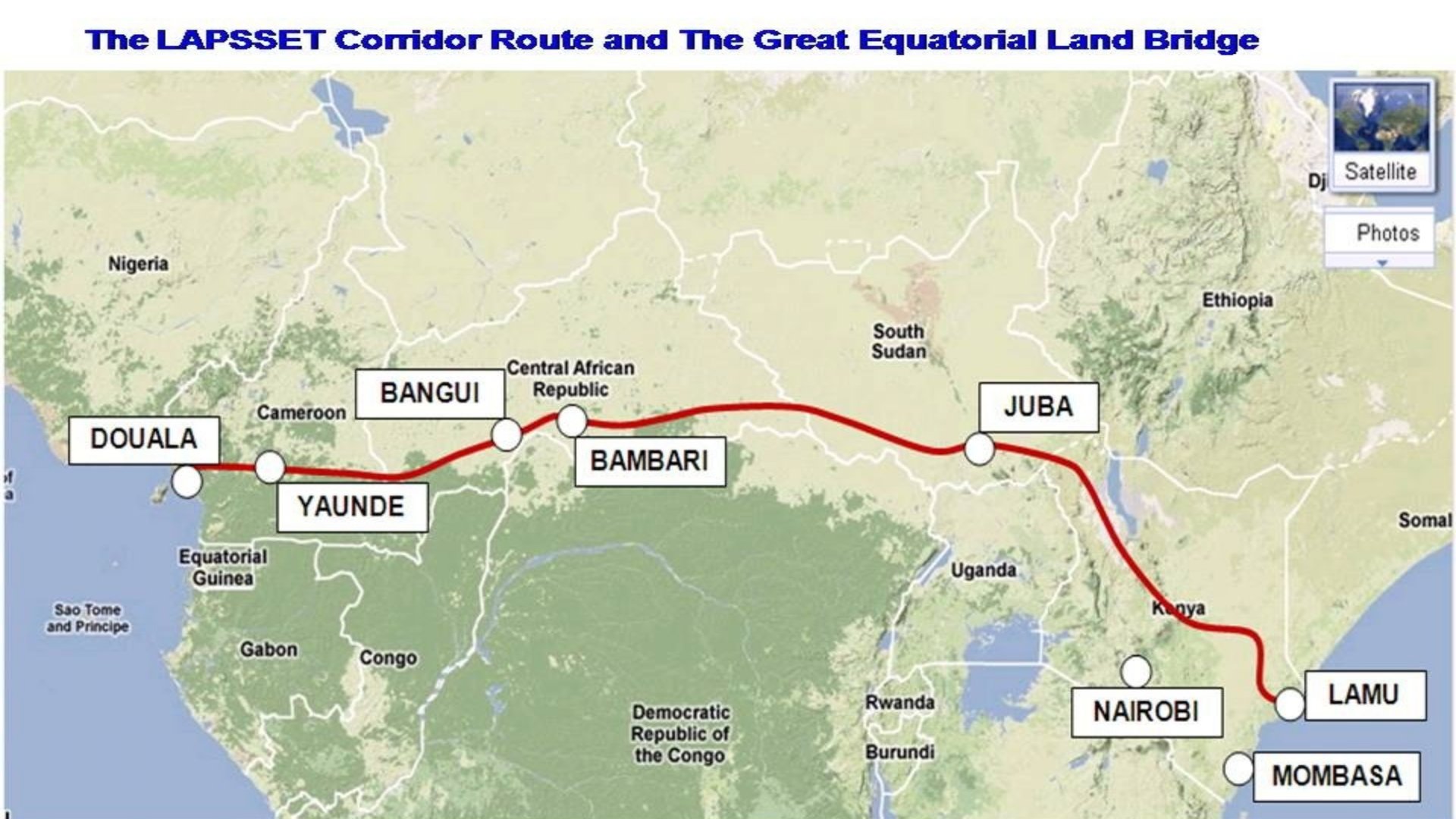

Five African nations face a collective financing requirement exceeding $60 billion to deliver the proposed Great Equatorial Land Bridge. The ambitious infrastructure project aims to create a direct transcontinental link connecting East Africa to West Africa.
The central component of the initiative involves constructing a 4,200-kilometer transport corridor across central Africa. Planning documents indicate the alignment will cross multiple national borders, linking remote interior regions to major trade centers and maritime hubs.
Under the current blueprint, the new corridor will join the Lamu Port-South Sudan-Ethiopia-Transport (LAPSSET) corridor at Juba in South Sudan. The integration connects existing eastern transport networks into a unified transcontinental passage.
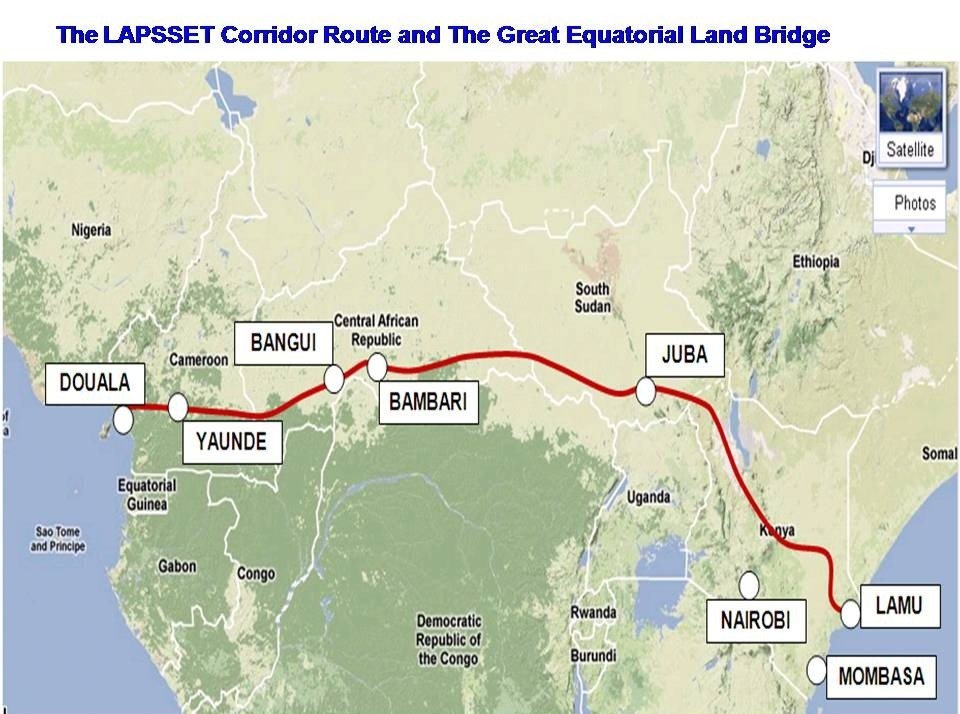
Once connected to LAPSSET, the entire ocean-to-ocean corridor will span 6,495 kilometers from Kenya to Cameroon. The complete trade route stretches from the Port of Lamu, passing through Nairobi, Juba, Bambari, Bangui, and Yaounde, before reaching the Port of Douala.
Establishing a direct overland connection between the Indian Ocean and the Atlantic Ocean is structured to cut maritime transit times. Cargo ships navigating around the continent currently lose weeks, whereas an equatorial land bridge provides a much shorter crossing.
Supporters highlight the potential to accelerate regional economic integration under the African Continental Free Trade Area (AfCFTA). Transport officials maintain that cross-continental highways will boost intra-African trade volumes, while lowering overall freight costs for landlocked interior regions.
However, securing more than $60 billion in capital funding remains a primary obstacle for the five participating nations. Developing nations must coordinate with international development banks, private equity firms, and bilateral partners to secure long-term infrastructure loans.
Beyond financial commitments, project leaders must address significant security challenges along the designated route. Border zones across Central Africa, if left unmonitored, could disrupt ongoing civil works and compromise the movement of long-distance commercial freight.
Border harmonization presents another critical task for participating governments across the central corridor. Standardizing customs protocols, transit fees, and immigration checks will prove essential, if vehicles are to move efficiently across five distinct national jurisdictions.
Port infrastructure at both ends of the corridor is already taking shape to accommodate larger cargo volumes. The Port of Lamu in Kenya and maritime facilities in Douala serve as coastal gateways, but inland connections require extensive capital upgrades.
In Kenya, state authorities are expanding feeder highways to handle heavy commercial vehicles traveling toward South Sudan. President Ruto has consistently advocated for regional transport projects, identifying corridor development as key to expanding national trade reach.
Technical committees are currently assessing the engineering standards required for heavy rail and high-capacity highways across difficult terrain. Standardizing design specifications will help prevent bottlenecks, when individual contractors build adjacent sections in different countries.
Contractors face challenging geographical terrain, including dense tropical forests and major river crossings along the central section. Specialized engineering solutions will be mandatory, if the highway and railway tracks are to withstand extreme seasonal weather patterns.
If member states successfully secure initial financing and maintain political alignment, the project will reshape African trade dynamics. The coming years will demonstrate whether participating governments can overcome funding hurdles and bring the ambitious corridor to reality.
Comments (0)
Leave a Comment
No comments yet. Be the first to share your thoughts!