
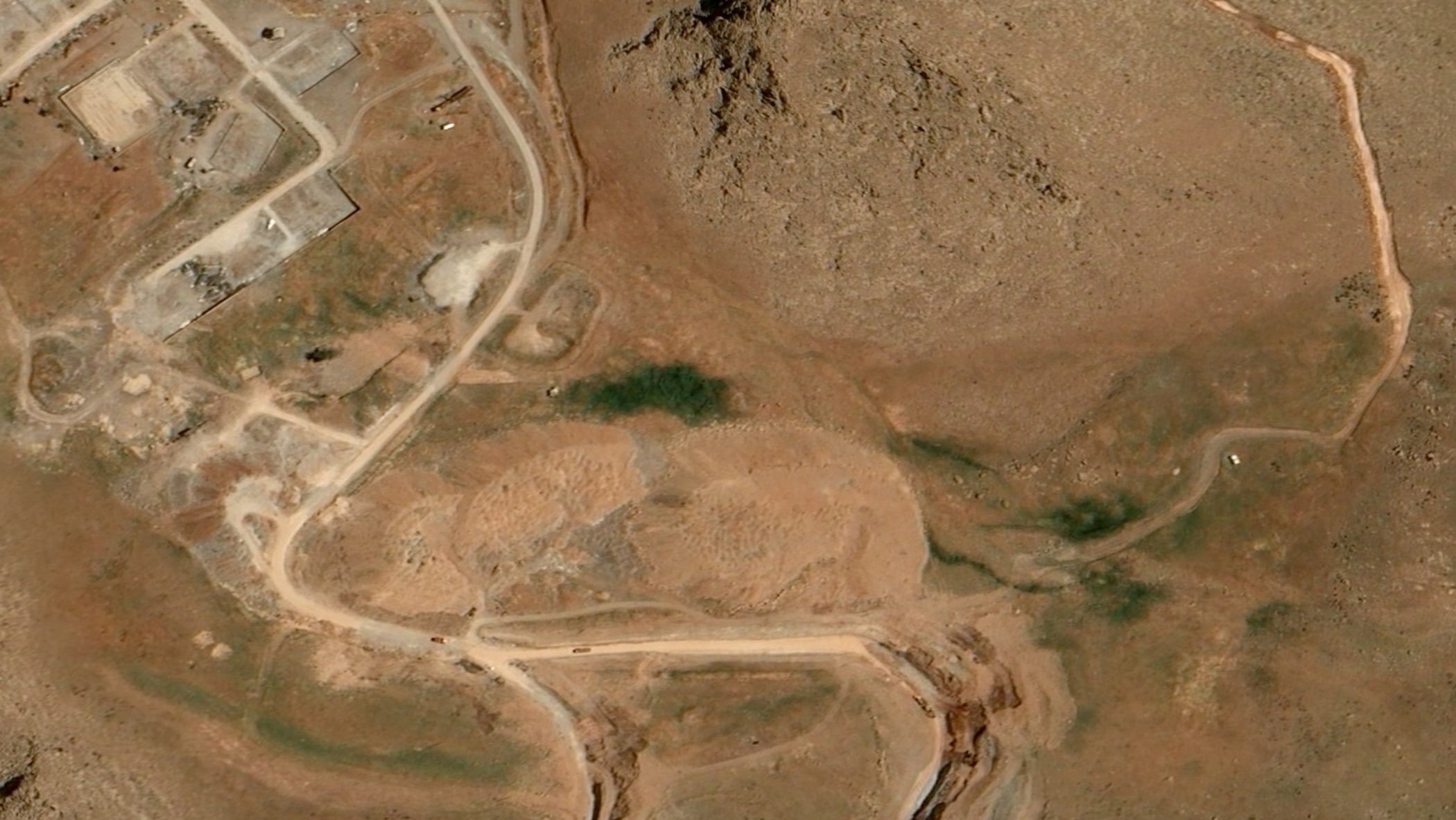

Aerial satellite imagery reviewed by intelligence analysts shows Iranian repair crews moving quickly to restore critical infrastructure following months of intense bombardment. Construction activity spans mountain missile installations, coastal shipping yards, key transportation links, and industrial manufacturing plants across the country.
Recent satellite photographs captured by commercial spatial technology companies show clear signs of civil engineering recovery at multiple strategic locations. Earthmoving machinery, freshly poured asphalt, and newly cleared access routes appear across sites previously rendered unusable by aerial munitions.
Military observers noted that heavy equipment operators reopened buried underground entrances within weeks of initial bombardment. Near Kangavar, in western Iran, satellite images documented newly paved access roads leading toward subterranean facilities.
Similar earthworks were documented near Kermanshah, where excavation vehicles removed collapsed rock layers to unblock buried portal structures.
At the Caspian Sea port of Bandar Anzali, maritime infrastructure linked to the Islamic Revolutionary Guard Corps (IRGC) shows visible structural repair. Dockside cranes and civil contractors have been documented clearing destroyed concrete and rebuilding damaged shipyard facilities.
Defense analysts state that repairing surface transport networks and access tunnels requires significantly less technical effort than replacing specialized manufacturing equipment.
Transportation corridors have also seen rapid emergency work. Defense officials reported that Iranian field units repaired a bombed bridge spanning a crucial supply route in just a few days.
Near Tehran, commercial satellite photos showed active rebuilding at the industrial site of Raja Shimi Industries, a facility associated with chemical and industrial processing.
The rapid pace of civil and defense reconstruction has surprised Western security personnel. High-ranking officials privately expressed concern that the ongoing aerial campaign has failed to cause lasting structural paralysis. They noted that local engineering teams maintain sufficient equipment, personnel, and materials to mitigate structural destruction quickly.
Former air defense commanders noted that Iran possesses extensive industrialization and reconstruction capabilities. Heavy engineering units operate across decentralized sectors, allowing simultaneous work on dispersed projects. By focusing immediate attention on transport access, contractors allow military logistics to continue despite persistent targeted strikes.
International military coalition reports indicate that thousands of precision-guided weapons were dropped during recent campaign waves. Targets included air defense installations, weapons storage bunkers, and command centers. However, ground-level imagery confirms that clearing rubble and paving bypass roads allows operational personnel to return to damaged sites rapidly.
Ongoing satellite monitoring continues to track civil works at dozens of damaged facilities nationwide. Defense planners acknowledge that keeping facilities permanently inactive requires continuous surveillance, because static infrastructure damage is routinely overcome by determined construction crews.
Comments (0)
Leave a Comment
No comments yet. Be the first to share your thoughts!