
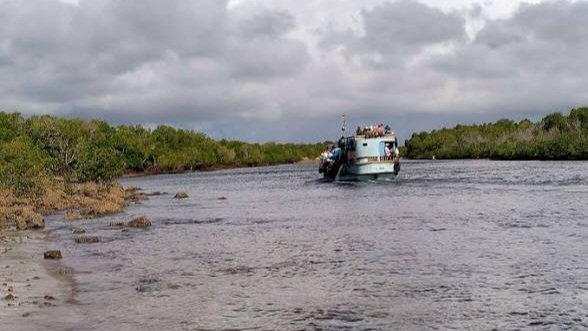

Navigating the coastal waters of Lamu has become a severe logistical challenge for local mariners, as the critical Mkanda channel suffers from profound siltation.
The deep-water path serves as a vital marine corridor, connecting the remote islands of Lamu East to the main trading hub of Lamu Island and the rest of the Kenyan mainland.
Without access to this channel, vessels are forced to detour into the open ocean, facing rough seas and dangerous currents.
For the regional economy, the corridor functions much like a local bottleneck, drawing comparisons to international chokepoints due to its strategic necessity for passenger and cargo movement.
The build-up of underwater silt and sand has severely reduced the depth of the channel, creating an effective blockade during low tides.
Large transport dhows and speedboats regularly ground on the shallow sandbanks, delaying the movement of essential goods, food supplies, and medical emergency evacuations.
The situation has revived calls for targeted capital dredging to restore the channel to standard navigable depths.
Past dredging initiatives offered temporary relief, but regular maintenance has been lacking, allowing seasonal ocean currents to redeposit vast amounts of sediment back into the narrow pass.
Marine safety inspectors note that navigating around the shallow points increases transit times, which drives up fuel costs for local boat operators.
The higher costs are passed directly to commuters and traders, adding an economic burden to a region heavily dependent on maritime commerce.
Local operators state that passing through the alternative open-sea routes is not viable for smaller passenger vessels, especially during the monsoon seasons when high waves pose significant safety risks.
A permanent infrastructure solution, including regular bathymetric surveys and sustained maintenance dredging, remains a priority for local leaders seeking to secure the trade route.
Until structural interventions are carried out, the shallow passage continues to restrict regional mobility, leaving island communities vulnerable to supply chain disruptions.
Comments (0)
Leave a Comment
No comments yet. Be the first to share your thoughts!