
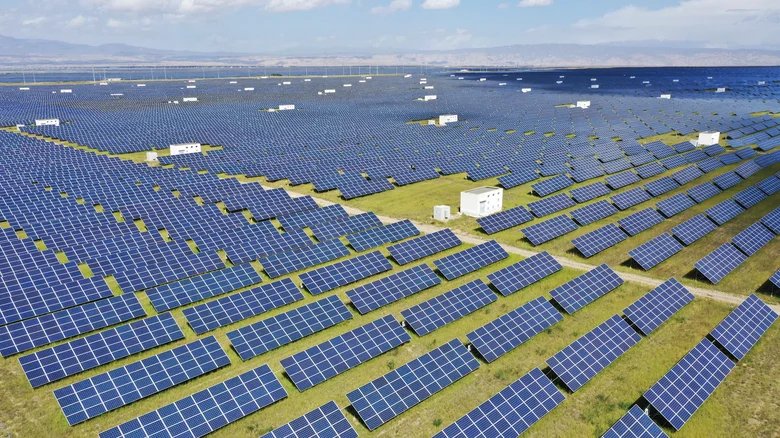

China continues to invest heavily in solar energy infrastructure despite remaining responsible for over half of global annual coal consumption. The largest of these undertakings is the Gonghe Photovoltaic Park (GPP), a massive installation covering 162 square miles of the Tibetan Plateau. The sheer scale of the facility means it occupies an area seven times larger than Manhattan.
The presence of the solar arrays has started quietly altering the surrounding desert landscape. Shading provided by the extensive rows of panels has lowered ground temperatures and cut down soil moisture evaporation, creating conditions that encourage unexpected plant growth. Monthly washing of the panels also introduces extra water into the ground, further stimulating the local ecosystem.
This ecological shift quickly created an operational challenge for the facility managers. The grass underneath the solar infrastructure grew so high that it began blocking sunlight from reaching the lower parts of the modules, reducing power efficiency while presenting a severe fire risk.
To manage the dense vegetation without resorting to expensive mechanical mowing or chemical treatments, operators turned to local communities. Shepherds from nearby villages were invited to bring their flocks into the park to graze. This practice, known as solar grazing, effectively utilizes sheep as a natural landscaping crew.
The animals navigate the tight spaces between structural poles and panels far more efficiently than standard lawnmowers. They also benefit from the setup, utilizing the shade of the panels to stay cool while accessing a reliable food source in a historically arid environment.
The partnership provides a critical source of income for local farmers who previously struggled against desertification and limited grazing land. Initial configurations presented physical barriers, as panels installed during the first phase of construction in 2012 were mounted too close to the ground for livestock to pass underneath.
Project technicians adjusted the infrastructure layout to better accommodate the animals. Later arrays were mounted higher and the spacing between panel rows was widened to allow the herds to move freely.
While the primary objective of large-scale renewable installations remains clean energy generation, the development has highlighted broader environmental and economic side effects. Studies show that solar installations can improve soil health and support local biodiversity, though large-scale projects also present clear land-use challenges. Large facilities require substantial space to match the output of traditional power stations, which can disrupt local wildlife or displace residents.
The integration of agricultural practices with energy infrastructure is gaining traction beyond the plateau. The American Solar Grazing Association (ASGA) has been coordinating similar mutually beneficial partnerships between farmers and solar firms in the United States since 2018.
Comments (0)
Leave a Comment
No comments yet. Be the first to share your thoughts!